The pain doesn’t start with the gunshots. It begins long before, in the quiet places where children sleep, where mothers hum lullabies, and where faith keeps fragile communities together through the darkness.
It arrives without warning, slipping through broken windows and across scorched earth, settling over Nigeria’s heart like a shadow that refuses to lift. This darkness goes beyond human conflict. It is a spiritual assault aimed at silencing believers and extinguishing the light of Christ wherever it shines.
Take little Ruth, a child who should have known only love and laughter. When Fulani militants stormed her village, Ruth’s mother, Hannatu, pleaded for mercy. The attackers tore Ruth from her mother’s arms, killed Hannatu instantly, and left the infant in the mud. By dawn, Ruth was found battered but alive, taken in by her aunt’s family, raised in the shadow of loss but also in the light of faith.
Ruth’s family understands both the depths of suffering and the roots of resilience. “We pray not for revenge, but for forgiveness — for the attackers to find Christ. Only God can change the heart of a man,” says her adoptive father, Danjuma John. “We’ve lost so much, but we also know that Christ is with us.” Even as Ruth pursues her education and sings hymns at church, her family prays: “Pray for Nigeria’s persecuted Christians. Pray for peace in Plateau State. Pray for children like Ruth — orphans of violence who long for a chance to grow in love and faith. And pray for the attackers, that their hearts would be transformed by God’s grace.”
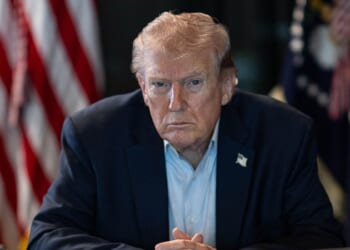
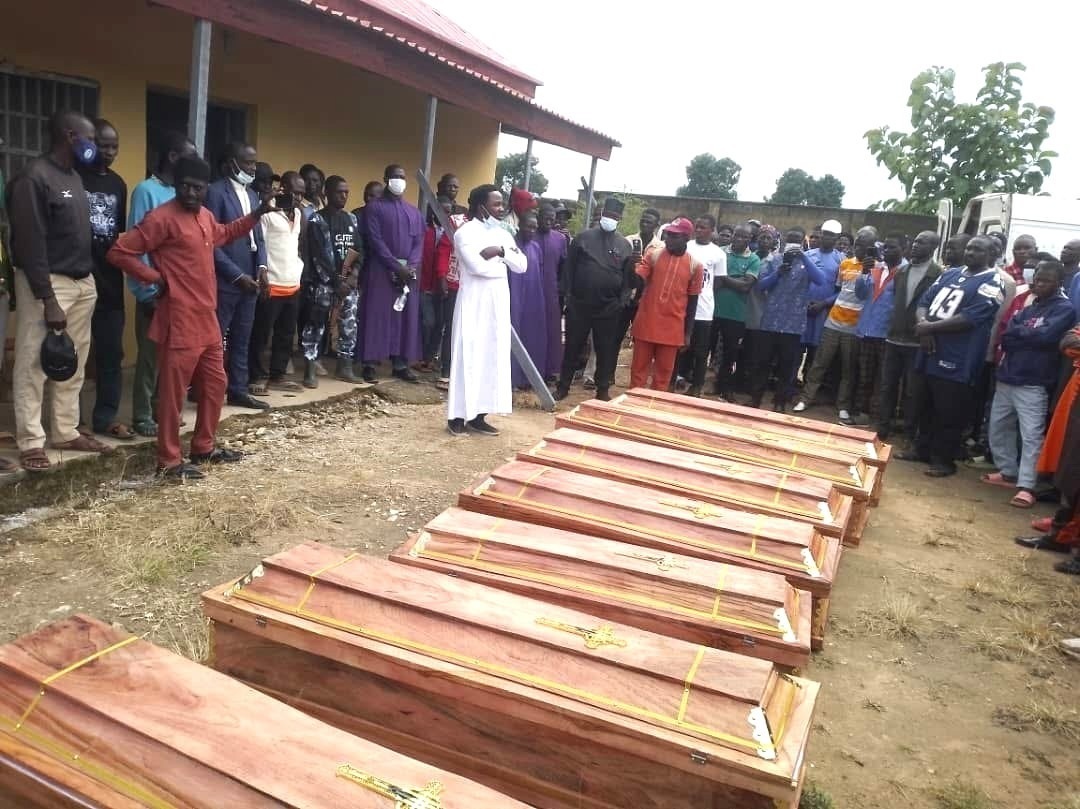
There are thousands of stories like Ruth’s. Nearly 7,000 Christians have been killed in Nigeria so far this year. While not all of these killings are strictly for religious motives, Christians make up a significant share of the victims in communal and violent conflicts across the country. American Christians have raised the alarm, calling for action and accountability. Recently, new resolutions have been introduced in Congress, and public pressure has grown, especially after President Trump announced he would redesignate Nigeria as a “Country of Particular Concern.” Headlines report sanctions, statements, and promises of pressure. But words in policy have not changed the daily reality for Ruth, her village, or the countless survivors who continue to face danger every day.
Too often, Nigeria’s Christians are only spoken of in terms of loss, counted, reduced to mere statistics that fail to capture the depth of their suffering or the strength of their faith. Survivors like Ruth remind us that behind every number is a life shaped by courage, prayer, and perseverance. Their faith becomes a quiet act of defiance against the violence that surrounds them.
Across Nigeria, churches and local ministries are carrying out the work of healing. They provide shelter, trauma counseling, and reconciliation for families torn apart by conflict. Pastors preach forgiveness even as danger remains close. Volunteers comfort children who wake each day with memories no child should hold.
More than numbers: The human reality
And yet, even here, after the debates and policy statements, the truth resists being simplified into charts and tallies. The crisis cannot be fully understood through statistics alone. When headlines fade and political discussions quiet down, a deeper reality remains. One not written in numbers, but in wounds, fears, and the unwavering faith of ordinary people.
Christian girls continue to be kidnapped in unprecedented waves. Families are shattered. Communities piece together faith through collective trauma and hard-won resilience. Massacres, burned churches, and government indifference keep repeating, even as much of the world averts its gaze. But even as communities struggle to survive, the world often responds from a distance.
American policymakers quickly propose solutions through aid packages, sanctions, and symbolic condemnations. Yet these efforts rarely address the core conditions of poverty, corruption, ethnic tension, weak institutions, and climate pressures that make faith-led communities vulnerable. From afar, the crisis is often seen as a policy problem to fix with speeches rather than through genuine solidarity.
As one Nigerian Christian leader recently said, “It’s a toxic cocktail of a lot of different things.” It is suffering layered upon suffering, including economic, social, and spiritual harm, crushing families long before militants ever arrive. The roots of the crisis are painfully complex. Our brothers and sisters in Christ need more than emergency care; they need long-term investments that empower women, strengthen local institutions, and build bridges with moderate Muslims. These steps are essential for any hope of lasting security. But even with all this complexity, the heart of the crisis is best understood through the believers who endure it with unshakable faith.
Seeing survivors, not just victims
This is why American Christians must respond with partnership, not pity. We can support trauma recovery programs, elevate survivor stories in our own communities, and invest in reconciliation efforts that bring Christians and moderate Muslims together. By combining prayer with tangible action, we honor Nigeria’s resilient believers and stand with them in hope.
Let prayer be combined with advocacy and practical support, not to “save Nigeria,” but to walk alongside and learn from its struggling faith communities.
The real test of solidarity
Congressional resolutions matter, but the real question is whether Western Christians, policymakers, and donors will listen humbly. Will we work with survivors to build lasting change from the ground up? Or will we continue repeating the cycle of outrage followed by empty promises?
The world may see ruins, but Heaven sees a Church that refuses to bow to the darkness. Ruth’s story tells us that faith still rises from the mud, forgiveness still grows from unimaginable loss, and the light of Christ still shines where evil believed it had triumphed. The Church in Nigeria is still singing, sometimes through tears and sometimes through whispers, but always through faith. The only question that remains is whether we will join the song.
Bishop Dr. Paul Murray has been in Christian leadership for more than 25-years and is the senior pastor of The Lighthouse Church Millersville, Maryland. He is the award-winning author of Broken: Picking up the Pieces after the Falland soon to be published, First to Serve. Dr. Murray serves as Vice President of the Global Peace Foundation where he leads efforts impacting religious freedom and liberties through the First Amendment Voice Alliance domestically and through the International Religious Freedom Roundtable globally.