By now it is old news that Tucker Carlson is splitting the MAGA world by interviewing a racist podcaster who praises Hitler and Stalin. But few if any have challenged Carlson’s claim in that softball interview that Christian Zionism is “Christian heresy.”
Christian Zionists say that Jews have a right to a homeland, and that this right is supported by the Bible. They say this support is not only in the Hebrew Bible (which Christians call the Old Testament) but also in the New Testament.
The apostle Paul, for example, wrote that “the gifts and calling of God are without repentance” (Romans 11:29). Paul was writing about Jews who had not accepted Jesus as messiah. He wrote that “as touching the election, they are beloved for the fathers’ sake” (Romans 11:28). In other words, they were still the Chosen People because of the promises He made to the patriarchs (Abraham, Isaac and Jacob). And the “gifts” he gave to them were irrevocable.
What did Paul mean by “the gifts”? In the first century Jewish thinkers such as Philo the philosopher and Josephus the historian wrote of God’s gifts to the Jewish people, and the land as one of the greatest of those gifts.
Paul taught the same thing. Luke tells us in Acts of the Apostles that Paul told a synagogue in Antioch of Pisidia (now in Turkey) that “the God of this people Israel chose our fathers … and when he [God] had destroyed seven nations in the land of Canaan, he gave them their land as an inheritance” (Acts 13:17-19).
But it wasn’t only Paul. The author of Hebrews says God led Abraham to a place to receive as an inheritance, and that Isaac and Jacob were heirs with him of the same promise (Heb 11:9). Before his martyrdom deacon Stephen said God promised to give Abraham this land as a possession and to his offspring after him (Acts 7:4-5).
Many think that Jesus implicitly denied the land promise when He preached in the Sermon on the Mount, “Blessed are the meek, for they shall inherit the earth” (Mattew 5:6).
But scholars are starting to recognize that Jesus was quoting Psalm 37:11, and that the Hebrew word for “earth” can also be translated “land.” Since the phrase “inherit the land” occurs five times in Psalm 37, it is probable that Jesus meant “land” and not “earth.”
Besides, Jesus also taught in his most famous sermon that every “jot and tittle” — which means every stroke of the pen — in the “Law and Prophets” was from God (Matthew 5:17-18). When one realizes that the Law and the Prophets (Jewish shorthand for the Old Testament) contain more than one thousand references to the land promise, it is clear that Jesus endorsed the land promise.
These claims have nothing to do with dispensationalism, a 19th-century theology fixated on “the rapture” (a lifting of true Christians off the planet years before the Second Coming) and detailed charts speculating about the precise schedule of last things. Christian theologians like Increase Mather (17th-century New England) and Jonathan Edwards (18th-century Massachusetts) taught the continuation of the land promise long before the rise of dispensationalism. And Karl Barth, the hugely-influential 20th-century Swiss theologian, rejected dispensationalism but believed the emergence of the state of Israel in 1948 was a “secular parable” whose history “even now hurries relentlessly’ toward the future of God’s redemptive purposes.
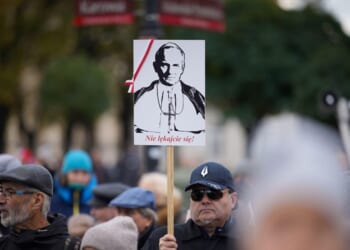
It’s not only Protestants. In 1991, Pope John Paul II referred to the return of Jews to the “mountains of Israel” in the last centuries as a fulfillment of Ezekiel’s promise in 34:13. English Catholic theologian Gavin D’Costa sees in recent magisterial documents a trajectory toward a “minimalist Catholic Zionism” whose building blocks are the assertions that “the Jewish covenant is irrevocable; that this covenant applies to the Jews today; that part of this covenant has been the promise of the land; that this promise is not superseded or annulled in the New Testament and is firmly based in the Old Testament.”
There is no conflict between a proper Christian Zionism and justice for the Palestinian people. The God of the Hebrew Bible is a God of justice, so Christian Zionism is not a blind endorsement of every Israeli state policy. Neither is it Christian heresy, as Tucker Carlson alleges.
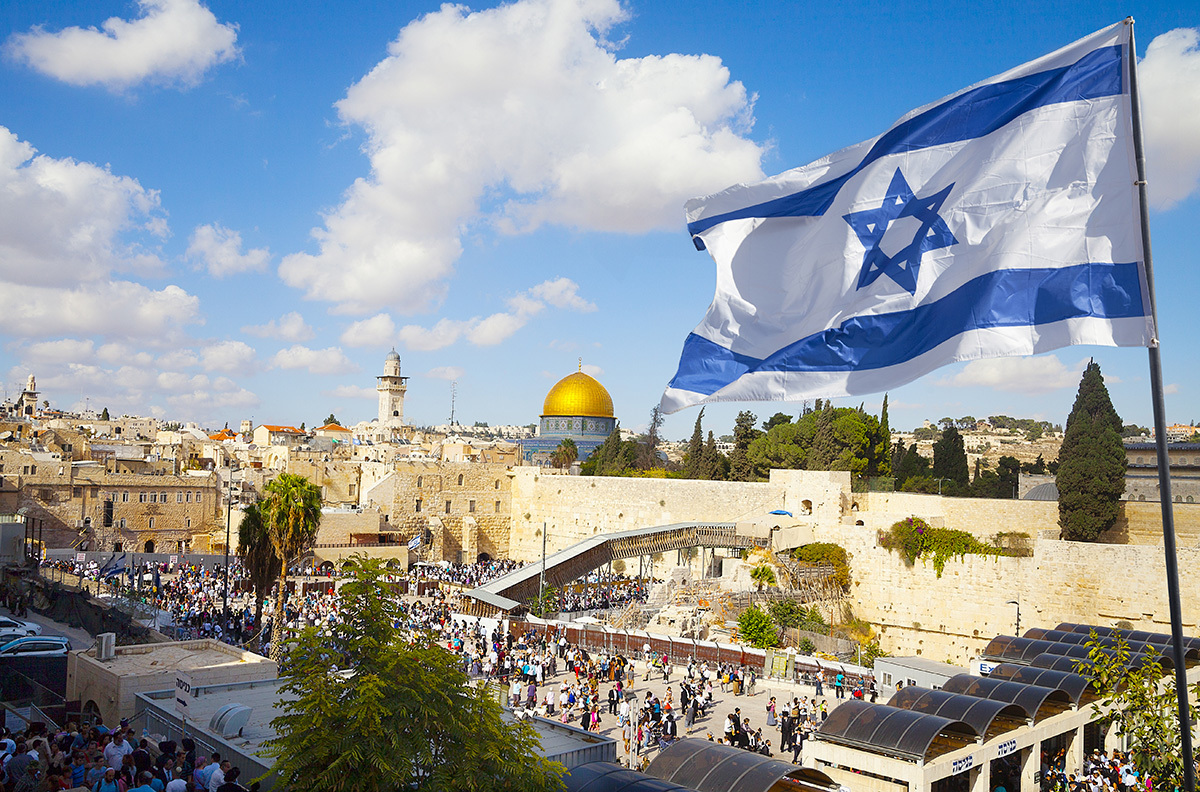
Instead, Christian Zionism explains why Jerusalem is called the “holy city” or its equivalent three times in Matthew and three times in the book of Revelation. It’s why Zionism can be seen in nearly every book of the New Testament, as a number of us scholars have shown in the book The New Christian Zionism.
Gerald McDermott teaches at Jerusalem Seminary and Reformed Episcopal Seminary. He is editor of The New Christian Zionism and Understanding the Jewish Roots of Christianity, and author of Israel Matters and A New History of Redemption.