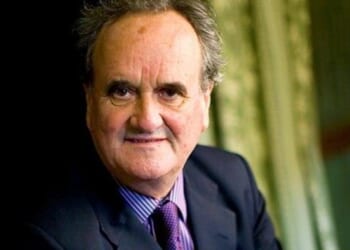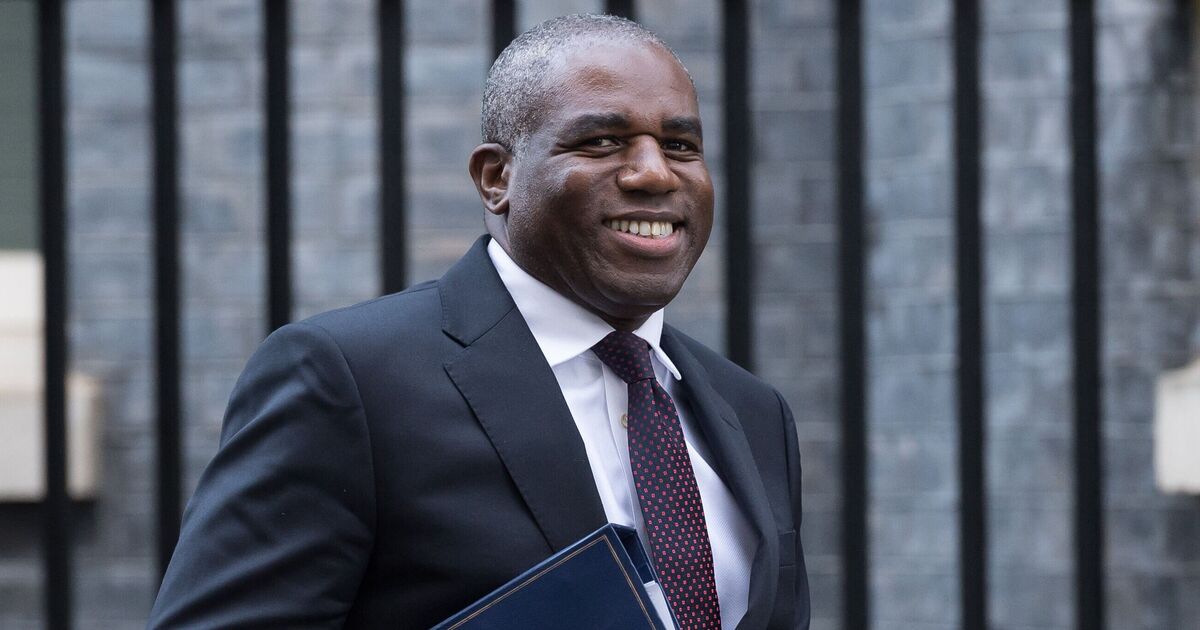
Keir Starmer and David Lammy believe “ordinary people are too stupid” to sit on juries and oversee justice, Robert Jenrick has warned.
Justice Secretary Mr Lammy told MPs judges will decide guilt in cases “with a likely sentence of three years or less” in new so-called “Swift Courts”.
But Mr Jenrick, the Shadow Justice Secretary, warned the bombshell proposals are “the beginning of the end for jury trials”, adding that the controversial plans “won’t even guarantee the backlog falls”.
It comes as Labour MPs vowed to rebel and try and block the legislation.
The plan to abolish jury trials will be deemed a success if the backlog begins to fall by the end of this Parliament – in 2029.
But Mr Lammy admitted it will “get worse before it gets better”.
Mr Jenrick said: “If Lammy’s proposals pass, it’s the beginning of the end for jury trials.
“If Lammy was interested in tackling the court backlog he’d get the courts sitting around the clock. But he refuses. He confessed today that slashing jury trials won’t even guarantee the backlog falls.
“The truth is that many in the Labour Party simply don’t trust ordinary people to make decisions.
“The message from Starmer is clear: ordinary people are too stupid, too troublesome, too time-consuming to be trusted with administering justice.”
Leaked plans last week revealed the Deputy Prime Minister wanted to go further, with juries only hearing murder, rape, manslaughter and “public interest cases” carrying sentences of five years and over.
They were drawn up to tackle the record Crown Court backlog, which is currently at a record level of more than 78,000 cases and some trials are being listed as far in the future as 2030.
This is projected to hit more than 100,000 by 2028.
Under Mr Lammy’s new plans, some sexual assault, burglary, drug dealing and robbery cases will now be heard by a single judge.
The Ministry of Justice will scrap the right of defendants to “elect” a jury trial for so-called “either way offences”.
Currently, defendants of either-way offences can have their cases heard in the Magistrates’ Court or Crown Court, where they can elect a jury trial.
But judges will now assess a case, and if it is “likely” to result in a three-year prison sentence or less, it will be heard by either a magistrate or the new Crown Court Bench Division.
Neither of these will require a jury.
But judges in the Crown Court Bench Division will retain full sentencing powers, meaning that if the evidence of a case stipulates that a longer prison term is necessary, the judge can utilise them and lock up the criminal for longer.
This means that, whilst hearing a sexual assault case, a single judge could hear all the evidence, convict and sentence a criminal to four or five years behind bars.
Magistrates’ powers will also be increased to hand down sentences of up to 18 months’ imprisonment, up from 12 months currently.
The powers could also be extended to 24 months if necessary.
Ministry of Justice modelling suggests that the number of cases going to a jury trial will be cut in half.
Some 15,000 cases went to trial in the year to June 2025.
And the MoJ believes around 2,500 will be heard in the Crown Court Bench Division, while another 5,000 cases will be heard by magistrates.
Just 1.5% of cases will be heard by a jury.
Labour MP Karl Turner said: “In the 15 years I have been in Parliament I haven’t ever voted against the whip but sadly, if it comes to it, I will have to do so. These changes won’t touch the backlog and will not put the victims of crime at the forefront of the criminal justice system. Do right, fear no one.
“This barmy idea won’t help reduce the backlog by much at all if at all”.
Riel Karmy-Jones KC, Chair of the Criminal Bar Association, said: “Let’s be clear – despite the government’s climb down from 5 back to 3 years, the proposal as announced today brings a wrecking ball to a system that is fundamentally sound and has been in place for generations.
“Juries work – they do their job superbly, and without bias. Juries have not caused the backlog.
“Although there are many things the CBA welcomes in the Deputy Prime Minister’s announcement, such as his commitment to the criminal bar, and the increase in sitting days, criminal barristers have been clear from the outset that we overwhelmingly oppose Judge-alone trials in the Crown Court.”
The Law Society of England and Wales warned the proposals “go too far in eroding our fundamental right to be judged by a jury of our own peers”.
Vice-president of the society, Brett Dixon, said: “Allowing a single judge, operating in an under-resourced system, to decide guilt in a serious and potentially life changing case is a dramatic departure from our shared values.”
And a judge at Winchester Crown Court said she believed juries were necessary for their “objectivity”.
Thanking the jury which sat on a rape trial, Judge Jane Miller KC, who is sitting in retirement, said: “Those of us who sit in this court think the only way cases like this could be tried is by a jury, and not just these types of cases.
“We think a jury brings an objectivity to cases like these which those involved in cases like this all the time cannot do.”
The reforms come as a response to recommendations made in July by Sir Brian Leveson to overhaul the courts system.
In his review, the former senior judge found there is “no constitutional or common law” right, or right within European human rights law, for a defendant to be tried by a jury, and so there was no need to limit reforms because of this.
Mr Lammy defended his plan, telling MPs: “This Government inherited an emergency in the courts: A record and rising backlog currently at 78,000 cases.
“Victims face agonising delays with some trials not listed for years.
“All the while, defendants bide their time. Guilty pleas have decreased every year since 2020. And in the year to June, 11,000 cases were dropped after a charge because victims no longer supported or felt they could support the case.
“Behind the statistics are real people: Katie was repeatedly abused by her partner.
“She reported him to police in 2017. But then had an unbearable 6 year wait for justice.
“During this time, she lost a job due to her mental health deteriorating. She became increasingly isolated, lived in fear, and lost faith in the court system. This is not an isolated failure. It is systemic.”