
An attorney representing New Jersey before the U.S. Supreme Court has admitted that a pro-life pregnancy care center the state subpoenaed had no complaints leveled against it.
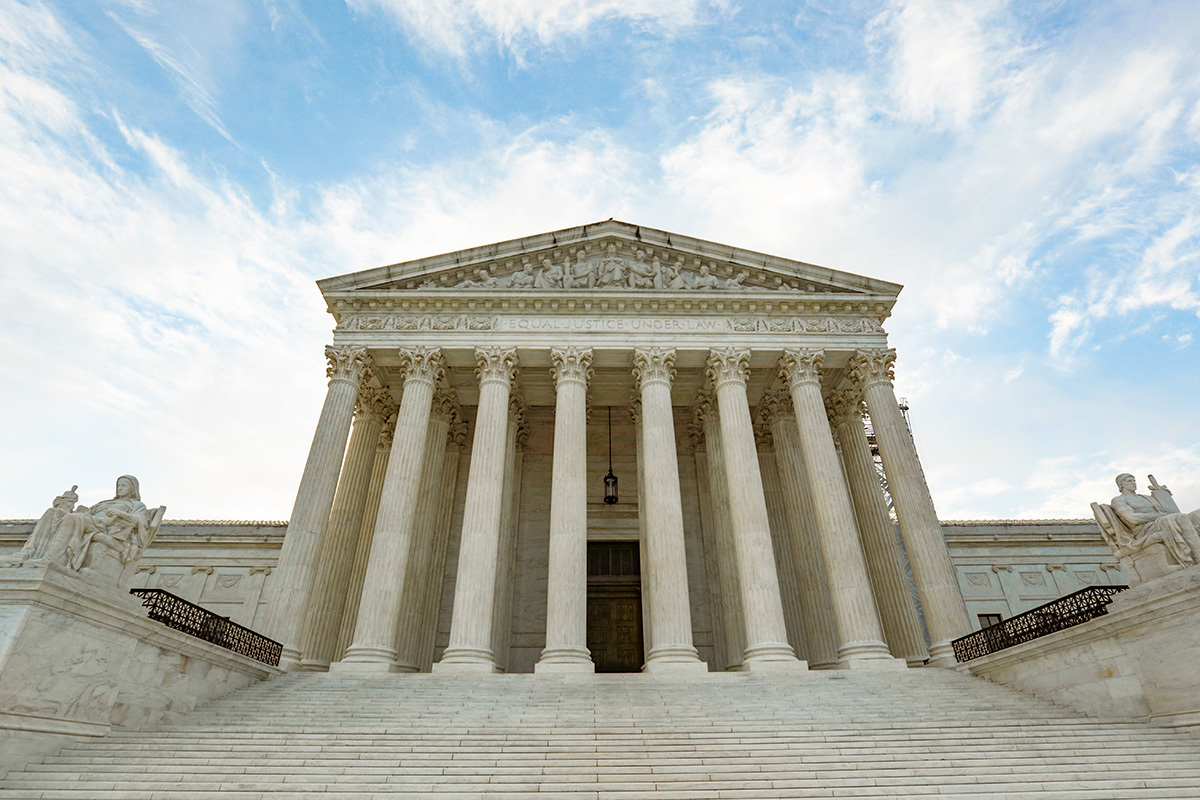
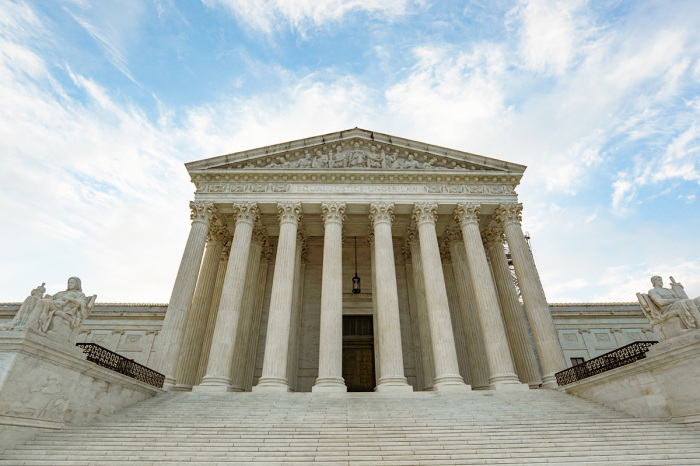
The Supreme Court heard arguments on Tuesday morning in the case of First Choice Women’s Resource Centers, Inc. v. Matthew J. Platkin, Attorney General of New Jersey.
At issue was whether New Jersey Attorney General Matt Platkin could require First Choice, a pro-life center network, to disclose its donor lists and donors’ information under threat of legal penalties.
Sundeep Iyer, chief counsel to the New Jersey attorney general, argued the case on behalf of the state. He argued that the subpoena did not violate First Choice’s First Amendment rights.
During the proceedings, Justice Clarence Thomas asked Iyer if he had “complaints that formed the basis of your concern about the fundraising activities” of First Choice.
When Iyer replied that “we certainly had complaints about crisis pregnancy centers,” Thomas interjected to ask if he had had complaints about First Choice specifically.
“So, I think we’ve been clear from the outset that we haven’t had complaints about this specific crisis pregnancy center,” Iyer responded.
Thomas immediately followed-up by asking, “So you had no basis to think that they were deceiving any of their contributors?”
“I don’t think that’s correct, your honor,” Iyer said. “I think we had carefully canvassed all of the public information that is provided on the website of First Choice in making a determination that we wanted to initiate an investigation.”
When Thomas reiterated that the state “had no complainants,” Iyer acknowledged this, but added that state and federal governments “initiate investigations all the time in the absence of complaints where they have a reason to suspect that there could be potential issues of legal compliance.”
“It could be the case, based on our investigation, when we look at documents, when we look at information, that ultimately we’ll determine that First Choice isn’t liable for any violations of law,” said Iyer.
“That just seems to be a burdensome way to find out whether someone has a confusing website,” Thomas responded. “It would seem that the obvious way to refute [First Choice’s arguments] was to say ‘we have 100 complaints.’”
“But you say you have no complaints, but rather you looked at the website and their materials and you think it could have been misleading.”
Iyer replied that the subpoena issued to First Choice was based on four concerns, namely questions about “potentially misleading donors,” “unlicensed practice of medicine,” “patient privacy practices” and “potentially misleading or untrue” statements.
“We had no complaints,” he restated.
Iyer argued that the subpoena was “non-self-executing,” meaning that the state attorney general doesn’t have the authority to enforce it, but rather it must be approved by a court.
As a result, according to Iyer, the subpoena requesting substantial donor information did not have an unlawful “chilling effect” on the First Amendment rights of First Choice.
Justice Elena Kagan asked Iyer, “What’s an ordinary person supposed to think and what’s an ordinary person supposed to do based on what an ordinary person is supposed to think?”
Kagan said that “an ordinary person” who would be “presented with this subpoena and then told ‘but don’t worry, it has to be stamped by a court’ is not going to take that as very reassuring.”
Chief Justice John Roberts asked Iyer about the potential impact of future donations to First Choice, asking him, “You don’t think it might have an effect on future potential donors to the organization to know that their name, phone number, address, etc. could be disclosed as a result of this subpoena?”
When Iyer insisted that there was no evidence of any donors being chilled by the subpoena, Roberts pressed him about how exactly he knows that no donors have been deterred by it.
Iyer noted that a group of unnamed donors said they “would have been less likely,” which he labeled a “backwards-looking statement” and not about “prospective” harm.
“Really?” interjected Justice Neil Gorsuch. “We’re going to now pick over the tense of the verb that they chose?”
“What if they had used the future tense?” asked Justice Samuel Alito. “‘If this information is disclosed, we will not donate.’ … That wouldn’t be enough?”
Ultimately, Iyer argued that since he believed the subpoena was not self-executing, that negated all the debates over tenses in the donor declaration of concern.
In November 2023, New Jersey Attorney General Matthew Platkin subpoenaed First Choice for records that included donor lists and private correspondence to investigate whether the network was violating the New Jersey Consumer Fraud Act.
Platkin was one of 16 Democrat attorneys general who signed a letter in 2023 accusing pro-life pregnancy centers of spreading “misinformation and harm” by “misleading consumers and delaying access to critical, time-sensitive reproductive healthcare.”
Before the subpoena deadline came, First Choice filed a complaint against Platkin in December 2023, claiming that the subpoena was too broad in its scope and was unconstitutional.
U.S. District Judge Michael A. Shipp, an Obama appointee, ruled against First Choice in January 2024, writing that the suit was “not ripe” and that the court “lacks subject-matter jurisdiction.”
“Plaintiffs claims related to the Subpoena’s enforceability in this matter would ripen only after the contingent future event that forms the basis of its alleged injury occurs,” ruled Shipp.
“Because this Court cannot yet know whether the state court tasked by the New Jersey state legislature with overseeing subpoena enforcement proceedings like this will, in fact, enforce the Subpoena in its current form, this matter is not ripe for resolution because no actual or imminent injury has occurred.”
In February of last year, the 3rd U.S. Circuit Court of Appeals rejected the centers’ emergency request to block the subpoena, denying it “without prejudice to reconsideration by the merits panel and/or the filing of a request for an expedited briefing schedule.”
Although the Supreme Court had initially refused without comment to take up the case in May 2024, the high court later agreed to hear oral arguments in the case in June.