ON THE Tuesday of Holy Week 2017, just four days after the announcement that I was to be the next Bishop of Sheffield, I underwent a sigmoidoscopy at a clinic in London. Within seconds of the start of the procedure, a cancerous tumour was found in my colon.
One of my most vivid memories of that day was of sitting beforehand on a medical couch, in a small, sterile, and featureless side-room, waiting to be escorted to the theatre. I was dressed only in paper pants and a thin, faded surgical gown. The gown was still fit for purpose, but it was far from new, and I found myself pondering how many other patients had waited in it before me (and what stories we would have to tell one another if we were ever assembled in some peculiar post-procedure cocktail party).
Over the course of the next six months, to Advent Sunday, I became all too familiar with the very particular experience of waiting in a hospital, much of it done precisely in “waiting rooms”, sitting with other patients in rows of brightly coloured plastic chairs, expecting the automated voice that would call out some approximation of my name to direct me to a particular treatment room or bay.
For a five-week period in July and August that year, I waited very publicly in a hospital corridor on five days of the week, before a dose of radiotherapy, desperately hoping not to be recognised. I was by then the new Bishop of Sheffield, and, for various reasons (some relating to my own needs, some relating to what I perceived to be the needs of my new diocese), I had chosen to confide the news of my illness to only a small circle. So, waiting in that corridor, I felt acutely vulnerable on grounds that were only partly to do with the treatment that I was there to receive. As far as I am aware, I never was recognised.
The last major medical hurdle of that year came on All Saints’ Day, when I underwent surgery for the removal of the residue of the tumour, an operation which has left me with a permanent colostomy. I was given that date at a consultation that happened to fall on my 56th birthday, on 10 October. So 1 November was a date for which I was waiting for six weeks. I waited in expectation and apprehension in equal measure: looking forward to the removal of the tumour, dreading the long-term implications of such radical surgery.
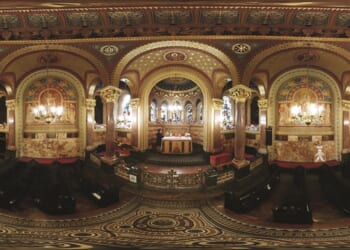
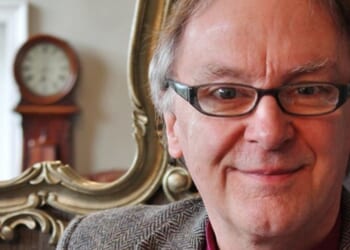
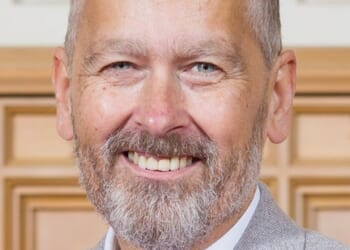
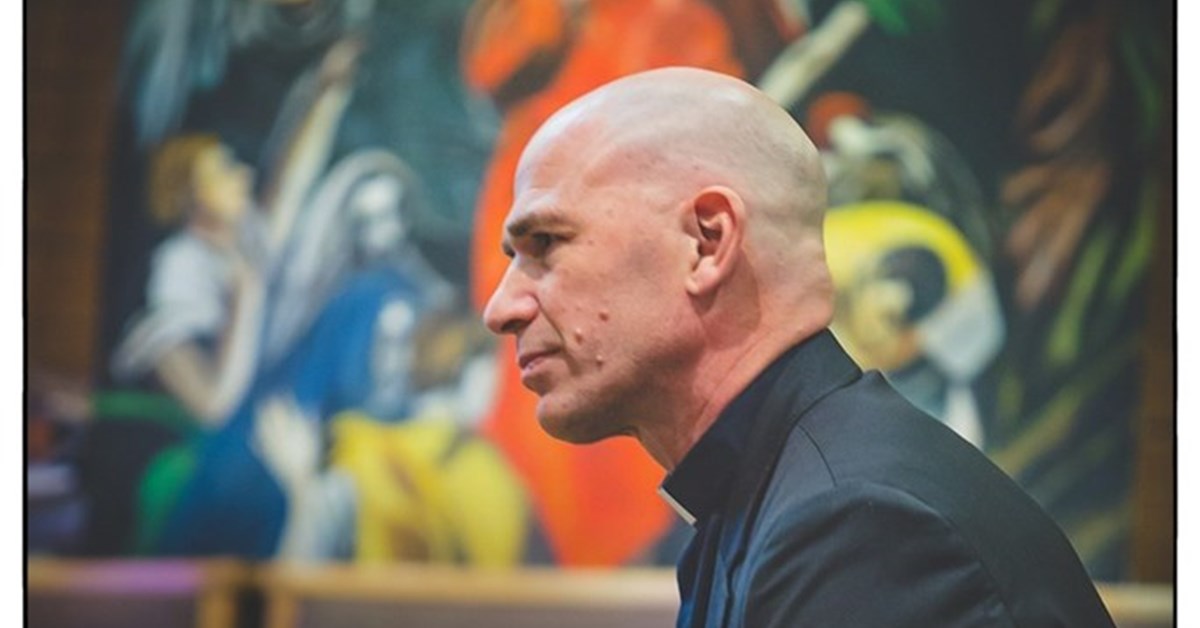
IN BETWEEN the pre-appointment medical that I underwent in March and the surgery in November, I also did quite a lot of vocational waiting. The accompanying photograph captures one very specific such moment. It was taken on Friday 7 April. I was sitting in St Swithun’s on the Manor, in Sheffield, waiting for the 10 a.m. Downing Street notification of my nomination, so that the announcement “event” could begin.
After that, I awaited key vocational milestones: my election by the College of Canons in Sheffield Cathedral on 5 May; the Confirmation of Election in York Minster on 9 June; the service of consecration in York Minster on 22 June; the opportunity to pay homage to the late Queen on 5 July; the service of installation in Sheffield Cathedral on 23 September. I waited for these dates with less conflicted emotions: I was feeling very strongly called to this position, and these dates were, for me, therefore, unambiguously hopeful.
Looking back on those months of waiting from this distance, I can begin to see the ways in which they have been formative for me. I am sorry to say that all that waiting has not taught me patience. I remain an impatient person, inclined to hurry up. I don’t think I am better at waiting now than I was a decade ago. But I do perceive two lasting benefits.
One is that I have grown in my awareness of how fundamental it is to Christian faith to wait.
After that sigmoidoscopy in the Holy Week of 2017, I knew that I had cancer, but I did not know how widespread it might be, or how treatable. The result was to make me intensely aware of my mortality, particularly that year, as Maundy Thursday gave way to Good Friday, Good Friday to Holy Saturday, and Holy Saturday to Easter Day.
A few days after that, a head-to-toe scan showed that my condition was localised and curable, and so it proved. But, for a few days either side of Good Friday, I didn’t know that. I had to face up to the fact that my death might be imminent. I discovered, to my delight and relief, that my hope in Christ of an eternity in glory is sure. One day, I hope to rise to life at the coming of God’s Kingdom. The point was driven home for me that year that, until That Day, every day is, in a profound sense, a waiting day.
But, meanwhile, I am not wishing my life away. Far from it. In fact, this is the second great benefit that I inherited from all that waiting: I have become more intentional about relishing the present moment — even while I am waiting. Once the prospect of an imminent death had passed, what lingered (and continues to linger) is a refreshed sense of the preciousness of each new day. I try to savour each one. The ministry of a bishop in the Church of England at the present time is not entirely conducive to this discipline, but I do try.
As it happens, I was interviewed by the Crown Nominations Commission for the vacant see of Sheffield the day after Advent Sunday in 2016. One year later, on Advent Sunday 2017, I was just starting to resume a public ministry after my surgery. I now think of that 12-month period as an extended Advent season: a season of waiting and a season of contemplating my mortality, but also, yes, even a season of joyful hope.
A Year of the Lord’s Favour: Grace in times of need by Pete Wilcox is published by Church House Publishing at £12.99 (Church Times Bookshop £11.69); 978-1-78140-508-6.