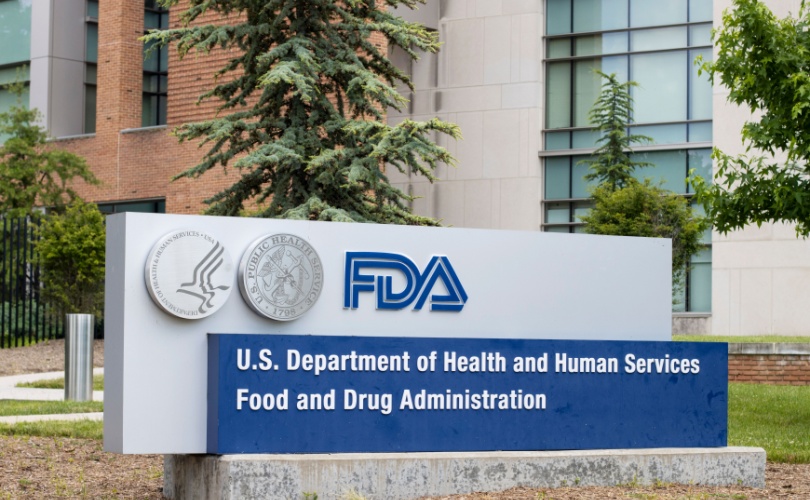
(LifeSiteNews) – A Texas single father says the U.S. Food & Drug Administration’s (FDA’s) new investigation into COVID-19 vaccine deaths has finally acknowledged and vindicated his years of certainty that the shot killed his son.
As LifeSiteNews covered November 29, FDA Chief Medical Officer Vinay Prasad acknowledged in an email to staff that “(a)t least 10 children have died after and because of receiving COVID-19 vaccination (…) Why did it take until 2025 to perform this analysis, and take necessary further actions? Deaths were reported between 2021 and 2024, and ignored for years (…) The truth is we do not know if we saved lives on balance,” he wrote. “It is horrifying to consider that the U.S. vaccine regulation, including our actions, may have harmed more children than we saved. This requires humility and introspection.”
The government has not released the names of those children, but on December 2, journalist Maryanne Demasi published a Substack highlighting one of the likely candidates: 16-year-old Ernesto Ramirez Jr. of Texas, who took the Pfizer mRNA-based COVID vaccine on April 18, 2021, collapsed five days later while playing basketball in a park, and died after being rushed to a hospital.
Ernesto’s medical records were reviewed by prominent COVID-skeptic cardiologist Dr. Peter McCullough, who told his father Ernest Ramirez that the boy’s heart “was twice the normal size it should have been,” and that his cause of death had been myocarditis. Ramirez memorized the particular shot’s lot number, ER8731, adding that “I’ve been told that’s one of the worst lot numbers that was put out.”
Ramirez says the hospital refused to acknowledge the vaccine’s role in his son’s death, and even that the Federal Emergency Management Agency (FEMA) “asked me … if I would change my son’s death certificate so that it showed he died of Covid … then they would give me $10,000 for the funeral.” He refused, even after two years of calls and badgering eventually raised the offer to $35,000.
However, one of the second Trump administration’s hires under FDA Commissioner Marty Makary, Dr. Tracy Beth Høeg (who was just promoted to acting director of the Center for Drug Evaluation and Research), started investigating child COVID shot deaths and reached out to Ramirez to request his son’s medical and death records to review. Ramirez then traveled to the nation’s capital to meet personally with Makary and Høeg.
“We sat there for about three hours talking when normally people only give you 30 minutes at the max,” he said. “We gave them paperwork, medical records, everything … and they just kept asking for more. It was overwhelming on our part because somebody actually wanted to hear the information and see what we had to offer.”
Ramirez is immensely grateful and does not see the fact that the number of deaths acknowledged so far as a cause for disappointment. “This is the beginning. We can’t flood them and overwhelm them,” he said. “This is a door opening. I feel something positive is finally coming out. I see a little light at the end of the tunnel.”
The COVID vaccines have been highly controversial ever since the first Trump administration’s Operation Warp Speed initiative prepared and released them in a fraction of the time any previous vaccine had ever been developed and tested. As LifeSiteNews has extensively covered, a large body of evidence has steadily accumulated over the past five years indicating that, while the COVID vaccines may have alleviated the severity of COVID cases, they failed to prevent transmission and more importantly carried severe risks of their own.
The federal Vaccine Adverse Event Reporting System (VAERS) reports 38,773 deaths, 221,257 hospitalizations, 22,362 heart attacks, and 29,012 myocarditis and pericarditis cases as of August 29, among other ailments. U.S. Centers for Disease Control & Prevention (CDC) researchers have recognized a “high verification rate of reports of myocarditis to VAERS after mRNA-based COVID-19 vaccination,” leading to the conclusion that “under-reporting is more likely” than over-reporting.
An analysis of 99 million people across eight countries published in the journal Vaccine last year “observed significantly higher risks of myocarditis following the first, second and third doses” of mRNA-based COVID vaccines, as well as signs of increased risk of “pericarditis, Guillain-Barré syndrome, and cerebral venous sinus thrombosis,” and other “potential safety signals that require further investigation.” In April 2024, the CDC was forced to release by court order 780,000 previously undisclosed reports of serious adverse reactions, and a study out of Japan found “statistically significant increases” in cancer deaths after third doses of mRNA-based COVID-19 vaccines, and offered several theories for a causal link. Most recently, studies published in the International Journal of Infectious Diseases and International Journal of Medical Science raised the possibility of the shots carrying risks of not only respiratory diseases but even kidney injury.
Ever since, many have intently watched and hotly debated what President Donald Trump would do about the situation upon his return to office. Though he never backed mandates like former President Joe Biden did, for years Trump refused to disavow the vaccines to the chagrin of his base, seeing Operation Warp Speed as one of his crowning achievements. At the same time, during his latest run, he embraced the “Make America Healthy Again” movement and its suspicion of the medical establishment more broadly.
So far, Trump’s second administration has rolled back several recommendations for the shots but not yet pulled them from the market despite hiring several vocal critics of the COVID establishment and putting the Department of Health & Human Services under the leadership of America’s most prominent anti-vaccine activist, Robert F. Kennedy Jr. Most recently, the administration has settled on leaving the current vaccines optional but not supporting work to develop successors.
In a July interview, Makary asked for patience from those unsatisfied by the administration’s handling of the shots, insisting more time was needed for comprehensive trials to get more definitive data. Ernest Ramirez’s experience indicates that patience might finally be getting rewarded.