Isaiah 35.1-10; Psalm 146.1-10; James 5.7-10; Matthew 11.2-11
THIS is not a Gospel for those who like easy answers. One commentator remarks that, among the four Evangelists, “Matthew’s presentation of the Baptist is . . . the most puzzling and difficult.” Another refers to Matthew 11.11 as “an enigmatic verse”.
My first reaction was to disagree with both views. Jesus’s meaning is clear: the least significant people in the Kingdom are greater than the greatest of those who are not. The author of the Gospel of Thomas tried to make Jesus sound more mystical: “There is none higher than John the Baptist, so that his eyes shall not be broken . . . whoever among you becomes as a child shall know the Kingdom.” But the Kingdom of heaven is not a matter of secret knowledge. Real Gospels have no truck with such stuff.
At first, Christians understood Jesus’s words in verse 11 as referring to himself. Then, in the fourth century, Jerome argued that Jesus’s words were a reference to every Christian still involved in the battles of this life. Jerome’s view has come to prevail — but much depends on whether Jesus believed that the Kingdom of heaven had begun already, or whether, for him, it was something set in the future.
Either way, the passage presents us with a challenge, because it introduces the concept of rank into the Kingdom. That is a sensitive matter: does hierarchy (“least”, “greater”) persist in the Kingdom of heaven in the same way as it is embedded in this life? In other words, will some people always, eternally, be more “important” than others?
My first instinct is to say “No!” For me, the creation story in Genesis 1-3, right at the beginning of salvation history, establishes the truest foundation for tackling this question. Hierarchy is a by-product of the Fall. Before the curse is put upon Adam and Eve, they are alike, equal. After it, hierarchy rules their relationship: “your desire shall be for your husband, and he shall rule over you” (3.16). Obviously this is a negative for the woman, but I see it as a negative for the man as well. Putting it in an extreme form, we could say that there will be no domestic violence in the Kingdom of heaven.
When we look at this matter in the universal context of creation, a degree of hierarchy in the Kingdom is confirmed. None of us, I hope, would claim to be equal with the angels, even if we do manage to enter the Kingdom (Psalm 8.5). True, they are created beings, as we are. But, although they have the capacity to sin, they do not sin. And their closeness to God puts them above humankind in every way except one: the blessing of knowing the Lord’s salvation. That extraordinary privilege belongs to humankind alone.
The hierarchical nature of earthly humanity is something we absorb without really reflecting on it. At the same time, our faith teaches us the principle that it is characteristic of God to overturn such human hierarchies. Hannah’s song (1 Samuel 2.1-10) finds resounding echoes in Psalm 113.7 and, centuries later, in Luke’s Magnificat: “He raises up the poor from the dust; he lifts the needy from the ash heap, to make them sit with princes and inherit a seat of honour.”
Back to the first part of this Gospel, to the question of Jesus’s identity. When someone asks us to prove our identity, we reach for our driving licence or passport, although I was recently stumped by being unable to provide a single utility bill in paper form as proof of identity. Technology often outstrips rules, just as social trends leave faith struggling to find words and actions to meet new situations.
Here, John sends his disciples to ask Jesus, “Are you the one who is to come, or are we to wait for another?”. But, instead of using words to validate himself, Jesus directs John’s disciples to consider concrete physical proofs: blind people receiving their sight; lame people walking; lepers being restored to health; deaf people becoming able to hear; and the dead being “raised”. Facts, not words, prove who he is. We might even take the last item of Jesus’s list as a summary of all the others: “The poor have good news brought to them.”
Perhaps the deep message in Jesus’s words is that being his disciple is the only identity that really matters.
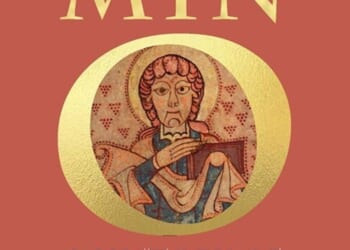
Buried Treasure: The collected Church Times Sunday Readings by Cally Hammond is available now (Canterbury Press, £24.99 (£19.99); 978-1-78622-567-2).