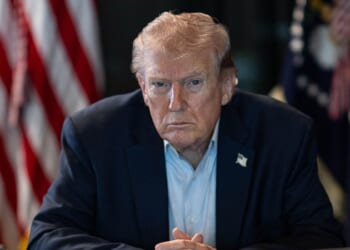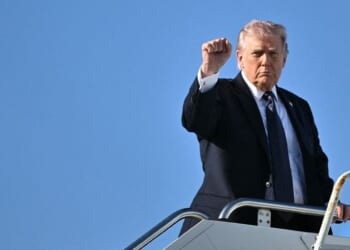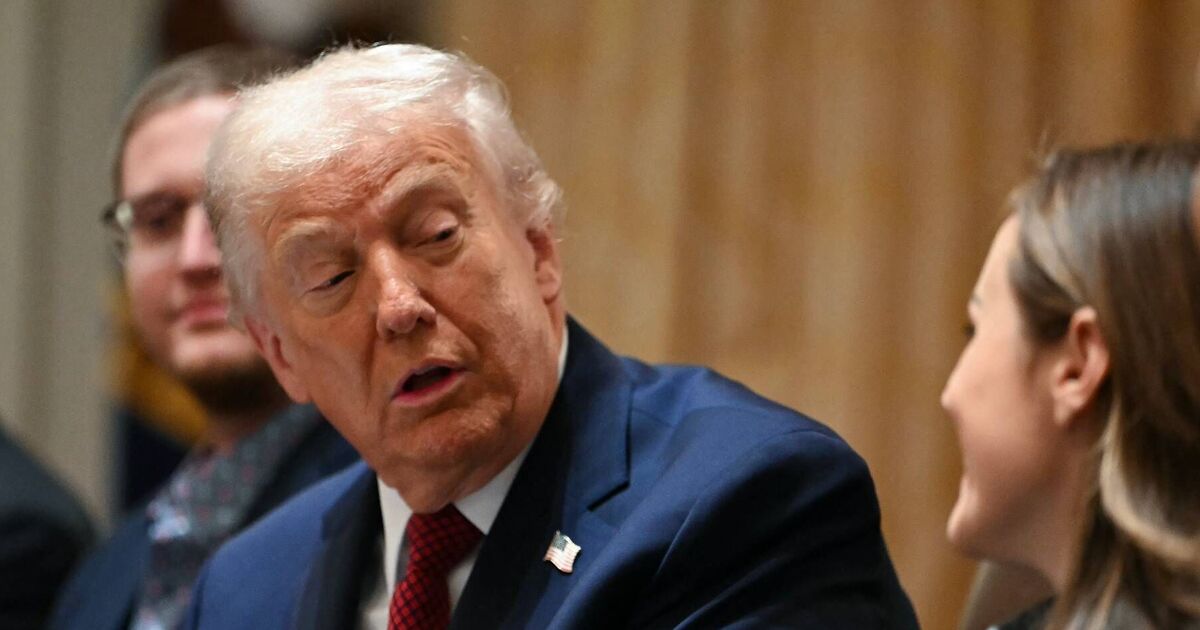
President Donald Trump appeared to become muddled whilst discussing America’s soybean trade with China.
Agricultural producers specialising in corn, cotton, sorghum, soybean, rice, cattle, wheat, and potato were all present at the gathering, where the president unveiled a $12 billion farming support package designed to help embattled farmers market their produce amid escalating expenses following heightened tariffs on China as part of an extensive trade dispute.
Trump said, “I told this to President Xi, our soybeans are more nutritious than competitors. Somebody said, ‘Is that a Trump statement or is that real?'”
He went on, “In fact, you know who asked me that question? President Xi asked me that question. He said, ‘Really? I never heard of it.’ And he was a food purchaser for a long time.”
The comments left many baffled, with numerous users responding to a video clip shared on X branding the entire account “BS. Lmao I hope Xi asked him if that was real or just his usual BS,” one user posted.
“So Trump acknowledges everything he says is unadulterated bulls—…” another responded.
A third user added, “He can’t even make his own lie consistent. He claims he told Xi our soybeans are more nutritious, then claims Xi asked him which soybeans are more nutritious. How does that work?”
This revelation follows a noticeable dip in President Trump’s popularity ratings.
Farmers, traditionally staunch supporters of Trump, are becoming increasingly disgruntled as his aggressive trade strategies and fluctuating tariff rates take a toll on their livelihoods.
Soybeans and sorghum have borne the brunt of the ongoing trade conflict, with over half of these crops exported annually, primarily to China. Since Trump announced the agreement in late October, Beijing has only bought approximately 2.8 million metric tons of soybeans, a mere quarter of what was initially promised by China.
Treasury Secretary Scott Bessent, during an appearance on CBS’ “Face the Nation,” stated that “The Chinese actually used our soybean farmers as pawns in the trade negotiations,” explaining the necessity for this “bridge payment” to farmers.
Trump has also faced criticism over the soaring beef prices. The cost of beef has reached an all-time high due to drought reducing U.S. herds, and imports from Mexico are dwindling because of a parasite resurgence.
In response, Trump announced plans to increase imports of Argentine beef to mitigate this issue.
Trump also put his signature to an executive order over the weekend that instructed the Justice Department and Federal Trade Commission to examine “anti-competitive behaviour” within food supply chains, encompassing seeds, fertiliser and machinery, whilst considering enforcement measures or crafting fresh regulations.
Prior to the gathering, Agriculture Secretary Brooke Rollins declared, “What you’ve been able to do is open those markets up and again, move toward an era where our farmers are not so reliant on government checks, but have the markets to sell their product. Having said that, we do have a bridge payment we’ll be announcing with you next week, as we’re still trying to recover from the Biden years.
“For so long, our farmers, many of them, have been farming for government checks instead of moving their product around the world. These trade deals change that forever,” Rollins said.
Although President Trump has dismissed mounting worries about affordability as a Democratic “hoax,” this relief package seeks to ease the pressure of escalating expenses whilst continuing to champion Trump’s economic leadership.
However, not everyone is convinced by the approach. Mark Read, District 5 director for the Illinois Soybean Association, previously told CNN, “Farmers don’t want free aid. We want free trade.”