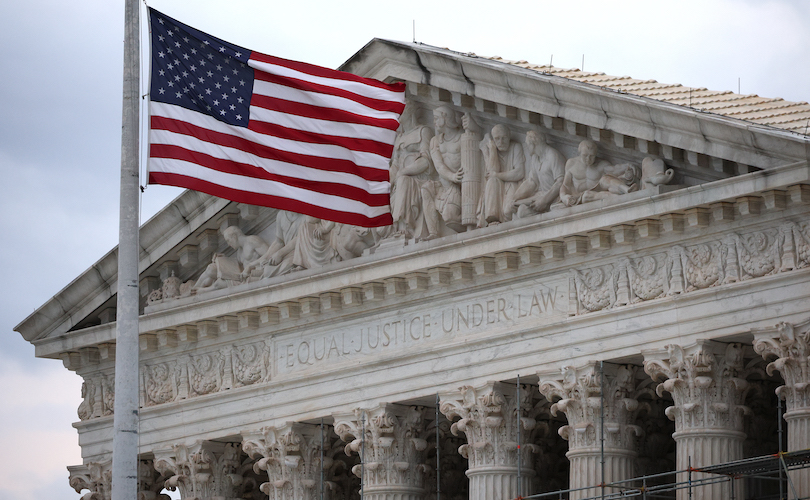
WASHINGTON, D.C. (LifeSiteNews) — The U.S. Second Circuit Court of Appeals must reexamine its decision to allow New York officials to levy massive fines on Amish parents for declining vaccines for their children, the Supreme Court ruled.
On Monday, the Supreme Court asked the Second Circuit to reconsider a ruling that upheld New York’s imposition of vaccine requirements on small Amish schools and, by extension, students. The Supreme Court said the court must reconsider the ruling in light of Mahmoud v. Taylor.
This summer, SCOTUS ruled in favor of a religiously diverse group of parents who said that sexualized school curriculum in Montgomery County, Maryland, public schools violated their religious rights. The school district eliminated opt-outs after an overwhelming number of parents requested them.
That ruling could now clear the way for greater religious freedom rights in other areas of life.
“This case is about the Amish defending their faith and way of life,” First Liberty Institute counsel Hiram Sasser told LifeSiteNews via a media statement. The group is representing the Amish parents fighting hundreds of thousands of dollars of fines.
“It’s hard to say at this time how it may impact others,” Sasser said, when asked about the potential for the Mahmoud case to effect parental consent and vaccines.
There is no clear timeline at this point for the next steps in the case. “We are at the mercy of the Second Circuit and will have to wait on their instructions,” Sasser said.
The New York attorney general’s office did not respond to an emailed request for comment Wednesday about the lawsuit and what steps it took to inform state agencies about the Mahmoud ruling.
New York eliminated religious exemptions, targeted Amish
The case came about after New York officials sought to eliminate all religious exemptions from vaccines, after a 50-year period of allowing them.
“In 2022, the State brought an enforcement action against the Amish Appellants, imposing catastrophic penalties,” First Liberty wrote in a summary. “For religious reasons, the Amish educate their children in private Amish schools and have done so for hundreds of years and without vaccinations.”
The religious freedom group said this case gets to the heart of parental rights.
“The Amish community in New York wants to be left alone to live out their faith just like they have for 200 years,” Kelly Shackelford, CEO of First Liberty stated in a news release. “Who is the authority over our children? Their parents or government bureaucrats? Ultimately, this case will affect every American- their religious freedoms and the authority of every parent to raise their children according to their faith.”
Others have suggested the Mahmoud ruling could lead to a reversal of a widely-criticized 1990 Supreme Court case, Employment Division, Department of Human Resources of Oregon v. Smith.
In that majority opinion, authored by Catholic originalist Justice Antonin Scalia, the court ruled that “generally applicable” laws that may burden an individual’s religious rights are constitutional.
Specifically, Justice Scalia upheld Oregon’s firing of two drug counselors who used hallucinogenic peyote as part of their Native American religion. Though often remembered as a stalwart conservative, Scalia lamented that a ruling in favor of the drug counselors could lead to challenges against “compulsory vaccination laws,” suggesting that such exemptions are a bad thing.
The ruling sparked widespread backlash and led Congress to pass, almost unanimously, the Religious Freedom Restoration Act (RFRA), sponsored by then-Democratic Representative Chuck Schumer and signed by President Bill Clinton in 1993.
Other states followed up with their own state level RFRA laws. The laws put the burden on the government to prove it must violate someone’s religious liberty, instead of there being a presumption that state officials are in the right.
However, Smith is still part of the Supreme Court precedents for states that do not have RFRA laws – for now.
Washington Stand writer Joshua Arnold suggested the latest vaccine decision “may signal interest on the Supreme Court in revisiting its Smith precedent.”
“At the very least, the court order for the Second Circuit to reexamine the case in light of this new precedent signals that the court believes the religious exercise of parents should extend beyond the Mahmoud precedent,” Arnold wrote. “While that case dealt only with education, the court has now ordered the Second Circuit to apply its reasoning to a health care decision as well.”
He said, “the Supreme Court is combining parental rights with the parents’ right to free exercise of religion, reflecting an (accurate) understanding that parental rights are grounded in part on a religious basis.”