C of E racial-justice funding and ‘cis-male supremacy’
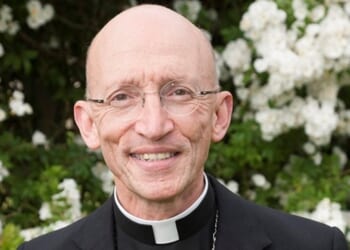
From the Bishops of Kirkstall and Croydon and nine others
Madam, — As members of the newly formed Racial Justice Board of the Church of England, we write to express our deep concern and disquiet over the decisions of the Archbishops’ Council and Triennium Funding Working Group (TFWG) to reduce national funding for racial-justice work significantly over the next three years.
These decisions have been taken and subsequently reaffirmed despite the changing social context in the country over the ten months since the TFWG made its original decision.
During that time, we have seen in our country rising racial tensions, arguably the worst for decades; increasing incidents of racial violence; and the impact of the Unite the Kingdom March. These funding decisions have been made despite overwhelming support from the General Synod for continuing and strengthening the Church’s commitment to racial justice as a long-term priority and the maintenance of current funding levels.
The original allocation of £20 million for racial-justice work during the 2023-25 triennium reflected the Church’s intention at that time to treat this work as long-term and foundational rather than short-term or temporary.
The final report of the Archbishops’ Commission for Racial Justice emphasised that meaningful and lasting change required long-term investment. It also highlighted the fact that many previous attempts to address racial justice in the Church had failed because commitments had not been followed through, funding had been inconsistent, or support had been withdrawn too early. The current reduction in funding risks repeating those patterns.
The highly regrettable decision of the TFWG to reduce funding available for social justice from a total of £22 million to £12 million has been compounded by the lamentable decision of the Archbishops’ Council in December further to reduce the funds available specifically for racial-justice work to £7 million for the next triennium.
This decision will undermine the work of racial justice in the dioceses of the Church of England.
Projects that have only recently started and are just beginning to grow will now face significant issues of sustainability. The Racial Justice Unit will face significant pressures on its capacity and scope, especially in terms of supporting dioceses, monitoring projects, and ensuring that progress is maintained.
It is less than five years since the Archbishops’ Racial Justice Taskforce published its ground-breaking report From Lament to Action, which led to funding for the last triennium. That report identified a catalogue of broken promises over decades and a litany of inaction despite the best of intentions.
We view the decisions of the TFWG and the Archbishops’ Council as a backward movement; shifting from action back to lament, undermining the gains that have been made and frustrating the work of racial justice in the Church.
These decisions signify a deep lack of commitment to this gospel work and miss a vital mission opportunity for the Church of England at a time when it is desperately needed in our country.
ARUN ARORA (Leeds); ROSEMARIE MALLETT; DAVID HERMITT; STEVEN HORNE; GODFREY KESARI; KAARINA LEONG; DOUGLAS MACHIRIDZA; SHEMIL MATHEW; DANIEL MATOVU; NOVELETTE-ALDONI STEWART; NICOLA THOMAS
From the Revd Jae Chandler
Madam, — I have read with interest about the Bishop of Kirkstall’s planned response to Tommy Robinson’s campaign to “Put the Christ back into Christmas”: a poster campaign highlighting that Christ is and has always been “in Christmas”, drawing attention to the fact of Jesus’s refugee and brown-skinned status, with a focus on the Christian call to justice for all. This is laudable, of course, though I note that some are commenting that it is a rather passive response.
I am interested, however, in what lies behind this acute anxiety surrounding Tommy Robinson and the rise of his particular brand of right-wing politics, because it flags up an inherent classism in the Church of England. People like Mr Robinson have been around for decades, talking about exclusion, about refugees, about people of colour, about queers — any and all people who, on their so-say, do not belong and, therefore, need to be cancelled, dismissed, delegitimised, or “go back to where they came from” — all posited as solutions to getting society back to where it “should be” (and it’s always a mythical version of society, at that).
It has taken different manifestations over decades and generations. Not that long ago, it took the form of the English Defence League and football-hooligan firms: the common appeal for white working-class disaffected males easily whipped up into populist right-wing politics. Before that, it was 19th-century marriage reforms, transatlantic slavery, colonialism, the crusades — all expressions of (predominantly) males recruited into exclusionary power-grabs, all of which appropriated the name of Jesus Christ.
It has been easy for the middle-class Church to ignore this for years; but ask any clergy serving in white working-class areas, and they will know the lived realities of this kind of politics and rhetoric. So, why has this now caught the attention of the national Church? I suspect that it is because the rising profile of this movement has now created a more direct and problematic juxtaposition to the Church because its message has seemingly appropriated the name of Jesus Christ.
But Mr Robinson’s is just one in a long line of men and men’s movements that have appropriated the name of Christ for personal, political, economic, or social gain and power accumulation. The issue is not just without: the issue is within. If, as a Church, we continue to harbour and give resources to those within who speak, teach, and act against justice in the form of the full inclusion of women, persons of colour, LGBTQIA+ people, then the flip side of that is, and always will be white cis-male supremacy.
We should not be surprised by Mr Robinson. Rather, we should do the honest inner work of lamenting what we hold, ignore, or promote within the Church and which facilitates this kind of rhetoric — wittingly or unwittingly. The two issues cannot be separated. As long as we foster theologies that exclude and “other” people — people who are who are made in the image of God — then we are not reflecting the body of Christ. Instead, we are complicit.
JAE CHANDLER
Priest-in-Charge of St Mary the Virgin, Henbury, diocese of Bristol
Address Supplied
From the Revd Elizabeth Baxter and 112 others
Madam, — We draw attention to the Archbishop of York’s recent support for White Ribbon Day, and this year’s theme “We speak up”, calling on all men and boys to end violence against women and girls.
We were pleased to hear the Archbishop say: “Every time we ignore something that even doesn’t feel right we miss an opportunity to be an ally to women, to set a good example and to make a culture change. . . this really matters.” He also challenged us to “Speak up to create a world where everyone is safe, equal and respected.”
While the feminine is invisible in liturgical images of God, and the Five Guiding Principles are still firmly in place, we call for our leaders to “speak up” indeed, making the connections between what is being called out through the White Ribbon Day and our own perpetuation of these issues within the Church of England, thereby acting with integrity to change the misogynistic culture of our Church.
This will help to bring about the positive change in the workplace called for by the Archbishop, “calling out behaviours and attitudes, [and] to be ambassadors and champions in these areas and to set a good example and make a culture change”.
In support of this challenge for the Church of England, we will continue to offer our experience and theological perspectives so all members of Christ’s body on earth can flourish without fear of violence.
ELIZABETH BAXTER, Spittal, Berwick-upon-Tweed, and others
Full list of signatories below*
Church Commissioners and arms manufacturers
From Sue Claydon, Jan Benvie, and Sarah Maguire
Madam, — The recent announcement of changes to the Church Commissioners’ investment policy (News, 5 December) has sparked a new debate about how the Church adheres to its policy on defence. The Commissioners’ “Responsible and Ethical Investment Policy” says: “As a faith-based investor we consider our investments in line with Christian values and exclude companies that are active in spaces and sectors which we feel a moral responsibility to avoid.”
The Anglican Pacifist Fellowship (APF) welcomes the continuing exclusion of companies involved in controversial weapons (such as cluster bombs, landmines, and chemical and biological weapons) and the exclusion of oppressive regimes. Companies based in or supplying equipment to “oppressive regimes” are now explicitly excluded from investment, regardless of the proportion of revenue generated. We do, however, wonder how this will be implemented. We know that, once arms are sold, it is impossible to know where they end up (e.g. with the RSF in Sudan).
Our concerns include “Companies involved in the production of nuclear weapons may be considered investable on a case-by-case basis,” so long as they are based in NATO countries. We believe that support for any aspect of the production of weapons of mass destruction is immoral.
The word “defence” sounds reasonable and harmless. “Defence” and “security” are, however, used for an industry that makes vast amounts of money selling weapons whose purpose is to kill huge numbers of people, most of them civilians, including children. A Christian Church should not invest in such an industry.
The APF was founded back in the 1930s to support Christians whose faith would not let them to take part in war. Although Anglicans in the UK today are not faced with conscription into the armed forces, we should certainly not be conscripted into playing a part in the anti-Christian arms industry.
SUE CLAYDON (Chair), JAN BENVIE (Secretary), SARAH MAGUIRE (Coordinator)
APF
March, Cambridgeshire
From the Revd Dr V. Jonathan Hartfield
Madam, — I am disturbed by the Church Commissioners’ new investment policy in relation to arms manufacturers.
In previous years, only companies making ten per cent or less of their revenue from “strategic military sales” could be considered for church investment. There were also restrictions on companies making “controversial weapons” as well as on companies based in “repressive regimes”. The latter two groups are now more clearly defined and continue to be excluded from all church investments.
In the new policy, the ten-per-cent cap has been removed from manufacturers in the UK and certain other countries.
In answering questions about the controversial-weapon group, the Commissioners now consider that investment in nuclear weapons should be legitimate — subject to certain conditions.
They do not have a list of repressive-regime countries, implying that they have no clear criteria for assessment. There was, therefore, a coyness apparent when they were asked whether they intended to invest in Israeli firms.
Over the past year, the sales by the top 100 arms-makers increased by 5.9 per cent and have reached a record high at $1.19 trillion; so investing in arms should be safe, and give a good financial return. But should we, who are committed to loving both our neighbour and our enemies as ourselves, be actively encouraging manufacturers whose products are designed to kill people and destroy structures as efficiently as possible?
It is a complex and important subject, which should be carefully debated by the Church as a whole before any of the proposed new investments are made.
V. JONATHAN HARTFIELD
Whanganui, New Zealand
In response to Lord Biggar and Archbishop Cottrell
From Mr Andrew Purkis
Madam, — The Revd Lord Biggar challenges the expertise of the Archbishop of York in using the word “genocidal” in relation to Israel’s onslaught on the people of Gaza (Comment, 28 November), but then he himself ignores legal expertise and knowledge of the Middle East greater than his own in discussing the issue.
You would not know from his piece that the International Association of Genocide Scholars, the world’s leading academic body in the field, had formally declared, in a resolution in September, that Israel’s policies and actions in Gaza met the legal definition of genocide. Nor would you know that South Africa had brought a case to the International Court of Justice in 2023 alleging genocide. This is still under consideration by the Court, which, nevertheless, identified clear risks of genocide and mandated certain actions by Israel to mitigate and avoid such risks, with which Israel has not complied.
Moreover, Lord Biggar does not mention the meticulous studies by organisations, including Human Rights Watch and Amnesty International, which have documented what, they conclude, are war crimes in different dimensions — studies that make Lord Biggar’s brief DIY sketch look decidedly inadequate.
And, of course, in using wording such as “genocidal”, “ethnic cleansing”, and “apartheid”, the Archbishop is in the company of sundry UN experts and of leading UK charities with strong partner presences and long track records in working with the Palestinian people, and that must have regard to the dictates of charity law: Oxfam, Save the Children, War Child, and others. In comparison with the Archbishop’s testimony based on a personal visit, listening, and presence, Lord Biggar’s contribution is of little value and will fade away like the dew in the morn.
ANDREW PURKIS
(Former Secretary of Public Affairs to the Archbishop of Canterbury)
London SW12
From Sharen Green
Madam, — Lord Biggar quibbles that Archbishop Cottrell is not qualified to pronounce on whether Israel is committing “genocidal acts” in Palestine. Amnesty International, Human Rights Watch, and a United Nations-appointed panel of genocide experts have all classified Israel’s actions as a genocide.
Professor Nick Maynard has borne witness to the deliberate targeting of the genitalia of Gazan teenage boys as reported in Democracy Now on 25 July and at a meeting in Salisbury Cathedral on 30 October. Professor Maynard also said that foreign doctors coming into the strip had baby formula for starving babies confiscated. Gaza’s fertility clinic was bombed, as reported by the BBC on 25 May, and 4000 embryos were destroyed.
And we have all seen pictures of starving babies dying because Israel has been deliberately depriving Gazans of food. We know that upwards of 70 per cent of deaths are among civilians, in spite of Israeli boasts of avoiding civilian casualties wherever possible. It is difficult to see how this is not a genocide.
SHAREN GREEN
Wimborne, Dorset
From the Revd Drs Ian K. Duffield and Alan Billings
Madam, — In reflecting on his recent visit to the Holy Land, the Archbishop of York models a powerful pastoral approach. He asks Palestinians the question asked by our Lord of Mary Magdalene, “Why are you weeping?” He listens closely to what they say, and weeps with those who weep. He then goes much further, however. He does not merely pledge Christian solidarity with them, but moves beyond the pastoral into the political, adopting their highly contentious political language. In doing so, he submits to a common (if beguiling) theological fallacy: assuming that a pastoral approach is adequate for geo-political realities: that what works at the human, small-scale level is appropriate at the macro level. That is a theological misstep.
The Archbishop sought to nuance his use of the language of “occupation”, “apartheid”, and “genocide”; but nuance does not work well in a violent political context, and, as Lord Biggar demonstrates, terms such as “genocidal” are quite inappropriate. The Archbishop has ended up pledging himself (and the C of E?) to supporting the Palestinian cause.
In geo-political terms, Israel–Palestine is part of the conflict between jihadi terrorist totalitarianism and the democratic West.
So, the Archbishop’s misstep is, to say the least, worrying. It is surprising that so many in the West adopt such a prejudiced approach to the only Jewish state and, thereby, ally themselves with anti-Semitic Arab leaders who have dominated the lives of ordinary Palestinians from the appointment of the arch anti-Semite, the Grand Mufti of Jerusalem, in the 1920s to Yasser Arafat’s secular terrorism of the PLO, and to Hamas, Hezbollah, and Islamic Jihad in our day.
Being pastorally supportive of Palestinian Anglicans does not lead to political support of the Palestinian cause. That is to make a dangerous theological-ethical misstep and is why the Chief Rabbi found the Archbishop’s words “irresponsible”.
IAN K. DUFFIELD, ALAN BILLINGS
Sheffield
How to avoid being stuck in a grievance culture
From Wendy-May Jacobs
Madam, — I felt uncomfortable after reading Simon Parke’s piece “Culture of grievance is a threat to society” (Comment, 21 November), although I recognise what he is describing, and, perhaps if we were to meet, we would find ourselves on the same page. I am sure that he didn’t intend this, but he seemed to be telling victims just to get over themselves. And how can he state “Campaigning against injustice can be a moral cause”? Surely, campaigning against injustice is a moral cause.
Our retributive justice system continues to put offenders centre-stage (and, indeed, so does the Church, but that’s another story). The victim is comprehensively sidelined; so it is unsurprising that we are currently experiencing a pendulum swing of rage as abuses of power are increasingly recognised. Anger is a natural and healthy stage of navigating and dismantling the abuse of power, which is the cause of each of the three scandals that he mentions: Hillsborough, Windrush, and Horizon.
I find it more helpful to use the term “person who has been harmed” rather than victim or survivor, which can, indeed, tip into tribalism. We don’t have to get stuck in a grievance culture. If a restorative approach is used, the harmed person is encouraged and facilitated to seek answers to their burning questions from those who have caused them harm. They are no longer forced to fight their corner: they are supported, and their losses honoured. It also gives the “harmer” the opportunity to understand the impact of what they have done, and to seek collaboratively a better way forward.
A restorative approach has a far wider application than in our justice system. Yet, in our criminal justice system, every person harmed by crime is entitled to access to the restorative process. In practice, only one in 20 is offered this. I invite and encourage your readers to sign this petition and get this Kingdom discipline resourced as it deserves: commongroundjustice.uk/petition
WENDY-MAY JACOBS
Portsmouth
*Additional signatories to the letter from the Revd Elizabeth Baxter (with their locations):
Anne Heath: Chelmsford, Anne Smith: Exeter, Anne Watson: London, Charlotte Humble: London, Christine Pratt: Australia, Christine Pressick: Durham, Clive Barrett: Bradford, Dave Pownall: York, David Walland: York, Alison Jasper: Scotland, Erica Beaumont: Blackburn, Sharon Jagger: York, Rebecca Mills: Southwark, Sarah Bennet: Oxford, Elaine Thomas: London, Elsa Lewis: Canterbury, Hilary Cotton: Bristol, Jennifer Stark: Scotland, John Scott: New Zealand, Katharine Salmon: Leeds, Jenny Humphreys: Zambia, Lynne Scholefield: Guildford, Martyn Haley: Exmouth, Mary Cannon: York, Paula Blake: Southwark, Adrian Thatcher: Exeter, Nicola Slee: Exeter, Rachel L. Baines: Bath and Wells, Roger Neill: Peterborough, Romie Ridley: Cambridge, Ruth Lampard: Salisbury, Sally Barnes: London, Sue Cutts: Peterborough, Sue Luckett: Gloucester, Susan J Royce: Ely; Paul A. Smith: Oxford, Alison Green: Salisbury, Alyson Peberdy: Oxford, Angela Birkin: Leeds, Angela Townsend: Guildford, Anika Gardiner: York, Anne Jenkins: York, Anne Stevens: Southwark, April Keech: London, Bonnie Evans-Hills: Scotland, Brenda Wallace: Chelmsford, Sheila McLachan: Canterbury, Bryony Taylor: Derby, Cathy Milford: Bradford, Cynthia Dowdle: Liverpool, Dianne Gamble: York, David Bruce Bryant-Scott: Crete, Elizabth Shercliff: Manchester, Lisle Ryder: Carlisle, Marilyn Sharland: Gloucester, David Jasper: Scotland, Robert Cotton: Bristol, Theresa Scott: New Zealand, Wendy Wilby: Leeds, Catherine Dyer: Salisbury, Charis Enga: London, Christine Polhill: Lichfield, Cristine Sindall: Newcastle, Clodagh Ingram: Wales, Jenny Morgans: London, Lesley Hardy: Canterbury, Mary Kells: Canterbury, Paul Smith: Oxford, Sarah Schofield: Lichfield, Elisabeth Hawkes: York, Eve Bell: St Edmundsbury & Ipswich, Fiona Eltringham: Durham, Fiona Souter: St Albans, Gabrielle Ayerst: Newcastle, Georgia Ashwell: London, Helen Rengert: St Edmundsbury & Ipswich, Heston Groenewald: Leeds, Hugh Lee: Oxford, Imogen Vibert: Southwark, Isobel Rathbone: Bradford, Jacqueline Vasquez: Liverpool, Jeanette Rosemary Peirson: Leeds, Jenny Webb: Ely, Joy Hance: Coventry, Judith Roberts: Southwark, Kate Lovesey: Chelmsford, Katharine Rumens: Salisbury, Keith Magee: Salisbury, Kristin Breuss: London, Lindsey Pearson: York, Lisle Ryder: Carlisle, Liz Crumlish: Scotland, Lizzie Hopthrow: Canterbury, Lucy-Ann Ashdown: Exeter, Lynda Randall: Peterborough, Margaret Evans: London, Marion Gardener: York, Martine Oborne: London, Mary (Di) Hervey: Shetland, Michael Taylor: Portsmouth, Nicki Caines: Lichfield, Pat Dickin: Birmingham, Pat Fuller: Newcastle, Paula Challen: Peterborough, Pauline Shelton: Lichfield, Peggy Jackson: Winchester, Philippa Boardman: Southwark, Kathy Roberts: Exeter, June Boyce-Tillman: Southwark, Stephen G. Wright: Carlisle, Rebecca Amoroso: Oxford, Rosemary Enever: Exeter, Ruth Harley: Newcastle, Sibylle Batten: York, Simon Talbot: Norwich, Sue Booys: Oxford, Sue Hammersley: York, Wendy Saunders: Norwich, Tina Nay: Chichester, Tina Pownall: York, Victoria Peattie: Chichester
The Editor reserves the right to edit letters.