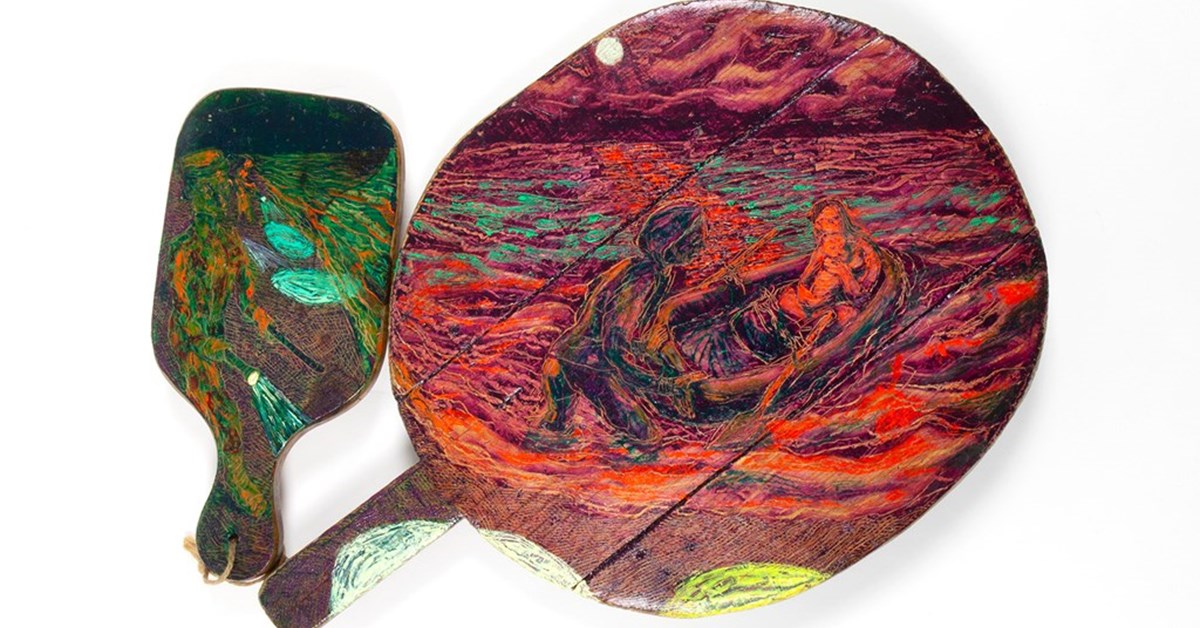
TWELVE Advent Stations are composed of sonnets rendered calligraphically and read by actors, alongside paintings on assemblages formed by domestic utensils; they form a circular journey, the last word of each poem featuring in the first line of the next, echoing the annual repetition in the church calendar, of which Advent is the beginning; and they cover conception, John the Baptist, annunciation, Bethlehem, birth, shepherds, Magi, massacre, flight, return, Simeon and Anna, and Trinity.
These Stations — created by the artist Mark Cazalet, the calligrapher Pansy Campbell, and the poet Richard Leaf, all members of the congregation of St Martin’s, Kensal Rise, where the Stations were first shown — had their own conceptions in Leaf’s sonnets, which then found complementary expression in Cazalet’s art, Campbell’s calligraphy, and the actor’s readings.
Leaf also adds reflections and reflective questions to prompt deeper imagining in viewers as they journey with the artists’ work. The complementarity of different perspectives on related and interwoven creations opens space for contemplation and imagination by way of response.
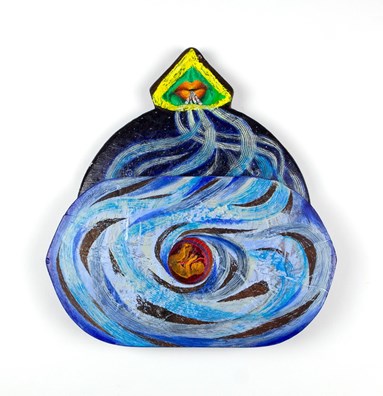 Chelmsford CathedralAdvent Station 1, on the theme of the breath of God in creation
Leaf’s poems and Cazalet’s images frequently refer to contemporary matters, including consumerism, homelessness, and migration. Campbell’s design decisions and carefully creative use of colour as background or highlight enhance words and phrases, to make the texts sing not just as words on paper, but as visual delights.
Cazalet’s use of domestic culinary objects as bases for his paintings offers a constant reminder of the wonder of incarnation: God moved into our neighbourhood to be with us in all our everyday experiences of joy and sorrow. Having appreciated, since his 1994 Cork Street exhibition “The Path to Calvary”, the way in which the sacramental impulse runs through everything Cazalet makes, I enjoyed seeing these images, which connect with that earlier exhibition in concept, style, and colours that zing.
At the beginning of these Stations, we are reminded of creation as involving speaking and seeing. A mouth of God breathing life into being is placed where the all-seeing eye of God would normally be located. New life in the relationship of Zechariah and Anna involves both hearing and muteness. The wind, or breath, of God blows through the experience of barrenness, with God as sonographer.
As we move through the Stations, the story of God’s arrival in the world is retold as witnessed and experienced by ordinary people, which brings the nativity into sharp focus, making it feel immediate and relevant to the world today.
The Stations themselves are set against contemporary realities: the innkeeper is primarily aware of commercial opportunities; the figure of Herod is reimagined in the likeness of today’s self-centred leaders who dominate our media; the harsh reality of people forced to flee violence, and the patient hope of aged folk waiting for miracles, reflect the distressing headlines about our world.
While there are many connections and insights to be discovered throughout the cycle, through the interplay of word and image, the strength of this collaboration is realised most fully in the final, culminating Station, which reflects on the revelation of the nature of God as found in the stories of Advent.
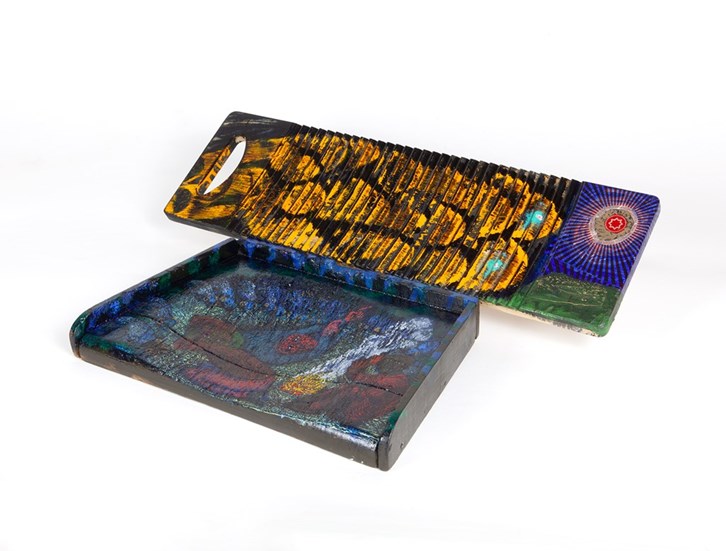 Chelmsford CathedralThe shepherds and the star, by Mark Cazalet
Leaf leads with reflection on the diverse names of God and revelation found in scripture and in nature. Campbell sets within Leaf’s text a band of gold wash, containing a gold Möbius strip on which are written the words Father, Son, and Holy Spirit. Cazalet adds an image of a mistle thrush among gold-flecked leaves greeting the dawning of a new day. Located by the altar and in sight of his Tree of Life, a permanent commission at Chelmsford, this work has added resonance in this space.
Chelmsford Cathedral is a treasure chest of contemporary art with, in addition to Cazalet’s own commissions, works by Peter Eugene Ball, Beryl Dean, Georg Ehrlich, John Hutton, Thomas Bayliss Huxley-Jones, and Sister Gabriela. These Advent Stations, sensitively positioned among the cathedral’s treasures, enhance deeply the space, our Advent reflections, and our journey through Advent to Christmas, Epiphany and Candlemas.
The Dean, the Very Revd Dr Jessica Martin, sums up well the experience offered by these Stations: “The Advent Stations invite you to see, from an intimate, personal, yet also uncanny, space, the workings of God in the life of a young family dealing with the threats of an unpredictable and often violent world. They are defenceless and yet visited by angels, weak and yet blazingly joyful, uncertain and yet enduringly faithful. It’s unflinching in its view of the cruelties that the vulnerable — those without power and influence — face in our world, but it manages at the same time to be full of joy and hope, and even a kind of exuberance in its colour and variety of media. Seeing it is not just coming to look at an artwork. It is an encounter.”
The “12 Advent Stations” are in Chelmsford Cathedral until 2 February 2026.