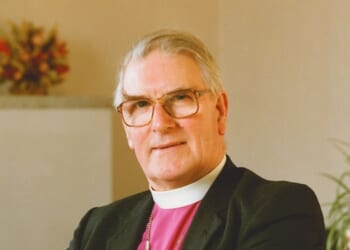
The Rt Revd Stephen Platten writes:
“MY PARENTS got their timing wrong. They conceived me in June 1939, three months before Herr Hitler declared war on Britain. I had three months of bliss in the womb before their lives, and mine, were shattered.” So begins Ray’s autobiography, written, as those first three sentences indicate, in his inimitable style. You never knew what might follow. His intercessions at morning prayer in Berwick Parish Church would leap from world affairs to a note on Trump’s latest enormity, and then to the baptism of a sick child the coming Sunday, and finally to the persecution of a minority somewhere in a place that he knew or where he had served.
Born in Aylesbury and brought up in Woking, in Surrey, he went to the local junior and grammar schools, and to Sunday school at Woking Methodist Church. There “he knew not the Holy Spirit”; so his parents allowed him “to cease attendance”. But, he liked the sense of liturgy and history in the Church of England; so that became his Church. Later, now in Sussex, his father had bought the Burlington, a café, of which, after his father’s breakdown, Ray became de facto manager. After visiting a friend at the London College of Divinity, he enrolled himself and trained for the priesthood.
Next came finding a parish. Basil, a friend, who belonged to Moral Re-Armament, was a priest in Longton, in Stoke-on-Trent; so off Ray went to be his assistant curate. It was, he said, “low-church”. From there, he went to Upper Tooting, in south London. This parish had a Cuddesdon-trained priest and so was Catholic in style — Ray was keen on colour in worship. After this came work for the Bible Society, living in a “posh house” at Thorpe End, in Norwich. His given task was to bring change.
Life was never dull for or with Ray. When he received a letter from Maurice Wood, then Bishop of Norwich, asking if he would serve as the first minister in a newly built, largely social-housing, suburb of Norwich, Ray said yes. His 20 years there were transformative for the community. Bowthorpe was not an obviously fertile field for the Church of God. New communities in freshly minted estates with significant numbers of people less well-off and less-privileged are notoriously difficult and specially for the spread of the gospel. Ray tagged Bowthorpe as a “dream community until humans moved in”. His work is still remembered, as Sally, his sister, who still lives within the heart of that place, will testify.
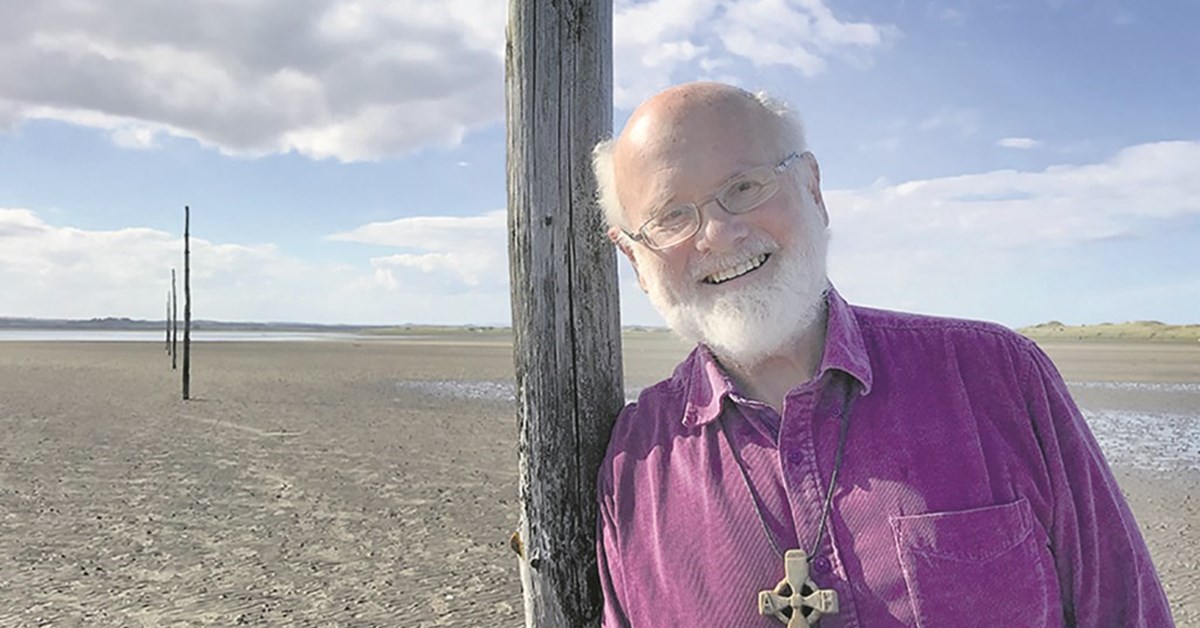
Then, yet another challenge came. Christ would not let Ray go. He spent Christmas on Lindisfarne in 1987, leading to his next venture: “There I knelt on the cold ground and offered up the island, the nation, and the Church to God.” Here was the birthing of the Community of Aidan and Hilda. Penny Warren, the Members’ Guardian of that community, reflects: “The gift that Ray gave was huge in its implication and so simple in its accessibility — to live simply, with a way of life and a daily rhythm of prayer, following the example of the Celtic saints, always in the company of a soul-friend/spiritual director.” The community continues now worldwide.
In his retirement in Berwick-upon-Tweed, little was different. Here, Ray wrote the last of his 40 books, many touching on the Celtic way as he saw it. Four of us prayed together every morning until his move to St Barnabas’s, Lingfield, six months before he died. As ever in Ray’s life, we were a motley crew, and were all retired: a Tyneside Reader, a Roman Catholic accountant, an Anglican bishop, and Ray.
No matter what your provenance, Ray’s influence was transformative. His penultimate paragraph in his autobiography is a sort of “sign-off”. So, “We must disintegrate, our God-given uniqueness will not be extinguished — we will joy in the oneness of self-aware souls with the One who fills all.”
The Revd Raymond Simpson died on 24 September, aged 85.