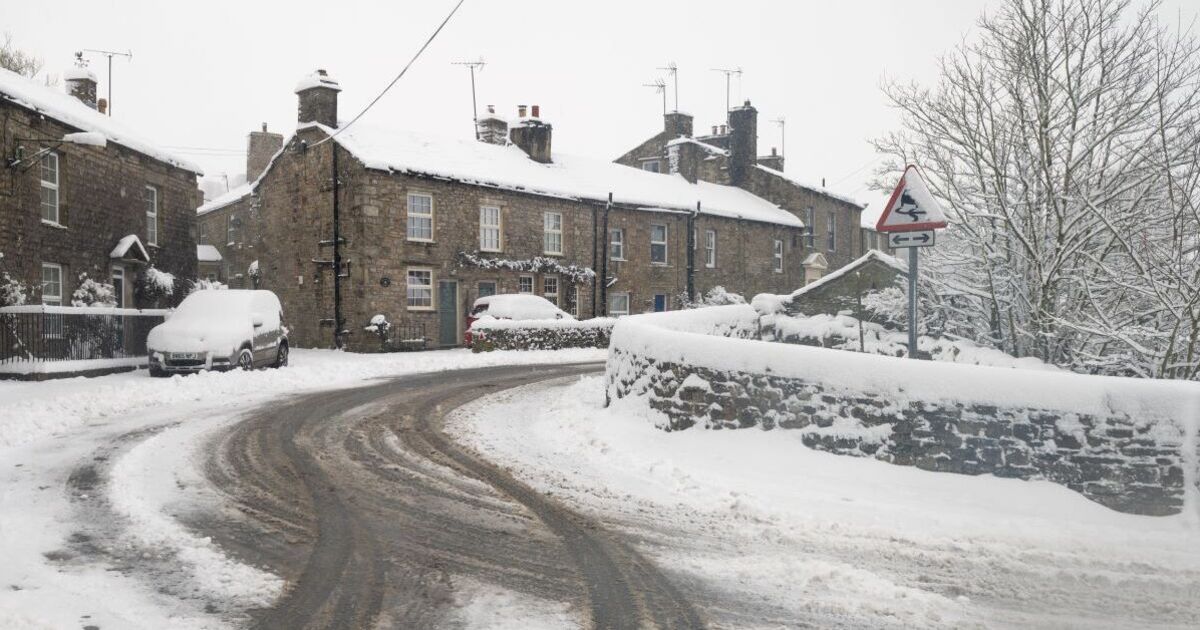
Snow is heading for the UK, with several towns set to be blanketed. As winter approaches, Brits can expect to experience colder weather.
Latest maps from forecaster WXCharts indicate that on Friday, December 19, some parts of the UK may experience snowfall. At midnight, maps show snow in the Lake District and north of Glasgow in Scotland. While most of England looks to avoid the snow, it also seems there won’t be much rain either. Large swathes of England will remain dry with only patches of rain to be seen along the south east coast, the Lake District and Devon.
As for Wales, there will be some rain along the coast, with most areas remaining dry.
At 6am, snow will only be seen in the Highlands, including Glencoe, Fort William, Aberfeldy, Port Appin and Oban. Large swathes of Scotland will see rain, with this not impacting the east coast. As for England, there will only be tiny patches of rain across the country. These will include Clovelly and Hartland in Devon and the Lake District in Cumbria.
By 9am, snow will be restricted to Scotland with more smaller patches showing on maps. The maps show snow could be seen in Edinburgh, Dunfermline, Stirling, Falkirk, Livingston, Ayr, Kilmarnock and Ullapool. England, Wales and Northern Ireland will not see any snow but will again see rainfall. Temperatures will reach lows of 0C in Scotland.
Separately, the Met Office predicts: “Showers or longer spells of rain are likely to continue at first for many parts of the country, perhaps heavy at times, but gradually over the weekend the weather is expected to become more settled.
“Scotland and Northern Ireland are likely to see this change first, with spells of rain perhaps slower to clear further across the south.
“Into the following week, high pressure is expected to become more widely established.
“Winds will be light and clearer skies are likely, however this does not rule out the odd shower, especially around coasts.
“High pressure and settled weather will result in temperatures falling to closer to average, with overnight frosts and morning fog which could be slow to clear.”