Canon David Nason writes:
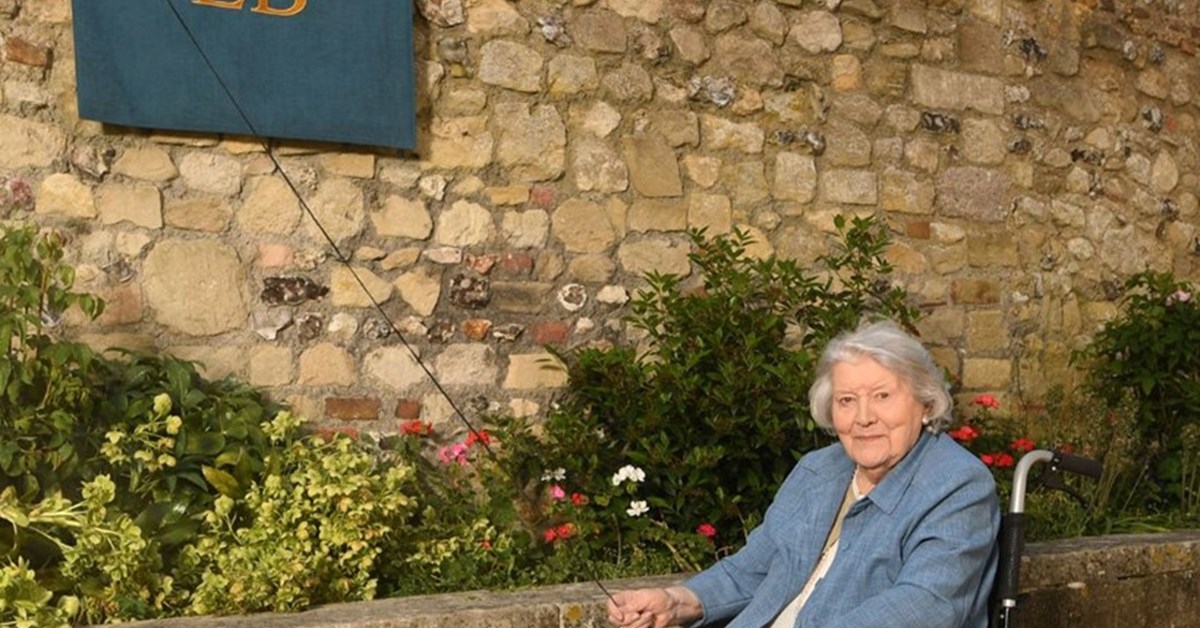
DAME PATRICIA ROUTLEDGE, who died on 3 October, aged 96 (News, 10 October), could rightly be described as a National Treasure, but perhaps more correctly as an International Treasure, as she found out when visiting Barbados at the height of her fame as Hyacinth some years ago.
Looking forward to two weeks relaxing in the sun where no one would know her, she went on the first morning to the bank to cash some travellers’ cheques to be greeted by a smiling Barbadian face enquiring. “Are you the lady of the house?” When talking about Keeping Up Appearances she would often joke. “They tell me that I am very big in Botswana and now I am even bigger in the Balkans.”
It is true that the adventures of the snobbish Hyacinth and the long suffering Richard are broadcast and admired all over the world, with Mrs Bucket (pronounced “Bouquet”) even dubbed, speaking in the local language. She had an ambition to find a Chinese version, but never managed it. This world-wide appreciation was evidenced by the great number of letters that she received telling remarkable stories of how she had helped the letter-writer face and overcome difficulties and illnesses in their life.
It is true that Hyacinth Bouquet was responsible for Patricia’s world-wide fame, but behind it all was many decades of acclaimed performances of plays and musicals, not only in the West End and throughout the UK, but also on Broadway. Pennsylvania 1600 was a musical written by Leonard Bernstein with lyrics by Alan Jay Lerner especially for her. Sadly, it was not a success, but the critics acclaimed her performance as eight of the First Ladies to be its only saving grace.
Behind the public persona was a very private person. Despite the wealth that a popular television series brought her, Patricia lived modestly and donated a large portion of her income to the Patricia Routledge Foundation, a charity that she set up in 1999. At a recent meeting of the trustees, it was announced that since its inception the charity had given donations of three and a quarter million pounds; and, of course, her philanthropy will live on after her death, as the Foundation will continue to alleviate suffering and to support young actors and singers.
At the beginning of 2025, Patricia was invited back to Birkenhead to receive the Freedom of the Wirral. She acknowledged this to be one of the highest accolades afforded to her despite all of the acting and comedy awards that lined the shelves at her home. Although she had travelled the world and been fêted in countries as far apart as Australia and the United States, she never forgot her roots in Tranmere, where she was born and brought up.
During the visit to Birkenhead to receive the Freedom, she visited her old schools and also Prenton URC, which she had attended, when it was Prenton Congregational Church, from a very early age. It was here that the seeds of her faith were planted, and where she taught in the Sunday school and sang in the choir. It was to be a faith that never left, her although she was always quick to acknowledge passing through the night of doubt and sorrow.
Her spiritual home became Chichester Cathedral. It was here, over the past forty years, that she found solace and reassurance through the regular pattern of communion and choral evensong. She always found it difficult to equate a loving God with all the suffering that is allowed to happen in the world, a dilemma that many have struggled with.
Patricia will be greatly missed as a faithful friend, which she most certainly was; but those of us who were close to her are heartened by the fact that her talent will be appreciated for many years to come by future generations, thanks to the enormous library of her performances captured on film and video. Also, many will continue to benefit through her Foundation from her philanthropy and her desire to alleviate suffering in all its forms.