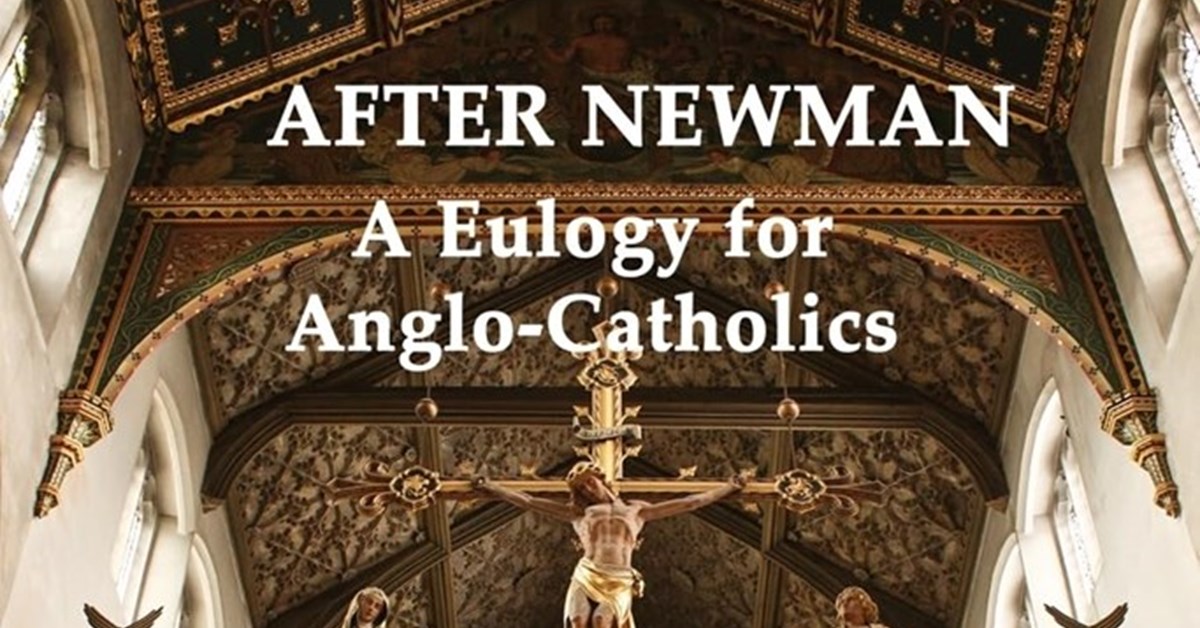
I GREATLY enjoyed reading Aidan Nichols’s After Newman: A eulogy for Anglo-Catholics 1845-1965. But I slightly felt, like Mark Twain, that the report of my death was an exaggeration.
Nichols introduces his work with characteristic precision, reminding us of the distinction between a eulogy, which is an encomium of praise, and an elegy, which speaks of the dead. He is right to observe that the vision and energy of the Oxford Movement’s transformative effect upon the Church of England is now of a different order. But I am not persuaded that the corporate life that he describes is no more.
Generations of students emerging from the St Mellitus brand of theological training tell me how much they value “generous orthodoxy”. They are sincere about this, but it is not exactly clear what the term means. For want of a better definition, I think of it as a real but vague apprehension of something of value which we have misplaced. It is not dead. It is lost from sight. The knowledge that it exists does, none the less, stir some inchoate sense of longing.
In that longing there is little sense that what we have lost is not a series of propositions, but a way of being in Christ individually, corporately, and sacramentally as the Church in this time and place, which is enriched, informed, and shaped by the Church in every time and place.
Nichols undertakes with generous affection the task of presenting this life as intrinsic to the character of the Church of England and those Provinces of the Anglican Communion which, in increasingly divergent ways, derive their ecclesial life from it.
He does so for the benefit of his Roman Catholic brothers and sisters, against the backdrop of the pontificate of Pope Francis and the intention declared by Pope Leo XIV of following a similar path that addresses communication of the joy of the gospel to an increasingly divided and unhappy world.
This Eulogy is a compendium of disciplines. We have the social, intellectual, and political analysis of history in chapters that plot the significance of Newman for the Tractarian generations. This helpfully suggests why Newman has recently been declared a Doctor of the Church.
We also have a series of short and insightful social biographies in chapters that bring into focus the theologians who establish a remarkable tradition of Anglican theological learning that is liberal in its vitality and curiosity, while at the same time nurturing a sense of going deeper into a living tradition. One example is a priest from the diocese or Chichester, John Mason Neale. Discovery of the theological richness of Eastern hymnody transforms his vision of how the Daily Office helps us to see time redeemed as it narrates salvation.
The later chapters address the impact of Anglo-Catholicism under a series of headings that explore the emergence of the religious life, engagement with social conditions, art and architecture, literature and music, and mission at home and overseas.
There are some jolts in the narrative. The great leaders seem uniformly to come from public schools and Oxford or Cambridge. Most of them are male. We get little sense of their emotional lives, or why in the second half of the 20th century other influences eclipsed them.
None the less, Nichols presents a thoroughly scholarly and respectful eulogy. Perhaps the Church of England has greater need of it than has the Roman Catholic Church. Perhaps it will encourage the Anglo-Catholics of The Society to reassess our continuing contribution to the ecumenical challenge that he poses: the formation of a strong Western Catholicism, patriarchally unified, yet denuded of hyper-papalism, and leavened by a strong sympathy with the Orthodoxy of the East.
To the poor, dispossessed, bored, and anxious men, women, and children of this age, here is the outline of the humble, compassionate, synodal Church Catholic that Pope Leo sees as serenely alive to Jesus Christ, who holds our memories and our future, and who offers us hope for today.
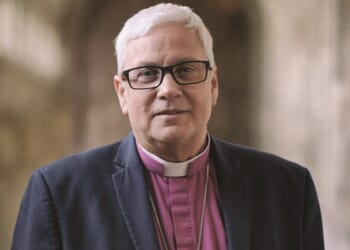
Dr Martin Warner is the Bishop of Chichester.
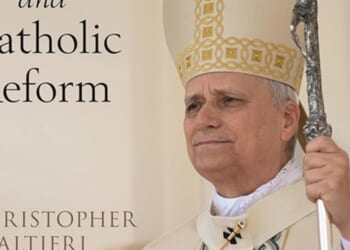
After Newman: A eulogy for Anglo-Catholics 1845-1965
Aidan Nichols
Gracewing £20
(978-0-85244-788-8)
Church Times Bookshop £18