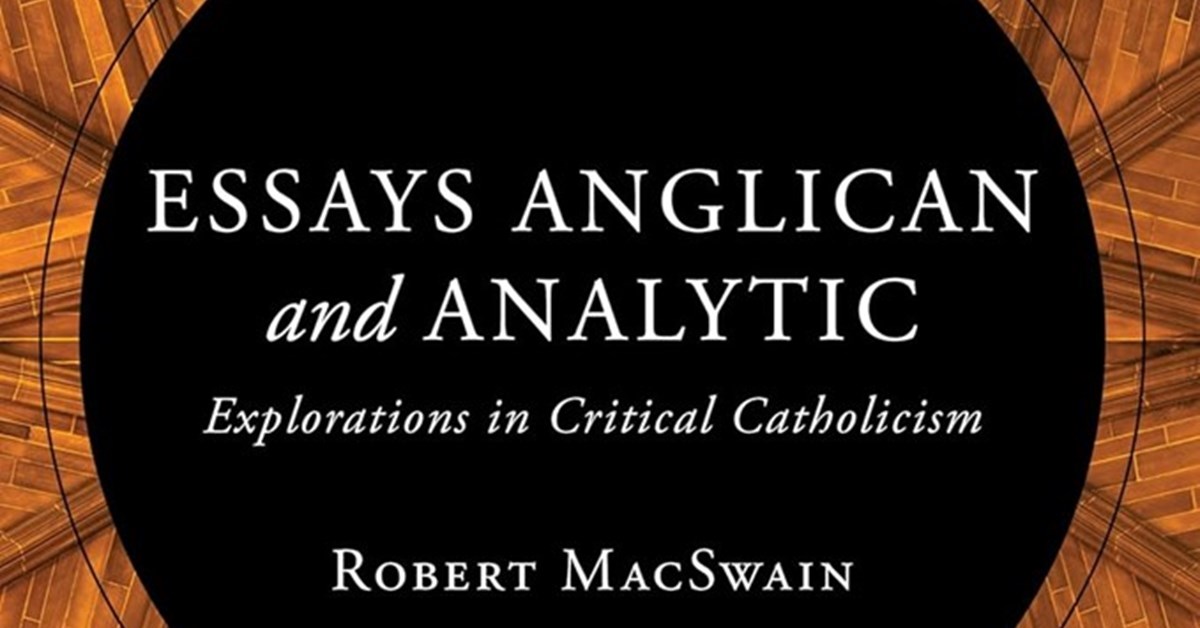
TRACING a golden thread through Anglican philosophical theology from Austin Farrer to David Brown, this compilation of pre-published essays makes a case for Critical Catholicism as a discrete movement related to, but distinguishable from, the more familiar principles of Anglo-American analytical philosophy — see Phil Wilson’s Introducing Analytical Theology (Books, 13 June).
The essays are arranged in order of publication, which serves the autobiographical overlay as Robert MacSwain, Episcopalian priest and theology professor in Tennessee, expounds his personal, vocational, spiritual, and theological development informed by successive mentors and influencers. The common denominator is that the essays “all deal with Anglicans who wrestled with how to respond to the powerful challenge that analytical philosophy presented to traditional Christian beliefs and practice”.
Some, such as Ann Loades, Sarah Coakley, David Ford, and David Brown are British and no strangers to the pages of the Church Times, while Stanley Hauerwas, Diogenes Allen, and Eleanor Stump are MacSwain’s compatriots. From further back, Austin Farrer, C. S. Lewis, and William Alston complete the roster of those who have influenced his journey of faith and theological/philosophical reflection, and especially his evolving formulation of Critical Catholicism as a contributor to Anglican studies.
It is to this evolving resource that MacSwain turns as he coalesces Anglican philosophical theology with the principles and practices of analytical theology in these essays. His preferred version contrasts with Anglo-American analytical philosophy. Rather, his approach is that associated with Basil Mitchell, and owing a debt to Farrer. This version is “Anglo-Catholic Anglican, paying attention to the historical roots of concepts, allowing for the possibility of ‘open’ concepts, and being especially aware of contested concepts, making ample use of parable and apt metaphor”.
MacSwain sees Farrer’s methodology as characteristically Anglican along those lines, and he provides instructive accounts of Farrer’s influence on Lewis, Hauerwas, and Allen. Farrer’s influence on MacSwain is exemplified by a chapter on how human holiness amounts to a hagiographical argument for the existence of God.
Of particular interest are chapters focusing on, respectively, contemporary Anglican systematic theology, reason, biblical interpretation, and sacramentality, engaging with Coakley, Ford, Joseph Butler, Stump and, in each case, Brown, with whom MacSwain studied in Durham and Aberdeen.
For example, a chapter focuses on David Brown’s and Eleanor Stump’s respective approaches to the interpretation of scripture. Both, to varying extent, belong to the Anglo-American analytical tradition, and contend that “nonhistorical” does not automatically equal “untrue”. The resulting interpretations of e.g. Abraham and Isaac, Job, and the relationship between Mary Magdalene and Mary of Bethany are certainly imaginative.
The Conclusion whets the appetite for MacSwain’s forthcoming monograph explaining the implications of Critical Catholicism for current forms of liberation and contextual theology, and he underlines his contention that: “although undoubtedly rather conservative in its firm commitment to a triune and incarnate deity, catholic order, formal liturgy, and sacramental realism, such Radical Catholicism is both theoretically and practically poised to learn radically new truths about God, humanity, and creation from any source whatsoever, including imaginative and artistic ones. It could thus potentially provide Christian theology a helpful way forward that avoids some of the limitations of other methodological approaches”.
It could, but whether it does, readers can judge for themselves. As an alternative to Radical Orthodoxy, it is certainly an enticing proposition.
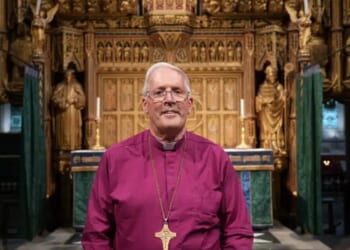
The Rt Revd Dr John Saxbee is a former Bishop of Lincoln.
Essays Anglican and Analytic: Explorations in critical Catholicism
Robert MacSwain
Eerdmans £22.99
978-0-8028-8311-7
Church Times Bookshop £20.69