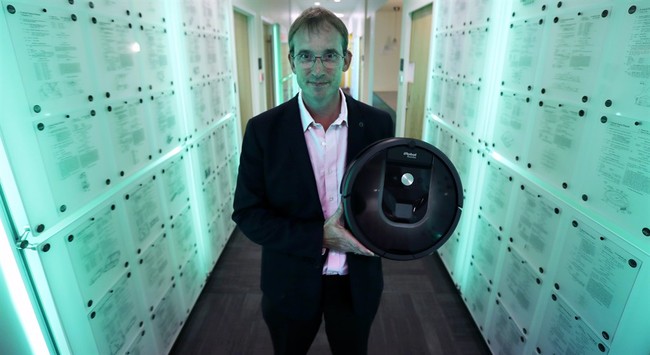
Here’s another one for the “unintended consequences” file.
iRobot, originally founded by tech entrepreneur Colin Angle and the company that makes the famous Roomba robot vacuum cleaner, recently sought to be acquired by Amazon. The FTC blocked that acquisition, citing antitrust policies. Now iRobot has filed for Chapter 11 bankruptcy and may well be sold to a Chinese concern, instead.
Does that strike anyone as a bad idea?
iRobot, the maker of the Roomba vacuum cleaner, filed for bankruptcy protection on Sunday and is pursuing a buyout from its primary manufacturer in China after the company’s acquisition by Amazon was blocked over a year ago on antitrust grounds.
iRobot first raised concerns about its ability to remain in business in March and filed for Chapter 11 bankruptcy protection in a Delaware bankruptcy court on Sunday as it faces competition from lower-priced rivals and new U.S. tariffs. It now plans to go private after its purchase by Picea Robotics, a China-based firm that is its primary manufacturer.
The bankruptcy filing follows the termination of iRobot’s proposed $1.4 billion acquisition by Amazon, which was abandoned in January 2024 amid a probe by the Federal Trade Commission (FTC) – led by Lina Khan – and European regulators. The FTC’s antitrust investigation was focused on Amazon’s ability to favor its own products over its rivals.
iRobot co-founder and former CEO Colin Angle told FOX Business in an interview that the FTC’s decision to oppose the merger struck him as “wrong-minded” and harmful in retrospect.
Of course, it’s wrong-minded! Granted, one wouldn’t think there would be much risk in the sale of a company that makes robot vacuum cleaners to a Chinese concern, but think about that for a moment; even the sale of a rudimentary robotics platform may lead Chinese engineers, most of whom are better at copying than innovating, down some unanticipated paths. It’s not as though this couldn’t be anticipated; Picea is, after all, already building the Roomba, and that’s part of the problem iRobot is having.
At least it’s not robotic taxis, but even so, it’s a bad idea.
Read More: Woman Delivers While Riding in Self-Driving Robotaxi in San Francisco
California 2025: Massive Blackout Hits San Francisco Leaving Waymos Stuck at Intersections
Mr. Angle had this to say about the deal:
“I bet if you asked almost anyone prior to the blocking of the deal with iRobot: Would you rather see iRobot innovating like crazy, coming out with new and better robots for your home, or would you like to see it file for Chapter 11 in the process of being sold to a Chinese manufacturer?” he said. “The wrong thing probably happened.”
Yes, the wrong thing happened.
I’m not a knee-jerk opponent of antitrust laws. There are cases where one wouldn’t want any one corporate octopus to have its tentacles in too many corners of the economy. Many would argue that Amazon is creeping up on that status. However, those cases of near-monopoly are almost always enabled by some branch or level of government, in one of those infamous back-room, Clintonesque deals. But for the luvva Pete, can someone interject a little good sense into this matter?
Option One: Have Amazon buy a struggling robotics company and fold it into its portfolio.
Option Two: Deny Amazon’s purchase, and have the company instead be sold to a Chinese company.
There’s the other problem, as well: The Chinese company is already the primary manufacturer of the Roomba. Tariffs on Chinese-made goods are hurting sales of the device. But perhaps Amazon, the senior management of which company is literally swimming in money, could have onshored production and made the whole thing profitable.
The transaction isn’t completed yet, of course. But as it stands right now, it sure looks like some folks at the FTC didn’t think this thing through.
Editor’s Note: Do you enjoy RedState’s conservative reporting that takes on the radical left and woke media? Support our work so that we can continue to bring you the truth.
Join RedState VIP and use the promo code MERRY74 to receive 74% off your membership.