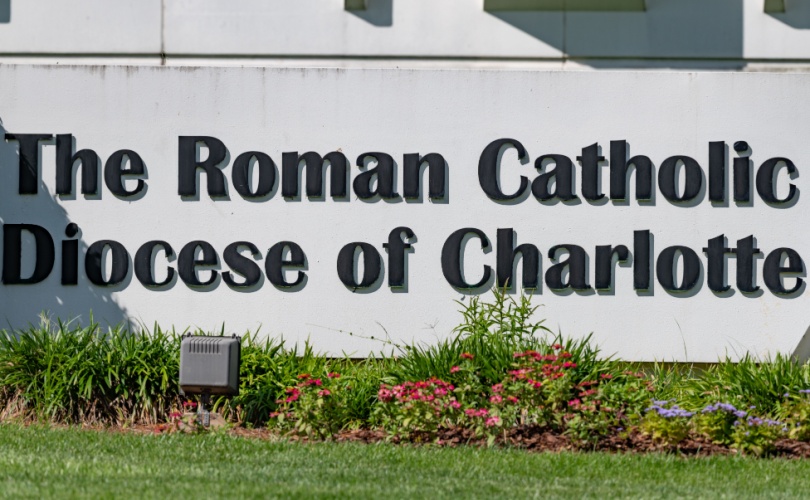
CHARLOTTE, North Carolina (LifeSiteNews) — The Diocese of Charlotte under Bishop Michael Martin, OFM, plans to add an extra “pastoral year” to its seminary formation that will require seminarians to work in Catholic schools full-time while largely living as ordinary laymen, beginning the next academic year.
The changes to priestly formation, announced in a December 15 email memo obtained by The Pillar, will require seminarians to spend an additional “pastoral year” in between their required philosophy and theological studies, teaching full-time at local middle or high schools, purportedly to experience the daily challenges of the lay faithful they hope to shepherd as clerics.
During this “pastoral year,” each seminarian will have a “lay mentor” and receive full pay and benefits, but they will be required to pay bills out of their teaching salary, apparently in addition to paying for an extra year of tuition, and they won’t be permitted to wear clerical garments.
The changes to seminary formation are just the latest changes made to the diocese by Martin who has heavily restricted the celebration of the Traditional Latin Mass (TLM) and even banned the use of communion rails for Novus Ordo Masses.
READ: Charlotte bishop officially bans altar rails for Communion as of January 16
This pastoral year will be an opportunity for those seminarians “who have little working experience to take on the demands of a full-time job, paying bills, and learning how to manage the elements of daily life that the people in our parishes have to balance all the time,” the memo said.
The memo added that the goal of this pastoral year is to allow “sustained and substantial time in pastoral ministry in a way that the assignments given by our seminaries simply cannot provide.”
Clergy in the Diocese of Charlotte CALL OUT Bishop Martin’s new seminary formation rules. pic.twitter.com/BoybENFiHl
— Sign of the Cross (@CatholicSOTC) December 22, 2025
One anonymous diocesan priest told The Pillar the additional pastoral year is “bizarre.”
“(The program is) adding another year to the (seminary) formation for something that doesn’t seem to be directly applicable to priestly life and ministry,” he said.
Some faithful have also noted concerns that these men are likely unqualified to teach before they begin their theology studies.
Some comments abt the Pillar’s Charlotte seminary report say “men with 4 years of theology study should be able to handle teaching HS,” but this is incorrect. The plan is for them to teach BEFORE studying theology. They will have taken max 2 years of philosophy, some less. pic.twitter.com/ih3JuusV2b
— Christopher Anadale (@ChrisAnadale) December 21, 2025
The Diocese of Charlotte did not respond to LifeSite’s multiple requests for comment on the new seminary requirements by publication time.
The seminary changes are just the latest changes Martin has made since being installed as the bishop of Charlotte in 2024. Earlier this year, Martin set off a firestorm of controversy when he merged the diocese’s four Latin Masses to just one small Little Flower chapel 40 miles from downtown Charlotte, which purposely cannot accommodate all the faithful who wish to attend the TLM.
READ: Faithful pack Charlotte Latin Mass on first Sunday since restrictions took effect
Within the last week, Martin officially ordered that all altar rails and kneelers no longer be used for the reception of Holy Communion at all Novus Ordo Masses by January 16, 2026. He also ordered churches to remove all “temporary or movable fixtures used for kneeling” for Holy Communion.
As The Liturgy Guy pointed out, the Diocese of Charlotte inherited from Martin’s predecessor, Bishop Peter Jugis, a relatively high number of vocations to the priesthood, suggesting this may be related to the prevalent use of altar rails within the diocese.
Of the diocese’s current seminarians, “75% of those young men come from parishes where the use of altar rails or communion kneelers has been the norm,” the Liturgy Guy noted, pointing to the study that shows reverent Eucharistic practices increase belief in the Real Presence. The high number of seminarians could also have been attributed to Jugis’s previous seminary program.