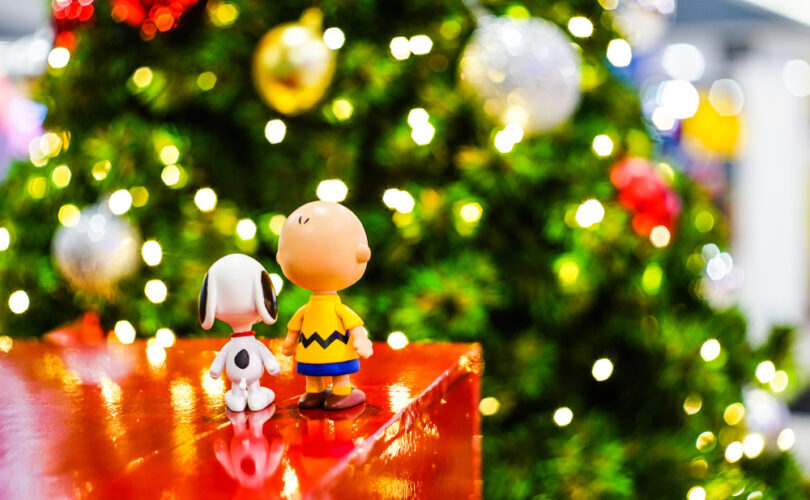
(LifeSiteNews) — When “A Charlie Brown Christmas” aired in prime time on CBS in December 1965, the American television audience was startled by the recitation of the Nativity narrative from the Gospel of Luke. The United States was still relatively homogenous and overwhelmingly Christian on the eve of the cultural revolution, but explicit expressions of religious faith remained rare on network TV.
Sixty years later, first-time viewers of the Christmas special would likely be shocked by its unapologetically Christian message. Some might even be offended. Today’s secular, politically correct society needs “A Charlie Brown Christmas” more than ever.
The 25-minute animated program begins with the protagonist telling his friend Linus he is depressed by the commercialization of Christmas. Linus’s sister Lucy advises Charlie Brown from her psychiatric help booth that his mood would be improved by directing their elementary school’s Christmas play.
The cast ignores Charlie Brown’s stage directions during the chaotic rehearsal. The eight-year-old then leaves to buy a Christmas tree for the play at a lot filled with gaudily colored aluminum trees. He picks out a scrawny real tree rapidly shedding its few remaining needles. The other children ridicule him mercilessly, deepening his despair over ever discovering the true meaning of Christmas.
Linus then steps forwards and, without background music, quotes Luke 2:8-14 from the King James Bible:
And there were in the same country shepherds abiding in the field, keeping watch over their flock by night. And, lo, the angel of the Lord came upon them, and the glory of the Lord shone round about them: and they were sore afraid.
And the angel said unto them, Fear not: for, behold, I bring you good tidings of great joy, which shall be to all people. For unto you is born this day in the city of David a Saviour, which is Christ the Lord.
And this shall be a sign unto you; Ye shall find the babe wrapped in swaddling clothes, lying in a manger. And suddenly there was with the angel a multitude of the heavenly host praising God, and saying, Glory to God in the highest, and on earth peace, good will toward men.
Linus dropped his ever-present blue security blanket as he proclaimed the angel’s words, “Fear not.” He concludes the account of Jesus’s birth by saying, “That’s what Christmas is all about, Charlie Brown.”
Ten seconds of silence follows, after which the children’s attitude and behavior dramatically change. They work together to decorate the humble Christmas tree using lights and ornaments from Snoopy’s award-winning doghouse display, transforming it into something beautiful.
Peanuts creator Charles Schultz, a former Sunday School teacher, insisted on including the biblical monologue despite strong pushback from TV executives, who feared it would sink the show’s ratings. Instead, viewers embraced the spiritual reality check and made the special an instant holiday classic.
The program also underscores how much America has changed, starting with the fact that public schools once produced Christmas plays. Charlie Brown’s neighborhood has no shortage of kids, with siblings, who walk to school and play outdoors without adult supervision. There’s also a surprising amount of bullying and threats of physical violence, typically directed by Lucy at the hapless main character.
Today, Nativity creches and other displays of Christianity have mostly disappeared from the public square due to legal challenges, even as groups openly promoting Satanism move to erect their own statues and sponsor after-school “Satan clubs.” Anti-Catholicism, in particular, has become socially acceptable.
Modern holiday specials from major content producers avoid overt religiosity. Netflix aggressively promotes the LGBT agenda in its children’s programming, while the Hallmark Channel went hard woke years ago.
Hallmark’s “Countdown to Christmas” lineup for 2025 features two dozen programs heavy on diversity and inclusion but exceedingly light on actual Christianity. Netflix’s current offerings are similarly superficial. Both companies and their counterparts churn out family dramas and romantic comedies devoid of spiritual meaning, focusing instead on Santa Claus and lighthearted escapism.
The tsunami of sex, drugs, and rock ’n roll that washed over the Baby Boomer generation in the second half of the 1960s initially appeared to many as mere hedonistic excess. But the decline of Christianity and the advance of cultural Marxism in the ensuing decades have severely eroded the nation’s moral foundations.
“A Charlie Brown Christmas” points to the authentic remedy for the secularism and consumerism of our watered-down “holiday season.”
In the show’s final scene, a light snow falls as the Peanuts gang gathers around the revitalized Christmas tree and begins singing “Hark! the Herald Angels Sing.” Credits roll as the children intone, “Christ is born in Bethlehem!”
Robert Jenkins is a Catholic writer living in Sacramento, California.