“Wonderful things,” Howard Carter famously replied when he was asked what he saw upon entering Egyptian Pharoah Tutankhamun’s tomb in 1922. Complete with its own legend of a curse, the site has become perhaps the most famous burial chamber in the world.
Another well-known discovery happened right here in the UK, Sutton Hoo in Suffolk, whose treasures, including the iconic Anglo-Saxon warrior helm that has become a symbol of the period, plastered across many a book about the era of British history, can be seen at the British Museum after being discovered by Basil Brown in 1939. A Netflix film, “The Dig”, has been made about it, starring Ralph Fiennes, Carey Mulligan and Lily James. Archeologists are discovering places where humans – whether high ranking in society or right at the bottom of the pile – were laid to rest.
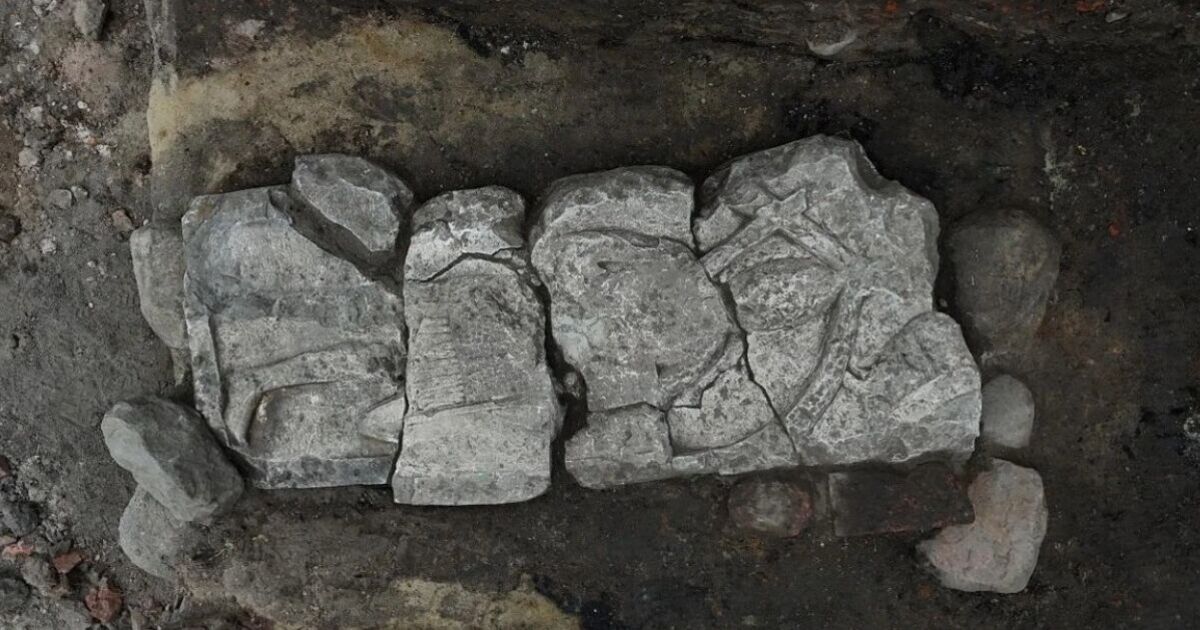
In Poland, experts have stumbled upon something that could be right out of an Indiana Jones film – limestone stele, which is believed to be marking the grave of a very important individual, maybe a knight or commander.
The slab depicts a knight standing tall, with a sword raised in one hand, Futura reports.
The individual is wearing a conical bascinet helmet, chain mail and fancy leg armor.
It is thought that the monument was created in the 1300s, and experts note that the imagery observed was usually only used to decorate places reserved for societal leaders or knights of high prestige.
The city of Gdansk in the north of Poland has proven to be a goldmine for discoveries.
Since 2023, a team of specialists from ArcheoScan has been digging and cataloguing, with the site dating back to the Middle Ages – broadly ranging from the fall of the Roman Empire to the 15th century.
About 250 coffins and burial pits have been found, alongside the remnants of a small wooden church built around 885-years-ago.
These are part of a large necropolis.