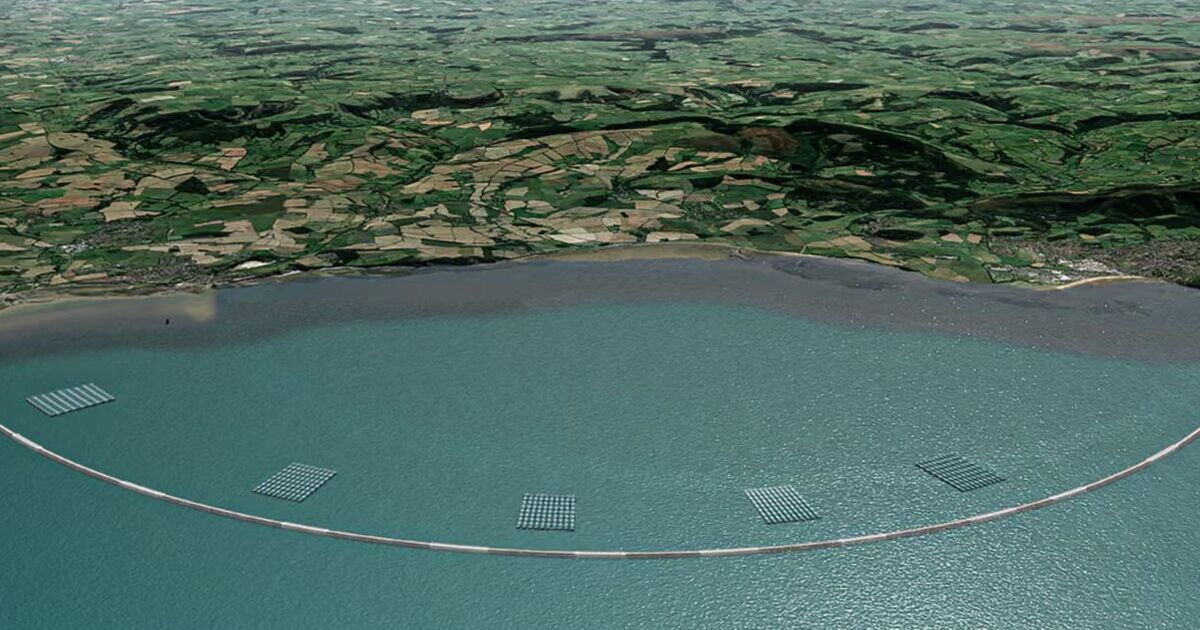
A team of British architects and engineers have drawn up ambitious plans to build a huge tidal power station in a 14-mile arc off the coast of Somerset. The power station would curve from Minehead to Watchet and use 125 underwater turbines to harness the power of the second-highest tidal range in the world.
It would have a maximum output of 2.5GW – providing almost as much energy as the Hinkley Point C nuclear power station just 12 miles east, when it becomes operational. The project would cost a whopping £11 billion and provide power to as many as two million homes. The consortium also say the power station could help Britain meet surging electricity demand to power artificial intelligence.
Julia Barfield is one of the architects behind the project and whose claim to fame includes the London Eye and the i360 observation tower in Brighton.
“If the decision is to go ahead with adopting more and more AI – which I am surprised is not being questioned more at a time of climate emergency – then it is going to be better with a renewable energy source,” she told The Guardian.
“Datacentres could double energy demand and this is a predictable and reliable source.”
The consortium hopes the power station will help create jobs and provide a major boost to the local economy.
Minehead was once a thriving holiday hotspot, but is now one of the 20% most deprived areas in Britain.
There are plans for oyster and mussel beds, rows of floating solar panels and a coastal amphitheatre.
At the same time, the team want to make the area attractive to the public and have included a path along the top of the semi-circular barrage for walkers and cyclists.
They also plan to build a water-sports marina, a lido and an observation tower.
Tidal power is more reliable than wind and solar, although there are still several hours when tides turn each day, providing little to no power.
Supporters of the West Somerset Lagoon project believe it will last 120 years and will produce energy more cheaply than nuclear power.
The idea to build the power station originated several years ago with the aim of reducing the UK’s CO2 emissions.