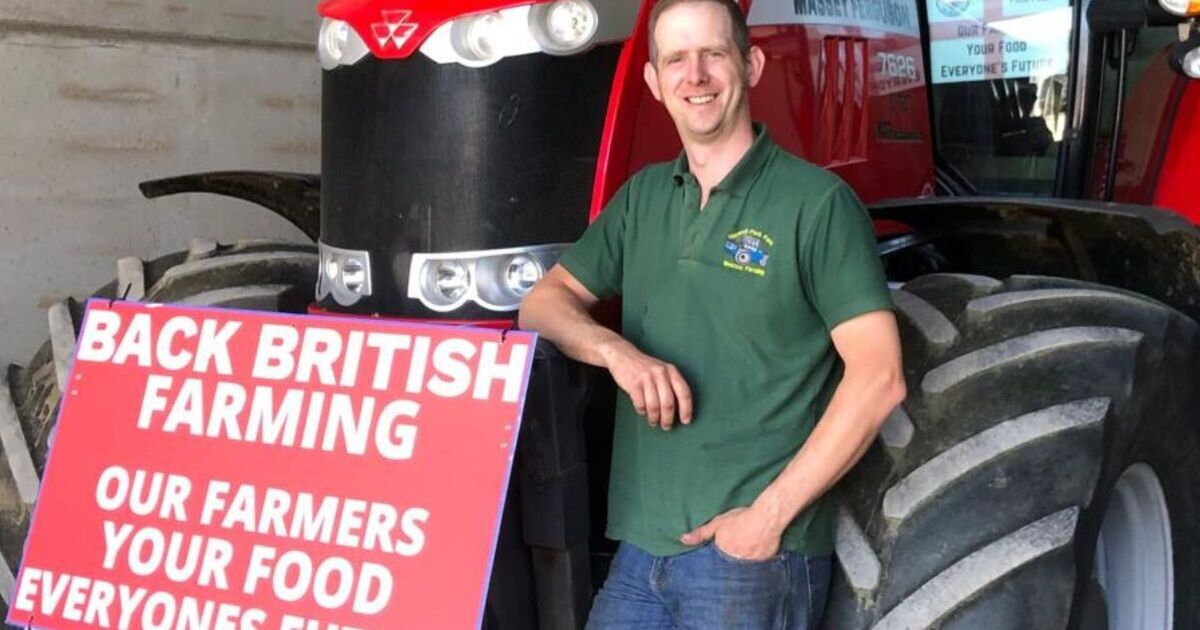
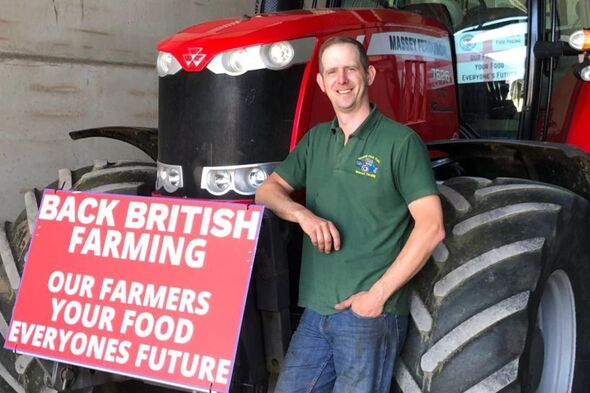
Philip, 40, had hoped to pass his 204-year-old family farm down to his children (Image: Philip Weston)
A 40-year-old farmer from Northamptonshire says Labour’s climbdown from plans to levy inheritance tax on farms worth over £1million will only protect him in the “short term” and betrays a lack of understanding of the core issues damaging the industry. The watered-down policy will see the threshold for 100% relief on qualifying agricultural assets rise to £2.5 million in April, with couples able to pass on up to £5million worth of assets without inheritance tax by combining their allowances.
Above the allowance, farmers will get 50% asset relief and pay a reduced rate of up to 20%, instead of the standard 40%. The number of farms facing inheritance will also be reduced from approximately 2,000 to around 1,100, according to the Government. Philip Weston, whose family has owned Hartwell Park Farm in Northamptonshire since 1820, said the change will “help him a lot” initially, but ultimately only delay the financial blow for a few years, when rising land value and diversification costs “inevitably push us and many others back into the danger zone”.
Read more: Keir Starmer sneaks out major U-turn as ‘personal cost won’t be forgotten’
Read more: Poultry farmer warns of ‘intense pressure’ because of disease risk
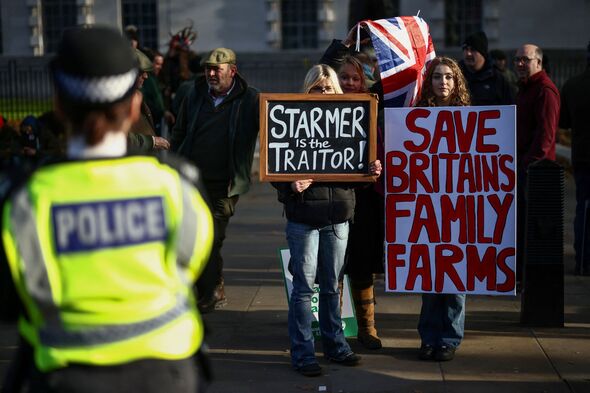
The inheritance tax plans have sparked a string of protests since they were announced last year (Image: Getty)
Mr Weston’s father died three years ago, and he is now in a business partnership with his mother. He has spent “millions” on legal advice about inheriting after her death, and was told he would be handed a tax bill of £200,000, payable as £20,000 a year over a decade.
“Any concession is better than nothing, but inheritance tax will still affect lots of family farms, especially in the longer term,” he told the Express. “It’s being celebrated as a victory for farmers, but costs are continuing to rise, and more people are converting or adding businesses onto their land as a result, which, alongside inflation, will push the asset value up.
Land value has outpaced farm profits for years, for reasons including a lack of supply regulation for supermarkets and the basis of calculations on overall market value rather than productive use.
Mr Weston is among the farmers who have called for the inheritance tax levy – which was introduced after years of exemption to raise money for public services – to be scrapped entirely, warning that it could deal an existential blow to the businesses that prop up the UK’s food security. The Daily Express’s Save Britain’s Family Farms crusade has also demanded that Chancellor Rachel Reeves row back on her tax raid, announced in last year’s budget.
As well as signalling only a “partial” backtrack, Labour’s U-turn on its previous dogged commitment to the controversial plans is an indication that the government can’t be trusted to introduce strong and durable protections for an industry already buckling under pressure, he said.
“This U-turn proves that everyone who thought they were lying about the impact of this from the beginning was right,” he added. “It also shows a complete lack of resolve. They said they weren’t going to get rid of it or change it, and now they have. We have no idea what they’re going to do next.
“Farming is a business that absolutely relies on long-term planning, but everything Keir Starmer does seems reactionary, not like it’s based in real analysis and understanding.”
“The industry is at a critical point,” Mr Weston continued. “Payments for produce are horrendously low, and growing costs are horrendously high. This announcement is a smokescreen to make it look like the government is actively trying to help us – but they’re not. That’s why we have to keep fighting.”
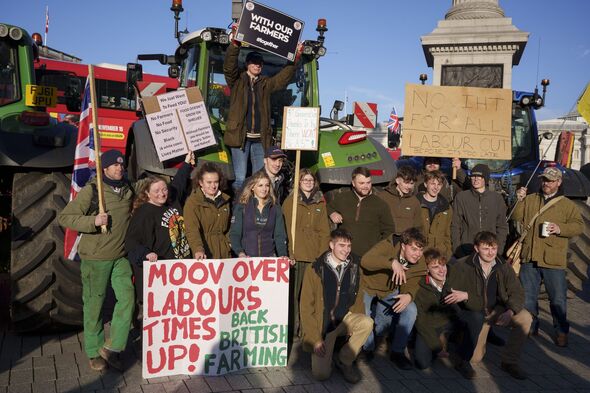
A record number of agricultural businesses closed in the year to June 2025 (Image: Getty)
The 40-year-old has two children who became “the reason for everything I do at the farm” after his father and role model passed away, and had hopes of keeping it in the family and preserving the skills that have been handed down from generation to generation over hundreds of years.
“When the inheritance tax change was announced, it seemed like everything I’d done had been for nothing,” he said. “So what’s my incentive to go out and do all these jobs and work hard for a better yield now? I’d make more money selling all my equipment and renting my sheds out for storage.
“But if you do that, you’ll never be able to get back into farming. Investing in the machinery alone would be absolutely impossible. Once family farms are gone, they’re gone. And if I can’t make a farm that’s been here since 1820 work, how is someone who’s thinking about going into the job now going to do it?”
Fears of losing inheritance tax relief, alongside wider economic factors, saw a surge in UK farm closures in the year to June 2025, with a record 6,365 agriculture, forestry and fishing businesses ceasing trading, the highest number since records began in 2017.
Labour’s concession follows the release of a long-awaited review into farm profitability, which recommended a “new deal” for the sector, to recognise the true costs of producing food and delivering for the environment.
Baroness Minette Batters, former head of the National Farmers’ Union (NFU) said the imposition of inheritance tax on farms was the single biggest issue raised by respondents in relation to farming viability.
Uncertainty over the Sustainable Farming Incentive (SFI), which forms the main part of the post-Brexit environmental land management scheme for agricultural payments, and which has been suspended since March, was also an ongoing concern.
NFU President Tom Bradshaw said the policy amendment would be a “huge relief to many” and “greatly” reduce the tax burden for a number of family farms. “I am thankful common sense has prevailed and the government has listened,” he said.
But Clive Pinton, head of wills, trust and tax at Aaron and Partners, warned that it shouldn’t be seen as an “all-clear” for the sector. “This is welcome news for farmers across the country who otherwise would have faced a significant and sudden inheritance tax burden, and the increased £2.5 million threshold will offer some protection to smaller farming businesses,” he said.
“However, this should not be seen as an all-clear. Many farming estates will still fall within scope of the changes, often without owners realising it. Land and property values have risen sharply in recent years, meaning assets can exceed the new threshold far more easily than expected.
“It is therefore vital that farmers seek early specialist legal advice and carry out a full review of their assets and estate structure. Without a proper audit, there is a real risk that families could face an unexpected tax liability at an already difficult time. Planning now is essential to avoid unpleasant surprises later.”
Conservative leader Kemi Badenoch also claimed the “fight isn’t finished” after the announcement on Tuesday, and Tim Farron, the Liberal Democrats’ environment, food and rural affairs spokesperson, called on Labour to scrap the “unfair tax in full”, warning that “many family farms still find themselves financially crippled and barely making the minimum wage”.
Environment secretary Emma Reynolds said: “Farmers are at the heart of our food security and environmental stewardship, and I am determined to work with them to secure a profitable future for British farming.
“We have listened closely to farmers across the country and we are making changes to protect more ordinary family farms. It is only right that larger estates contribute more, while we back the farms and trading businesses that are the backbone of Britain’s rural communities.”