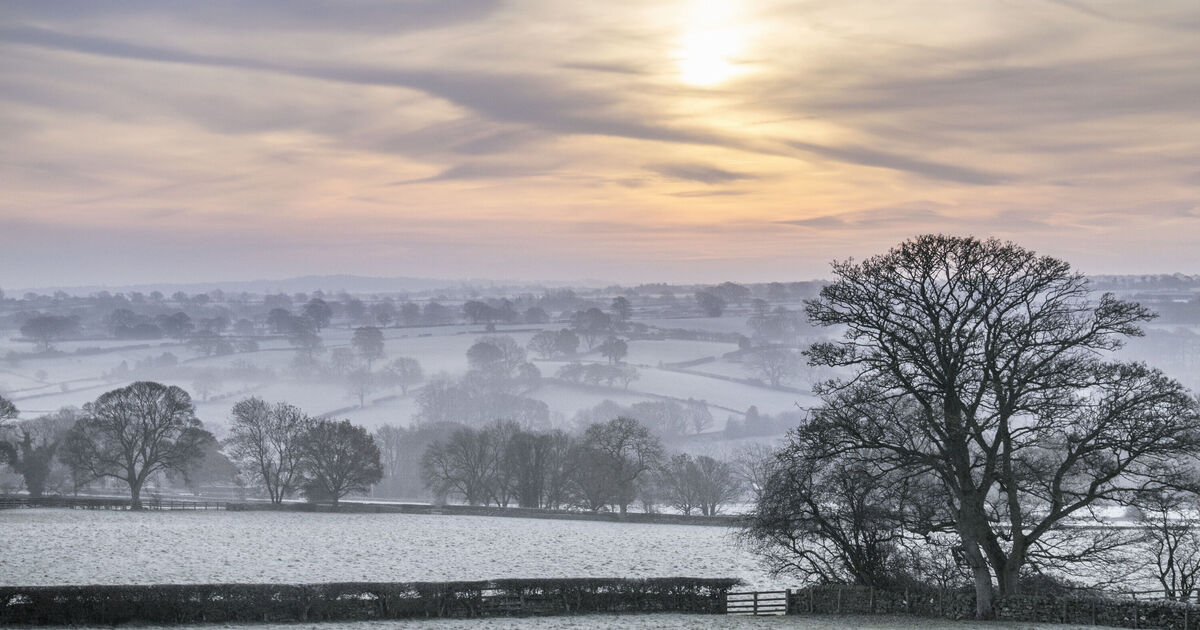
Cold health alerts have been issued for much of the country as Britons prepare for temperatures to plummet heading into the New Year. An amber warning is in place for north-east and north-west England, with the UK Health Security Agency (UKHSA) predicting the cold weather to cause a “rise in deaths” among the elderly and vulnerable.
The alert for the regions is due to remain in place until midday on January 5, with temperatures expected to fall to 3-5C in the day but around-3C overnight and -7C in parts of Scotland. Elsewhere, temperatures are forecast to be 4-6C from New Year’s Day and a yellow health alert is in force across England’s other regions. The Met Office said the final days of 2025 will not be “particularly fantastic”, with temperatures of 7-8C, but things will take a turn as 2026 arrives.
Northern parts of the country are expected to bear the brunt of the chillier conditions from January 1 onwards, with brisk winds bringing increasingly wintry showers to the north as the week progresses.
Forecaster Dan Stroud said: “We’re losing this sort of settled but chilly conditions, and bringing in something a little bit more showery with more wintry hazards in the forecast, particularly for the north of the country.”
The Met Office has said snowfall is expected in some areas in early January.
According to the UKHSA, an amber alert means the weather is “likely” to cause significant impacts across health and social care services, including a “rise in deaths” among those with health conditions or aged 65 or over.
It said the UK may also see “impacts on younger people” and there will likely be an “increase in demand for health services” across the regions.
The UKHSA said other impacts include “temperatures inside places like hospitals and care homes dropping below the levels recommended for assessing health risks”, and “challenges keeping indoor temperatures at the recommended 18C leading to more risk to vulnerable people”.
It also warned of staffing issues due to external factors like travel delays and said sectors such as transport and energy could see the impacts.
A yellow cold health alert — meaning potential for significant impacts — is in place for the East Midlands, West Midlands, south-east, south-west, East of England, Yorkshire and the Humber, and London.
Dr Agostinho Sousa, head of extreme events and health protection at UKHSA, urged people to check in on those who are “most vulnerable”.
“The forecasted temperatures can have a serious impact on the health of some people, leading to increased risk of heart attacks, strokes and chest infections, particularly for individuals over the age of 65 and those with pre-existing health conditions,” he said.