I HAVE written this piece — and the book from which it is derived — out of heartfelt love of the Church of England and its people. By “its people”, I mean not only the faithful regulars in churches, cathedrals, and institution chapels (who are the backbone of the Church), but I also include the untold numbers who used to attend worship but do so no longer, because they have become disillusioned and alienated.
I also have in mind all those who are touched, slightly peripherally but not insignificantly, by the Church’s ministry through the pastoral offices, civic services, and church schools. And we should not forget the numerous people who visit parish churches outside service times and write thoughtful, appreciative, and often moving comments in the visitors’ book: they have often found the church to be a unique holy space. I am writing out of love, with all those groups of people in mind (a great multitude), but also with burning passion, and not without grief and anger.
It is a sad, gloomy, and mournful place where the Church of England currently finds itself in the midst of society. The Church of England has not been in such a bad place for centuries. Its standing, as an institution, in society, and the local community has plunged. Its moral reputation has been wrecked. The morale of the faithful in their parishes and cathedrals has been severely dented, though many still carry on as best they can and deserve enormous gratitude for that. There is a pervasive sense of organisational incoherence, dysfunctionality, dishonesty, and betrayal. Instead of leading the way, as it often has done in the past, the Church of England has lost its way.
What we have now is a sad Church in an equally sad — disjointed, incoherent, and aimless — society. The Church of England has failed to rise to these challenges and to fill the spiritual vacuum thus created: one of meaning, value, and purpose. Instead, it merely reflects the fragmented and incoherent state of the society and culture within which it sits. It has lost what hold on the national imagination that it had, and has become marred by scandal and division.
THE presenting issue in the great cloud of distrust and disaffection which hangs over the Church is the scandal of sexual abuse of minors and young people, and the accumulated series of failures to deal adequately with the perpetrators.
The chronicle of failure has culminated (to date) in the failed handling of the unspeakable abuse of young men (schoolboys and university students) perpetrated by John Smyth QC over several decades, the evidence for which was exposed in shocking detail and forensically analysed in Keith Makin’s 2024 report (News, 15 November 2024).
Unprecedentedly, the catalogue of scandals –— and particularly the crowning scandal concerning Smyth — brought down an Archbishop of Canterbury (and contributed to the permanent tarnishing of the reputation of a past incumbent of that office) a year ago. What could be more lethal for a Church than to be “led” (as they see it) by archbishops who are not believed?
The significance of the forced, reluctant resignation of an Archbishop of Canterbury should not be underestimated. The Church of England and the wider Anglican Communion have a great deal of spiritual and ecclesial capital invested in the office of the Archbishop of Canterbury. Such a fall, such a disgrace, leaves a vacuum, not of executive authority, for the office has little of that, but of moral seriousness, edifying teaching, spiritual vision, and brave confidence within the Church. No Church where that happens can remain in good heart.
Who can blame those former churchgoers who have voted with their feet, saying to themselves in disgust something along these lines: “If that’s what the Church is like, I want nothing more to do with it.”
We may share the disappointment and disillusionment that motivate such a step on the part of some, but I trust that we do not draw the same conclusion. Rather, we should be saying: “Now is the time for all good people to come to the aid of their Church!” I want to say (and do say) to such people, who have had a raw deal from a Church of which they hoped better things: “The Church needs you more than ever. So, please get involved once again. Take up your share of the slack. Stick with it. Above all, be there, Sunday by Sunday.”
WHAT twists the knife in the accusations of betrayal and failure is the calling of any Christian Church to uphold, teach, and demonstrate in action the true path of life, based on the principles of justice, goodness, and love, according to the will of God revealed in the scriptures.
As the report of the Independent Inquiry into Child Sexual Abuse puts it, “As with other religious organisations, the Anglican Church [sic] is marked by its explicit moral purpose in teaching right from wrong. In the context of child sexual abuse, the Church’s neglect of the physical, emotional and spiritual well-being of children and young people in favour of protecting its reputation was in conflict with its mission of love and care for the innocent and vulnerable.”
The report continues (its measured, understated tone conceals horrors): “The Church of England failed to respond consistently to victims and survivors with sympathy and compassion, accompanied by practical and appropriate support. This often added to the trauma of those who had experienced child sexual abuse by individuals connected to the Church. While there have been important improvements in child protection practice, the Church of England still has more to do to rebuild the trust of victims and survivors. Some internal past case reviews were flawed and inaccurate, and there was a tendency to minimise offending.”
But the failure of justice, which is also a failure of love, goes much wider. There are whole swaths of people in the population — particularly women, LGBTQ+ persons, and members of ethnic minorities — who feel let down, devalued, and disregarded by the Church, when all they have asked is to be accepted and nurtured. This is a Church that, shamefully, loves to exclude.
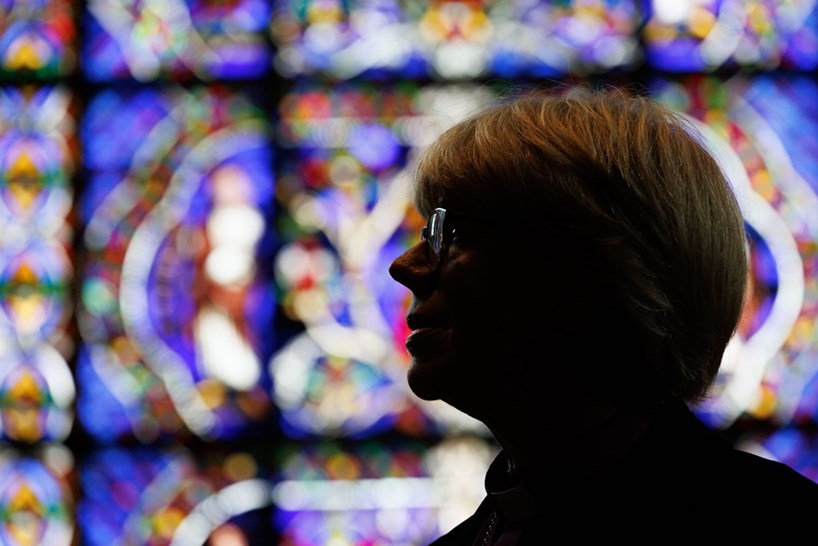 Neil Turner/Lambeth PalaceThe Archbishop of Canterbury-designate, the Rt Revd Sarah Mullally, in Canterbury Cathedral in October. Her election followed in November
Meanwhile, just when we needed to consolidate our remaining strengths, to re-energise parish ministry, and to reinvigorate the ordained ministry with funding, affirmation, and a theological rationale, the opposite course of action has been pursued: centralised control of policy and resources, disparagement of the parochial form of Anglican life, and devaluing of the ordained vocation.
Much has already been demolished, especially at the local level; much more has been weakened and made more difficult. It is hard going, these days, in parishes for clergy, together with churchwardens and other hard-working lay people. There are social and cultural reasons for the uphill nature of the task in the present era, but lack of support — in able clergy, in financial resources, in moral affirmation, in practical wisdom — is another. The Church of England on the ground is an ailing and failing Church. How has all this come about?
A minority of activists (lay and ordained General Synod members, some bishops and an Archbishop, and the Archbishops’ Council collectively) have contrived and conspired, over a period of years, to change the nature of the Church, to replace it with a different and alien ecclesial model. That replacement model is essentially managerial rather than relational, bureaucratic instead of organic, centralised in place of localised — all varnished over with the vacuous rhetoric of “leadership” (seldom has such a necessary concept been so misappropriated and abused). And all accompanied by complacent theological illiteracy and ignorance.
Centralisation of resources and of decision-making, whether at the national or diocesan level, subverts the institution as a whole. It sucks the life and energy out of the very places in which life and energy are primarily generated: the parish and (potentially) the diocese.
Ecclesiologically speaking, the diocese (the community of the ministry and oversight of the bishop) has priority and precedence over the national Church. A diocese is composed of parishes (with their visible and identifiable foci in the parish church and churchyard, the Christian year, and the clergy, lay ministers, and lay officers who serve the Church and the people).
A diocese does not exist without its parishes, nor a bishop without the clergy and people. The responsibilities and resources of dioceses and parishes are not devolved from the national centre, but vice versa, according to the widely accepted principle of subsidiarity. They do not need hierarchical permission to do their work. They need only the resources that rightly belong to them, in order to get on with the job.
We are now living in an upside-down, topsy-turvy, Church. Turning things the right way up again needs us to begin with the ethical imperative. What needs to affirmed, above all, is the priority of the ethical for thinking and acting, because the ethical reflects the nature and will of God and the character of Christ, as it is revealed by the prophets, the apostles, and the Gospel-writers.
It is a warped and darkened mentality that imagines that one can act religiously while not acting ethically according to the dictates of the moral conscience. As the Reformed theologian John Oman thundered in the midst of the First World War, our relation to our fellow humans comes before our relation to God. That, Oman insisted, in Grace and Personality (Cambridge University Press, 1917), “is the essential order, because there is no religious insight which is not first ethical, no relation to God which is not, in practice, a relation to [humankind]”. Repairing the inseparable connection between religious faith and ethical intention will set us on the path to becoming again “The Good Church”.
WE CONTINUALLY pray for the Church, its people, clergy, and bishops, not least in every Sunday service. How will we know whether our prayers have been answered? What difference do we expect it to make? What changes are we hoping to see?
The only solid ground we have been given, in order to answer that question, is ethical in nature and centred on goodness, justice, and love. The Holy Spirit is the Spirit of the Christ/Messiah (= Anointed One) who was endued with the Spirit of God, in the symbolic form of the dove of peace, gentleness, and innocence, at his baptism. The Holy Spirit is the Spirit of the God of justice, goodness, and love, whose ethical character is revealed in the scriptures, especially the prophetic and wisdom literature and the Psalms.
The work of the Holy Spirit in the Church is to teach, to give light, to enable sound judgement, to produce rejoicing, and to impart moral strength. “Come, Holy Spirit, and fill the hearts of your waiting people, and kindle in us the fire of your love.” The Spirit of Christ is the Spirit of love. Is love what we are praying for across the Church? I suspect that we might need to do an ethical check on our prayers. If we find that the moral complexion of the Church has improved, that justice, goodness, and love have suddenly become the driving forces of our priorities, then we will have the assurance that our prayers have, indeed, been answered. The Good Shepherd looks for the Good Church.
The Revd Dr Paul Avis is an honorary professor in the School of Divinity, University of Edinburgh, and Editor-in-Chief of Ecclesiology. This piece is adapted from the preface to his new book, Shaping a Church of Ethical Integrity: Groundwork of a Church rebuilt (SCM Press, February 2026).