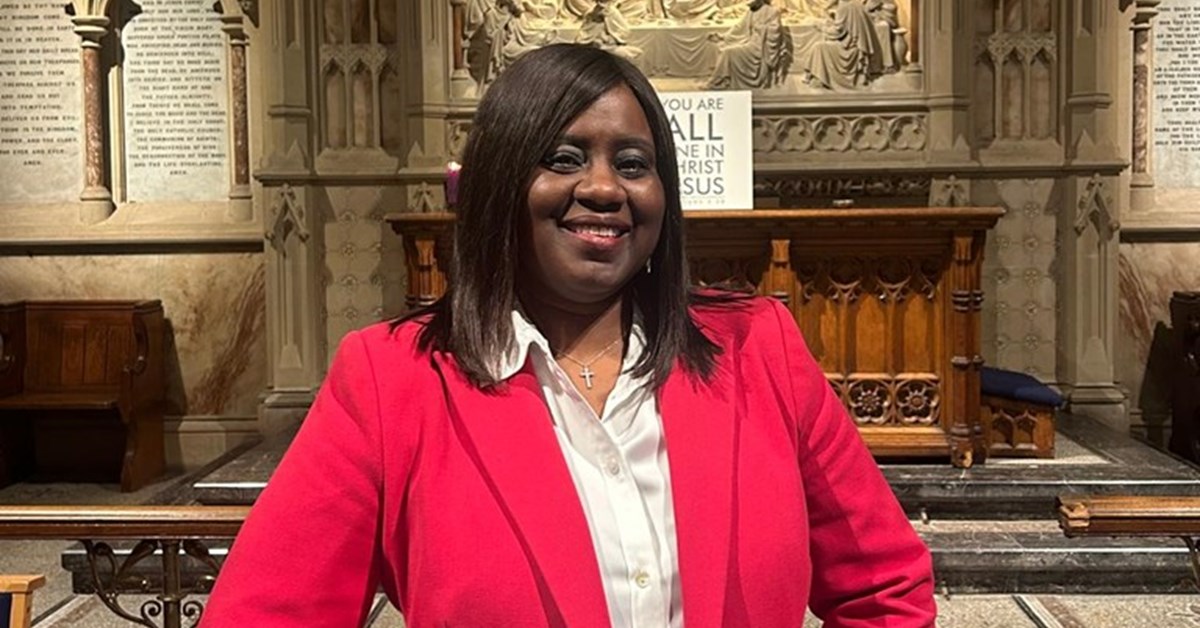
“I THINK it’s fair to say that, since my appointment . . . it has been an eventful year,” the Second Church Estates Commissioner, Marsha de Cordova, observes. It was less than six weeks after her appointment in October 2024 (News, 11 October 2024) that the unprecedented resignation of Archbishop Welby was announced. YouGov polling in the wake of the Makin Review suggested that just 25 per cent of the public held a favourable view of the Church.
Safeguarding is not the only issue that has exercised MPs, whose questions Ms de Cordova answers in Parliament every few weeks in her position as a link between the Government and the Church. Last November, the Labour MP for Exeter, Steve Race, suggested that “going backwards on very modest moves to end discrimination against same-sex lay and clergy couples” was “not a sustainable position if the Church wishes to continue to enjoy the privileges of its established status”. Last month, 27 senior Conservatives wrote to the Archbishop of Canterbury-elect calling on her to halt Project Spire — a £100-million fund announced by the Church Commissioners to benefit communities affected by the historic transatlantic slave trade.
Also last month, MPs deemed the National Church Governance Measure “inexpedient” (News, 12 December) — a determination also applied to the Clergy Conduct Measure (News, 31 October). The Abuse Redress Measure passed, however.
MPs were “rightly” exercised about safeguarding, Ms De Cordova suggests. “There’s no question that the Church has to be on this journey of rebuilding public trust and confidence, and I think the issues around safeguarding have contributed to that.” After a General Synod vote that stopped short of transferring all safeguarding functions to an external organisation, in favour of only partial independence, she issued a statement warning that it “puts back the progress we need”.
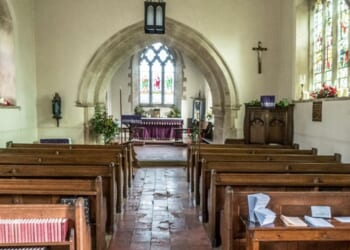
But she is also keen to emphasise the good that the Church brings to society, referring more than once to her vision of the local church as a “beacon of light”. The interview takes place, at her request, at the “incredible” St Barnabas’s, Clapham Common, in her own constituency of Battersea. She makes a beeline for a prayer group finishing its lunchtime meeting, and is clearly well known to the Vicar, the Revd Richard Taylor.
Amid scrutiny from parliamentarians, the level of good will is “striking”, she suggests: “Everybody wants to see the Church do well, and do better at this. And I think that that gives us all hope.”
EARLY on in Ms De Cordova’s tenure, the Government announced that the Listed Places of Worship Grant Scheme had been extended for one year only, and capped at £23 million, prompting an outcry. She maintains her position, set out in a packed Westminster Hall debate one year ago (News, 24 January 2025), that more long-term support must be found.
“It really is upon this Labour government to, in my view, make the right decision to see that that scheme is made permanent,” she says. While the picture of public finances painted at the last Budget is far from rosy, she remains “hopeful, because I think that’s important for me to do”.
Back in July, the Conservative MP for New Forest West, Desmond Swayne, made a link between the Church’s advocacy for the grant scheme and its expenditure on Project Spire. These were “two separate issues”, Ms De Cordova replied. Nevertheless, his question was illustrative of growing scrutiny of the Project by Conservative MPs.
Katie Lam, a Shadow Home Office Minister, told the House of Commons in April: “The funds that have been committed to projects via the Church of England’s reparations project are, in fact, for the upkeep of parish churches and the provision of salaries for the clergy.
“I know that the Second Church Estates Commissioner is dedicated to our parish churches, and would not support anything unlawful; so will the Hon. Lady please provide the grounds on which the Church Commissioners are authorised to allocate this money to aims for which it was not intended?”
The Church Commissioners have repeatedly emphasised that the fund is for “healing, justice, and repair”, rather than reparations, and that none of the money will come from parish income.
“I think it’s a fact that we know that the Church does have a historical link with the chattel enslavement of Africans,” Ms De Cordova says. “I think Project Spire . . . in terms of the Church atoning for its wrongs and its sins is absolutely the right way forward. . . To the critics, what I would say is, as somebody who has ancestors that were enslaved, I almost find it a little crass, frankly.”
MS DE CORDOVA’s grandparents came to Britain from Jamaica, as part of the Windrush generation. Her mother joined them in the 1960s, and the close-knit family built their lives in Bristol, where she grew up as the second of six children. During a 2022 debate in the House of Commons on the Windrush Review, she lamented that “the racism and discrimination they experienced when they arrived here remains today.” In a 2021 interview with The Times, she spoke of black colleagues waiting to vote being handed another MP’s coat and bag.
Amid debate about the rise of Christian nationalism and the far-Right, she says: “We need to be really mindful of those that seek to, in my view, appropriate Christianity, our beliefs, values, and also our symbols, particularly where they seek to sow division. If we think about who we are as Christians, and what our values are, the message of Christ, it really is about unity, it’s about social justice, it’s about equality, and it’s about freedom. And I think about the great men and women that have gone before us. We’re a stone’s throw away from where William Wilberforce used to go to church, the great abolitionist; others, like Martin Luther King Jr, who spoke about bringing people together, and anything that seeks to not do that, I do not believe that stands with our values.”
Aged ten in 1986 — when the apartheid regime in South Africa was at its height — she was given a book about Nelson Mandela. It proved to be a pivotal moment, catalysing an early sense of justice that fuelled her journey into politics. In a 2024 interview with Premier, she drew a connection between Mandela’s fight in South Africa and her passion for the rights of Palestinians, observing that “where there is injustice . . . if we remain silent we become complicit.”
Raising concerns about Gaza within months of her arrival in Parliament in 2017, she has remained an outspoken critic of Israeli “impunity” in the war that broke out in the wake of the 7 October Hamas incursion.
“I visited the West Bank a number of years ago now, so I have seen first hand what the occupation has led to,” she says. “And obviously, with the awful, horrific war that has taken place in Gaza . . . in terms of the indiscriminate killing of Palestinians, it is something that should really shock and horror anybody, particularly those of us with a faith.” Correspondence from constituents have encouraged her to remain outspoken. “When I first voted for a ceasefire, back in 2023, I had received over 6000 pieces of correspondence asking me to do so. . . We are believers and we believe in justice, we believe in freedom, and we believe in peace.”
IN A 2023 interview with the Mirror, Ms De Cordova recalled: “We were always told, growing up, that because we are black, we will have to work twice as hard. And, in my case, I obviously have a disability as well. So, there was an even greater pressure placed on me to have to work harder and be better.”
Born with nystagmus (an involuntary movement of the eye), she is registered as severely sight-impaired. Able to see “blurry outlines of faces and some colours, nothing after a few feet”, she described in an interview with The Times her frustration at being provided with parliamentary papers in small type and the “nightmare” of navigating the “incredibly dark” estate. She has the support of a sighted assistant.
Before entering politics, she founded the charity South East London Vision, and, as an MP, she remains a champion for the rights of the disabled. In 2017, she was made Shadow Minister for disabled people by Jeremy Corbyn (for whom she voted as leader, twice). She described the last government as presiding over a “hostile environment against disabled people”, and was one of 42 Labour MPs who signed a wrecking amendment against the current government’s controversial welfare reform Bill.
More recently, she has been a vocal critic of the Assisted Dying Bill, telling the House of Commons “we need assistance to live, and not to die.”
“I still stand by that,” she says. “I fear for the many disabled men and women that will be affected should this Bill be passed. I feel we should be investing in end-of-life care.” She points to the Royal Trinity Hospice, a short walk away: “I think that’s where the focus should always be. I certainly don’t believe that the levers that were used to bring forward this legislation were the right ones — a Private Member’s Bill.
“It didn’t provide us with the time to scrutinise it properly . . . and it’s now currently sat in the House of Lords and it rightly is getting the scrutiny that it needs. . . My view is that if this Bill passes, it will be a total shift in how we look at life.”
Does she subscribe to a particular theology of disability? “When I was growing up, when I didn’t have such a strong faith, I would go to the eye hospital regularly, and would pray or hope that there would be a cure,” she recalls. “But, when I became a Christian, and my faith is now rooted in what God’s image of me is, he has created us all in the image of Christ; so I know that we are all perfect in that space. And that’s the message that I would love people to get.”
In several interviews she has paid tribute to her single mother, who fought to ensure that she remained in mainstream education, with additional support. While agreeing that there is “absolutely” a need for a specialist setting for some children, she maintains that “the default should always be mainstreaming our children with the right support.”
SPEAKING to the Liberal Democrat MP Tim Farron for Premier, in 2024, Ms De Cordova described going to Sunday school as she was growing up, but not developing what she describes as a strong faith until in her twenties. It was the messages about Christ that “really resonated”, she said, leading to her baptism.
She has attended Holy Trinity, Clapham (HTC), a church in the Holy Trinity, Brompton, network, for a number of years. Its Vicar, the Revd Jago Wynne, is one of the leaders of the Alliance, which has campaigned for the stand-alone services of blessing for same-sex couples to be subject to further synodical processes. Ms De Cordova, who voted in favour of same-sex marriage in Northern Ireland, and served as Shadow Secretary of State for Women and Equalities from 2020 to 2021, says that she believes that this is the right way forward for the Church.
“I am a parliamentarian; so I’m a legislator, and to make laws we have to go through a process,” she says. “I think that opens it up for proper debate, dialogue, and scrutiny.”
Learning more about the history of HTC has been inspiring, she says. Mr Wynne once told her that her hopes following her election — “that I can represent Christ well while I’m serving my constituents” — echoed those of William Wilberforce.
“When I joined HTC, I had no idea I was going to be going into politics, but a lot of the congregation are actually my constituents, and that is not something I would have ever thought would happen. It’s just the amazing wonderfulness of how God works.”