The Middle East is in for a major realignment if the Islamic Republic of Iran topples. No matter what arises to replace the theocracy of the mullahs, a major power player in the Middle East will be gone; the world’s number-one state sponsor of Islamic terrorism will be no more, which should cause the rest of the planet to breathe a sigh of relief.
Meanwhile, though, the possible (and maybe imminent) fall of the mullahs will leave something of a power vacuum in the region. Nature abhors a vacuum, and so does geopolitics. There is another major player in the area that may already be looking to capitalize on the fall of the Iranian theocracy: Saudi Arabia.
As Iran weakens, a power vacuum is emerging across the Middle East — and Saudi Arabia is moving to fill it by recalibrating relations with former rivals, hedging global partnerships and asserting a more independent foreign policy, according to several experts.
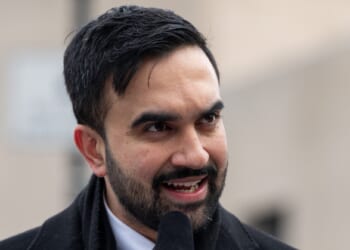
Javed Ali, former senior official at the National Security Council and professor at the University of Michigan, told Fox News Digital that “Since Iran’s 1979 revolution, both Saudi Arabia and Iran have vied for influence across the broader Muslim world. Mohammed bin Salman’s consolidation of power in the kingdom has also introduced a markedly different vision from that of his predecessors.”
Riyadh’s recent moves, from Yemen to Turkey, are fueling debate over whether Crown Prince Mohammed bin Salman’s expanding regional role still aligns with U.S. interests. As part of that recalibration, Bloomberg reported on Jan. 9 that Turkey is seeking entry into the Saudi–Pakistan mutual defense pact signed four months earlier, according to people familiar with the talks.
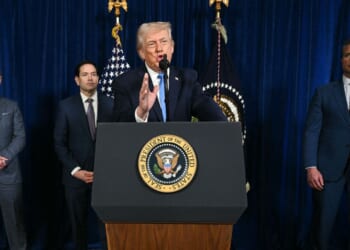
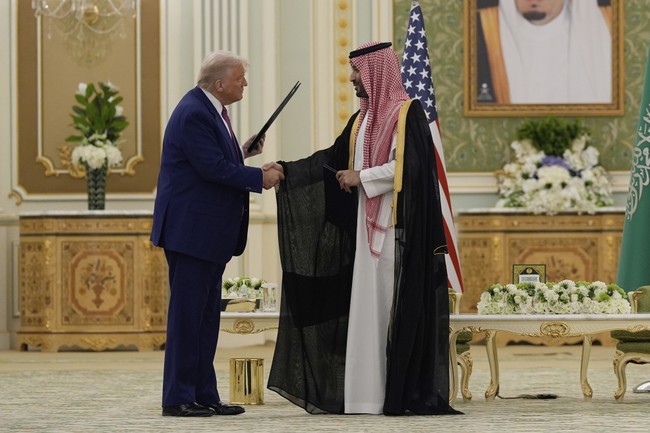
The Crown Prince has reiterated a pro-American policy many times, and has traveled to America to meet with President Trump, a meeting that seemed to include a lot of mutual back-slapping and camaraderie. Saudi Arabia has been an American ally for many years, but having spent some time (6 months) in and near the Kingdom, I can tell you that it’s a society so different than ours that it is hard to comprehend. The country is essentially a family business; the king is a no-kidding monarch, and the Kingdom also has its theocratic elements. Women are still treated as second-class citizens, and there isn’t even a pretense of religious freedom.
But nations have no permanent friends; only permanent interests. The Saudis will only be American allies as long as it’s in their interest. A strong United States affects that; a weak United States, as, say, under Joe Biden, weakens any incentive for other countries to maintain a close relationship.
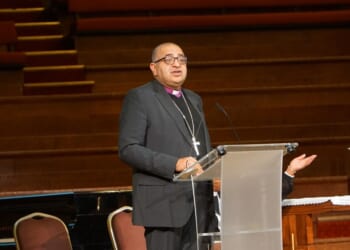
Michael Rubin, a senior fellow at the American Enterprise Institute, said Saudi Arabia’s current trajectory must be viewed through years of accumulated frustration with U.S. policy.
“To be fair to MBS, previous U.S. administrations did not uphold their end of the bargain either,” Rubin told Fox News Digital, pointing to repeated Houthi attacks on Saudi territory. “The Houthis launched hundreds of drones and rockets that the Obama administration ignored.”
But what if a new Iran arises, phoenix-like, from the ashes of the old?
Read More: New Bargain? Now Iran Proposes Meet During Protest Bloodshed
New: Trump Doubles Down on His Redline, Signals Imminent Action Against Iranian Regime
A new, prosperous Iran with a secular government (or even mostly secular) would change a lot of things in the Middle East. If Western sanctions were lifted on a reborn Persia, there would again be a major player in the Middle East, but the new Iran/Persia would, we fervently hope, be a major economic player, not a major state sponsor of terror and not a constant threat to the entire region.
We shouldn’t expect a complete shift to a Western-style government, of course. While it would be great to see a new, resurgent Iran translate the United States Constitution into Farsi and adopt it as their governing document, that’s not going to happen. But some sort of parliamentary system wouldn’t be unreasonable to expect.
If Iran falls, yes, there will be a power vacuum of sorts in the Middle East. The Saudis will seek to capitalize on that. It’s in their interests to do so. But nothing lasts forever, and much will depend on whether the revolution in Iran succeeds, and what arises to replace the monstrous rule of the mullahs.
Editor’s Note: Do you want to see more of RedState’s conservative reporting on the rising tide in Iran that may yet sweep away the mullahs and their theocratic rule? Support our work so that we can continue to bring you the truth.
Join RedState VIP and use promo code FIGHT to receive 60% off your membership.