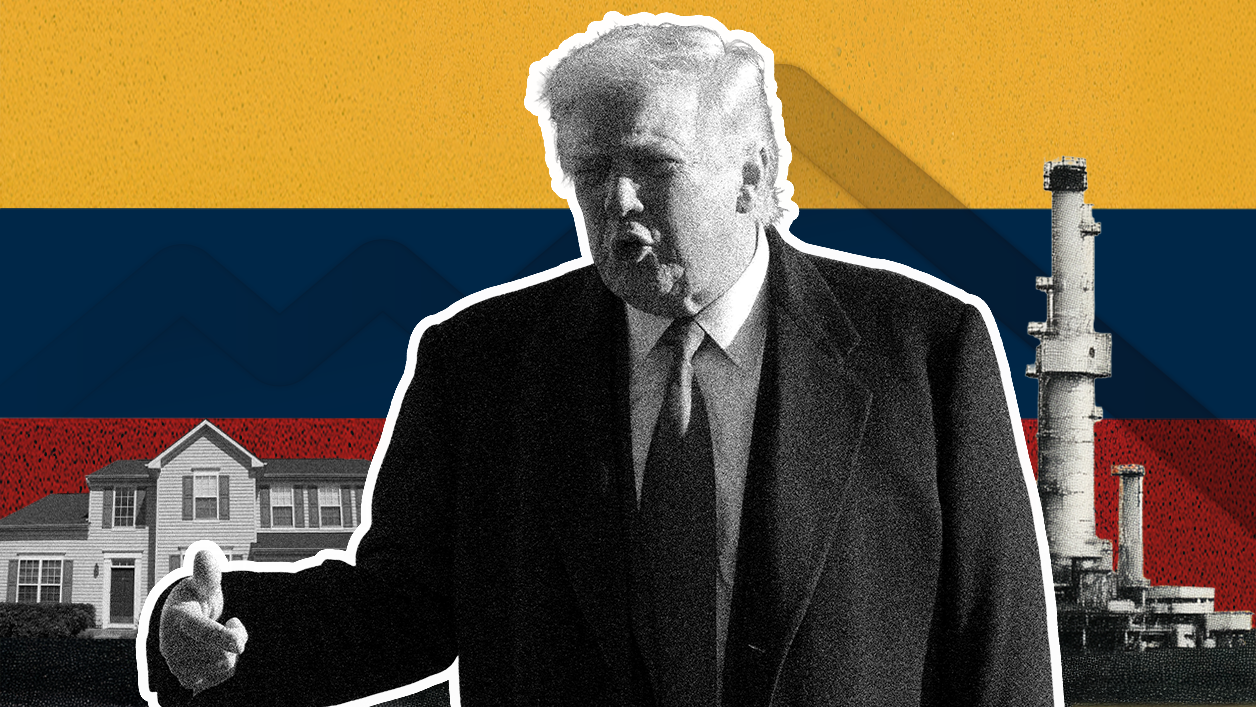
In just the past week, President Donald Trump has ordered defense companies to halt dividends and stock buybacks, and limited executive compensation to $5 million a year; ordered Fannie Mae and Freddie Mac to buy $200 billion of mortgage-backed securities; ordered an array of energy firms to invest in Venezuelan oil infrastructure, called for a 10 percent cap on credit card interest rates; announced steps to ban institutional purchases of single-family homes; and opened a criminal investigation into Jerome Powell’s handling of Federal Reserve building renovations in an attempt to influence monetary policy.
The pace of pronouncements and diktats coming out of the White House is dizzying. Many of the president’s actions are explicitly designed to direct private investment, in stark opposition to free market principles. Let’s examine these moves one by one.
Defense contractors have notoriously abused the taxpayer for years through waste and cost overruns, but imposing restrictions on dividends and buybacks is simply telling a corporation how to dispose of private property. One could argue that firms doing roughly 70 percent of their business with the U.S. government must accept certain restrictions as a condition of that business. But this is no different from the government dictating the composition of a company’s board or executive team. If defense companies can’t reward their shareholders, investors will simply take their capital elsewhere. The limits on executive compensation are draconian—if executive compensation is held below its market equilibrium, the result will be a shortage of qualified people willing to take the job.
Fannie Mae and Freddie Mac are currently under the U.S. government’s conservatorship and have been since 2008, so Trump can technically tell them what to do. And this isn’t the first time that the government-sponsored enterprises (GSEs) have been used for political ends. Trump wants the GSEs to buy mortgage-backed securities to push mortgage rates lower, betting that even a modest decline would ease the affordability crisis and help Republicans in the midterms. This strategy forces the GSEs to assume greater risk in their mortgage portfolios—the same dynamic that led to their collapse during the 2008 financial crisis.
Venezuela is often reported to have the world’s largest oil reserves, though many experts doubt how much is actually recoverable. Trump wants lower gasoline prices, so he is interested in exploring and producing Venezuela’s oil alongside U.S. energy firms. Oil executives expressed doubt about the reserves, and more importantly, working with the Venezuelan government, which has been untrustworthy. Businesses exist to make money, yet Trump wants the industry to plunge into a likely money-losing venture to serve political goals.
The 10 percent cap on credit card interest rates will lead to a shortage of credit, especially for lower-income consumers, who will be pushed toward payday lenders, title lenders, and black-market loan sharks. It will have the added effect of practically eliminating points and rewards programs at the credit card companies, since most of those rewards are subsidized by consumers running loan balances with high interest rates. The policy would fundamentally reshape the credit card industry, and not for the better. Most consumers are happy with their credit cards, especially the rewards programs.
It’s widely known that some institutional investors, such as Blackstone, have been buying single-family homes en masse and acting as landlords. Most people are ideologically opposed to the idea of a corporate landlord, even if there are benefits to scale. The internet has made a mountain out of a molehill over Blackstone’s residential real estate purchases, which represent only a tiny fraction of the housing stock. The fear is that institutional ownership will drive prices and rents even higher, though historically, scale has often enabled efficiencies and lowered costs.
Lastly, President Trump strongly dislikes Fed Chair Jerome Powell, believing that the Federal Reserve cut interest rates before the 2024 election to influence the outcome. Plus, Trump has divergent views about monetary policy, to say the least, wanting interest rates close to 1 percent. Powell’s term ends in four months, but Trump wants him forcibly removed from the chairmanship now. But even if the president succeeds in ousting him, Powell still can remain on the Board of Governors and influence monetary policy decisions.
And this is just one week. Let’s just say that laissez faire isn’t in Trump’s vocabulary.
In his second term as president, Trump is assuming autocratic powers, ordering around the private sector to do his bidding. There are no contemporary parallels in American history, and Trump is setting a precedent that will shape presidential power long after he leaves office.