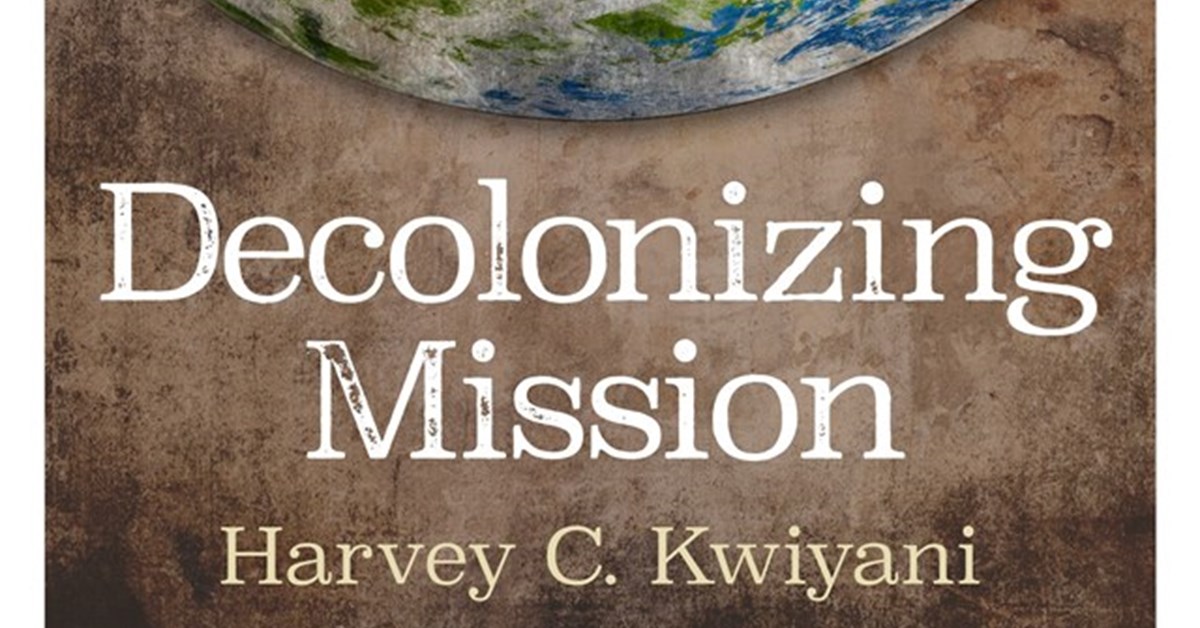
THIS is an important book. It is also a deeply personal book, which brings weight to the arguments that are advanced.
It is personal because the mission station set up by the pioneering David Livingstone at Magomero in Malawi became, under his daughter Agnes, the Bruce estates, where many of Harvey Kwiyani’s ancestors lived and worked. At Magomero, Livingstone’s vision of a virtuous marriage between Christian mission and commerce swiftly turned to violence and colonial brutality. For Harvey, this illustrates a pattern rather than its exception.
This is a “big-picture” account of missiology, which is primarily focused on European colonial history. It takes issue with missiologists such as Brian Stanley and Stephen O’Neill who have argued that colonialism and Christian mission can be separated. For Kwiyani, the latter are deeply and systemically inter-connected: not “every missionary was a colonialist,” but all worked in a context framed by the enabling doctrines of white supremacy, the doctrine of discovery, and civilising mission.
Broadly chronological, the book begins with chapters on Jesus and St Paul, respectively, reminding the reader that the Roman Empire is not simply the backdrop, but also the foreground to Jesus’s life and ministry. Kwiyani then proceeds to his key historical argument that what we have to understand as “mission” is, in large part, the product of Christendom’s response to the fall of Constantinople in 1453, the closure of the Eastern land trade route, and the turn to the West and a “New World”.
Kwiyani argues that the Jesuits played a key formative part in shaping ideas of mission as European empires expanded around the globe, seeding military language and concepts, within a Christianity that legitimated and accompanied the genocide of peoples and the expropriation of land, bodies, and resources. This then sets the historical framework for the subsequent trajectory of mission language and practice.
In turning his attention to the 20th century and the American empire, Kwiyani does not mince his words. The culture of American white Evangelicalism, in his assessment, lacks accountability and suffers from a “narcissistic personality disorder” that “is foundational to a great deal of Western evangelical missionary work in the world”. Furthermore, within this Christian sub-culture, “racial segregation is a normal part of the Christian life.”
Throughout the last few chapters, it becomes increasingly clear that Kwiyani is locked in a fierce battle within contemporary Evangelical missiology, between those who, in his eyes, broadly adhere to the colonial and capitalist framing and deflect, deny, and dismiss criticism, and those who argue for a missiology that is contextually relevant for a post-colonial world. The stakes are raised by the fact that many African churches have been deeply influenced by US Evangelicalism.
Inevitably, the breadth of Kwiyani’s historical sweep lays him open to challenge on a number of points, but the central argument about the system still convinces. Even readers outside the Evangelical tradition, who might point to missionaries such as C. F. Andrews, Arthur Shearly Cripps, or Roland Allen, have to concede that they were all exceptional, “atheists of empire”, battling a system in which the missionary nestled within the imperial enterprise.
This book deserves a wide readership; it is essentially a cry from the heart of a Christian theologian wrestling with the deep wounds of colonialism, not least within his own family, but also yearning to see the liberating love of Christ brought into the hearts of individuals and communities in a way that is consonant with the man of sorrows rather than imperial conquest.
The Revd Dr Duncan Dormor is the General Secretary of the USPG.
Decolonising Mission
Harvey Kwiyani
SCM Press £30
(978-0-334-06319-3)
Church Times Bookshop £27