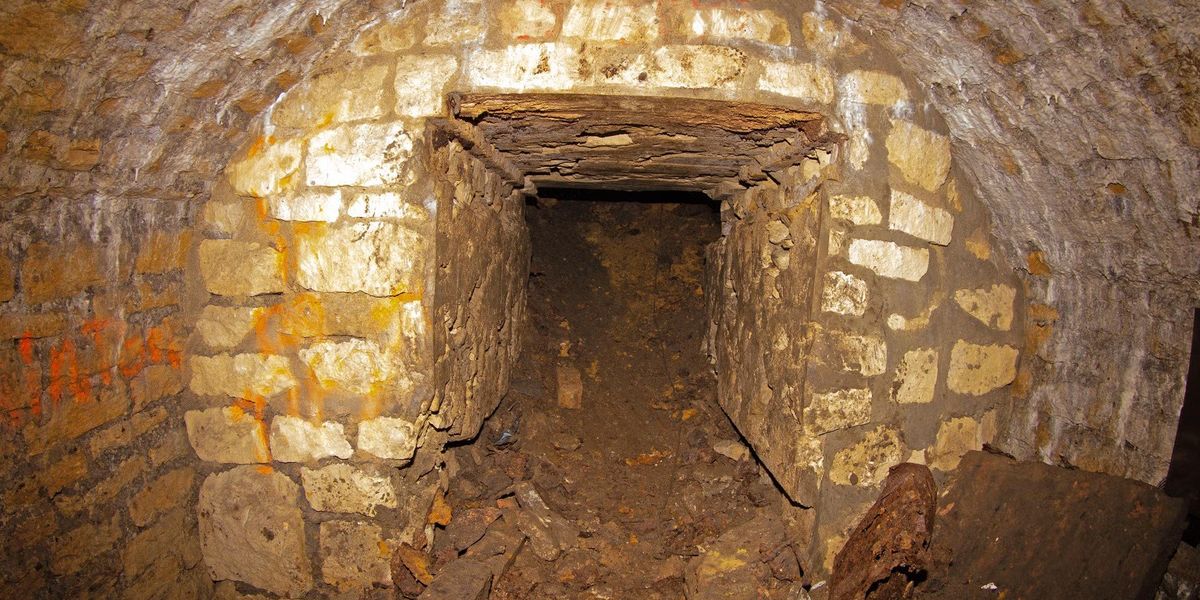
Archaeologists working near the medieval Castle Lichtenau in North Rhine-Westphalia have stumbled upon a remarkable underground chamber hidden beneath the German market town’s centre.
The subterranean vault, spanning more than a thousand square feet, was discovered accidentally during excavations close to the castle.
The city of Lichtenau, established in 1321, has long been dominated by the distinctive turrets and spires of the castle for which its name is taken.
However, the latest subterranean discovery has left archaeologists stumped, with both the identity of the vault’s builders and its original function remaining a mystery.
How the structure endured for centuries beneath the town’s cobblestone streets and urban activity has equally puzzled experts.
Several theories exist regarding the chamber’s purpose, including one that points to the haunting realities of medieval Germany.
At the most simple, it may have served as a cellar space for storing food, wine and other provisions.
Alternatively, the chamber may have functioned as a workshop for craftspeople handling temperature-sensitive materials that could melt or break, benefiting from the stable conditions underground before modern climate control existed.

A mysterious medieval underground chamber was found in Germany
|
GETTY / GARY CHALKER
A third possibility suggests it formed the foundation of a larger building whose upper storeys disappeared over the centuries, per Popular Mechanics.
At its most grisly, one theory proposes the vault served as a sanctuary for those escaping local feuds.
Between 1350 and 1550, Germany was torn apart by bitter rivalries between feudal lords that frequently erupted into bloodshed.
These conflicts were deliberately sparked in territories distant from royal oversight, seeing warring aristocrats ransack and loot one another’s estates, seizing or destroying everything possible.
Peasants suffered horrific punishments, including hanging, drowning and castration, whilst manor houses burned.

The discovery was made in the shadow of Castle Lichtenau
|
GETTY
Women were also subjected to sexual violence and degradation as part of the feuds, which were regarded as near-normal occurrences.
In a chilling account from that era, historian Tristan Sharp highlighted a letter sent to a lord attempting to cede the town of Soest from the control of the Archbishop of Cologne.
Lutter Quade, the archbishop’s cavalry captain, wrote in “A Warning to the Women of Soest”:
“Since you are the enemy of my lord and his land and people, I warn you that you should keep your women within the town in order that they do not go out and bring in the harvest; if they do, they (will) be taken, captured, and raped as it is customary to inflict upon one’s enemies; do not say or write that you have not been warned,” the terffying notice read.
The Lichtenau vault’s proximity to royal authority, unlike the remote regions where feuds typically raged unchecked, may have provided some protection.
Investigation into the true origins of the vault is ongoing, including accurately dating the structure.
Analysis of residues from floors and walls will also be undertaken to determine whether the chamber was used to store food or artisan materials.