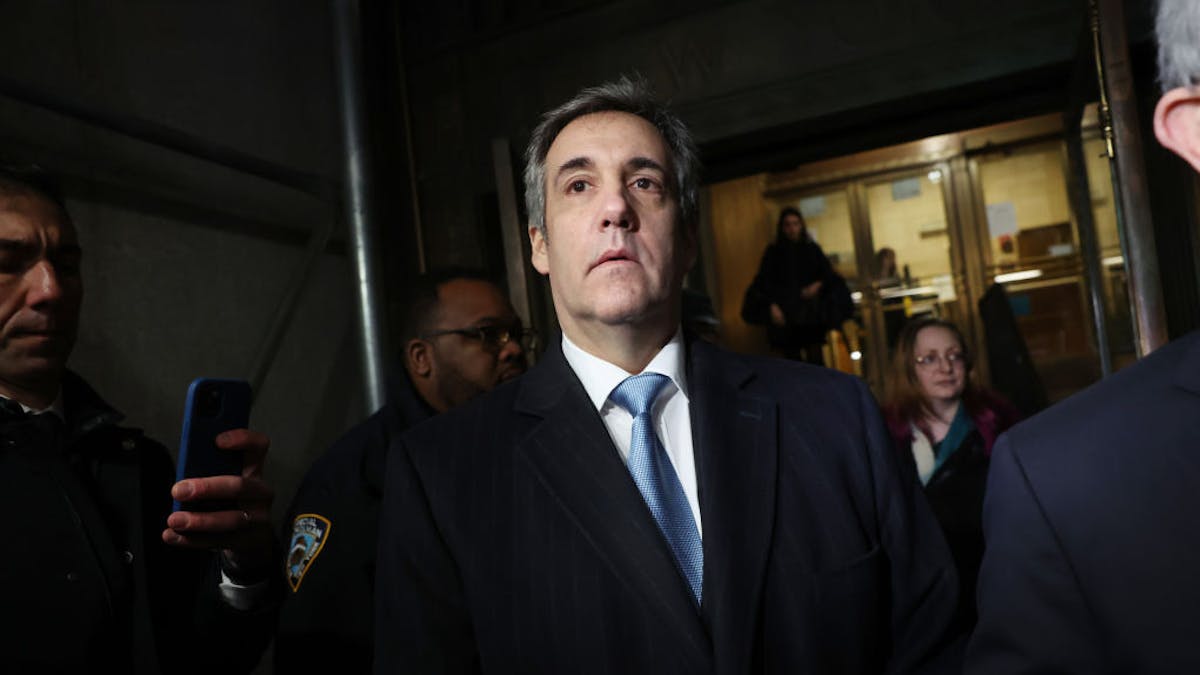
WASHINGTON — After years of criticizing Donald Trump, the president’s former lawyer Michael Cohen is admitting that he was “pressured” and “coerced” by Alvin Bragg and Letitia James to testify against Donald Trump.
In an astonishing Substack post published Friday evening, Cohen writes that he “felt pressured and coerced to only provide information and testimony that would satisfy the government’s desire to build the cases against and secure a judgment and convictions against President Trump.” He said the feeling began from his very first meetings with the lawyers working with Bragg and James, New York’s attorney general.
Specifically regarding James, he said he felt “compelled and coerced to deliver what they were seeking.”
“Letitia James made it publicly known during her 2018 campaign for attorney general that, if elected, she would go after President Trump,” Cohen writes in the post. “Her office made clear that the testimony they wanted from me was testimony that would help them do just that. Again, I felt compelled and coerced to deliver what they were seeking.”
Cohen writes about the two trials in which he testified against Donald Trump: the first, a civil action brought by the New York attorney general’s office accusing Trump of fraudulently inflating his assets to get favorable loans. The second case was a criminal action by the Manhattan District Attorney’s Office alleging that Trump falsified business records related to hush money payments to Stormy Daniels and Karen McDougal to influence the 2016 presidential election.
The jury found Trump guilty in both cases.
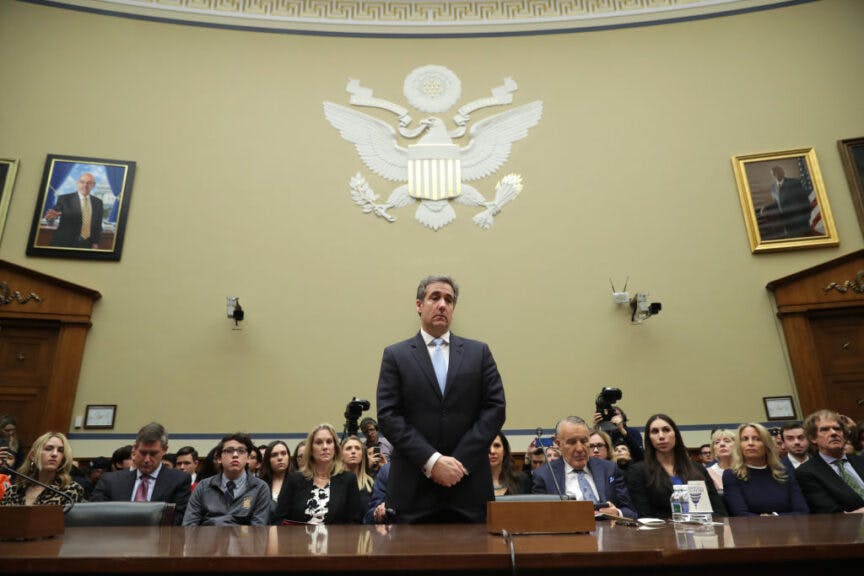
Michael Cohen, former attorney and fixer for President Donald Trump prepares to testify before the House Oversight Committee on Capitol Hill February 27, 2019 in Washington, DC. (Photo by Chip Somodevilla/Getty Images)
Cohen served prison time after he plead guilty in 2018 to multiple crimes, including lying to Congress. He also admitted during Trump’s hush money trial that he stole tens of thousands from the Trump Organization in 2017.
In his Substack article, Cohen notes that a federal appeals court just revived the president’s effort to undo his hush money conviction. He reflects that silently letting the record stand without proper context feels like complicity, prompting him to speak out.
“I am not writing this to defend Donald Trump, nor to relitigate his conduct,” he writes. “That ground has been plowed endlessly, often loudly, and rarely thoughtfully. I am writing because I have seen this system from the inside, not as an observer or analyst, but as a central subpoenaed participant. When courts now revisit questions of jurisdiction, immunity, and evidentiary boundaries, they are not engaging in sterile procedural debates. They are exposing how justice is pursued, how power is applied, and how outcomes are shaped well before verdicts are rendered.”
Cohen writes that he first met with prosecutors from the Manhattan DA’s office in August 2019, three months into his three-year prison sentence. He was released in September 2020 because of the COVID-19 pandemic and for good behavior and allowed to serve out the rest of his term at home, until November 2021.
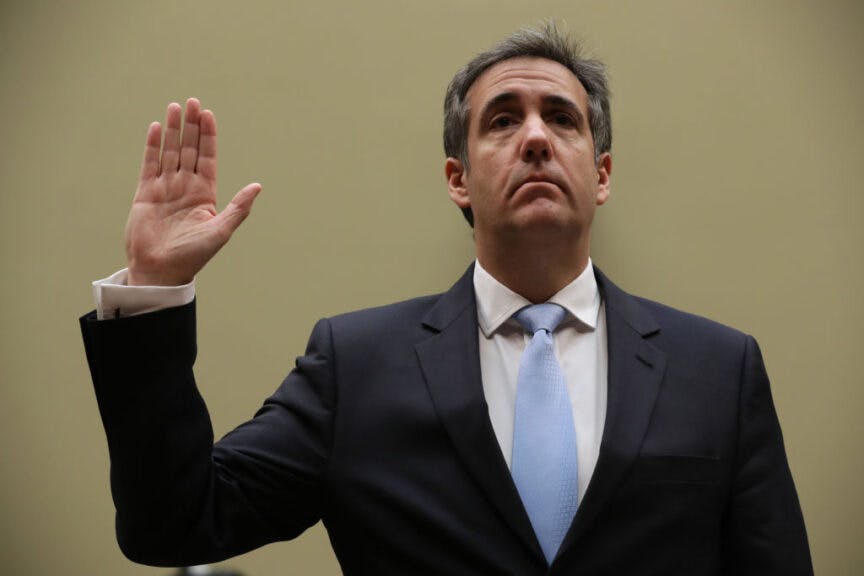
Michael Cohen, former attorney and fixer for President Donald Trump is sworn in before testifying before the House Oversight Committee on Capitol Hill February 27, 2019 in Washington, DC. (Photo by Chip Somodevilla/Getty Images)
He says he kept meeting with prosecutors after he was released in hopes that his home confinement and supervised release would be shorter because he was cooperating. He also writes that the reason he cooperated with the prosecutors from the Manhattan DA’s office was that he wanted to get out of prison and home to his family.
“During my time with prosecutors, both in preparation for and during the trials, it was clear they were interested only in testimony from me that would enable them to convict President Trump,” he wrote. “When my testimony was insufficient for a point the prosecution sought to make, prosecutors frequently asked inappropriate leading questions to elicit answers that supported their narrative.”
Cohen says that he also felt coerced and pressured into giving answers that supported the narrative from James, as her office made it very clear to him that they wanted testimony that would help them go after Trump.
“Letitia James and Alvin Bragg may not share the same office or political calendar, but they share the same playbook,” he writes. “Both used their platforms to elevate their profiles, to claim the mantle of the officials who ‘took down Trump.’ In doing so, they blurred the line between justice and politics; and in that blur, the credibility of both suffered.”
As for why he is speaking out now, Cohen says he has “witnessed firsthand the damage done when prosecutors pick their target first and then seek evidence to fit a predetermined narrative.”
“I have lived inside that process,” he wrote. “I have suffered from that process. And as courts now reconsider where the Bragg and James cases belong, how they were brought and how they were tried; that experience is relevant. More today than ever before.”
“When politics and prosecution become indistinguishable, public trust erodes; not just in individual cases, like mine and/or Trump’s, but in the system itself,” he concludes. “That erosion serves no one, regardless of party, personality, or power.”