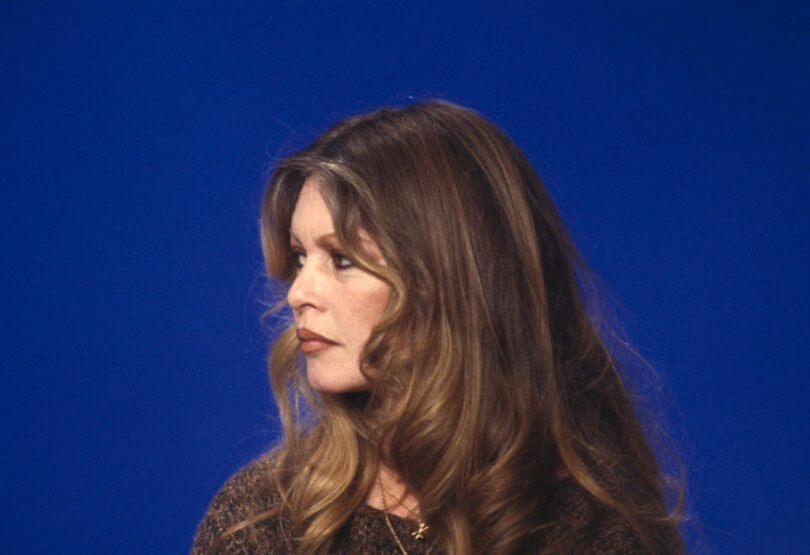
(LifeSiteNews) — Brigitte Bardot, the famous actress and sex symbol of the 1960s, was laid to rest on January 7 after a funeral Mass in Saint-Tropez, a glamorous former fishing village on the French Riviera. It was celebrated by the parish priest in the new rite and included mostly profane music, such as the score of Contempt, the Jean-L uc Godard film in which she starred in 1963.
In a thoughtful article on his Substack account shortly after her death, Edward Pentin recalled how Bardot “mourned a Church that ‘Lost its Mystery’ and closed its doors.” He quoted from an interview she gave to Aleteia in 2024 in which she described herself as a “traditionalist,” remembering the Mass of her childhood: “The priest celebrated with his back to us, in Latin. It’s such a pity that this was modernized. Celebrating Mass facing the congregation feels to me like a theatrical performance … I’d like to see Catholic worship regain greater respect and importance.”
However, Brigitte Bardot was not a practicing Catholic, and although she called herself a faithful believer, she wrote in her autobiography, Larmes de combat (Tears of Battle), published in 2018: “It’s the afterlife that’s awful, what the body becomes, it’s dirty. I don’t know if life after death exists. I don’t know, and I don’t necessarily hope that it does. What kind of mess can still await us on the other side? We might as well sleep. Forever … ”
Three weeks after her passing on December 28 – she died at home peacefully at age 91 after a battle against cancer – her faith and her conflicted relationship with that faith and the Church are certainly a major part of her story. But now that weeks have passed, her more unfortunate legacy needs to be recalled, lest her life be made an example and a symbol of France’s grandeur. She was in fact, surely despite herself, deeply involved in this former Catholic nation’s rejection of the traditional values it formerly stood for, and she was a central figure in helping the sexual revolution take root in many countries all over the world.
She was an “icon,” a legend, the embodiment of Frenchness: these are the words with which Brigitte Bardot was acclaimed when she died. Her passing caused a flood of ink to flow around the world, focusing attention on a France that no longer exists and which, incidentally, she bitterly regretted. Of course, there were reminders of her missteps; she has a mixed legacy due to her stances in favor of the National Front and against Islam. Marine Le Pen was at her funeral, and French president Emmanuel Macron was told that he was not welcome.
“Sois belle et tais-toi,” say the French: “Be beautiful and just keep your mouth shut.” Brigitte Bardot was beautiful — but so beautiful that she has hardly been blamed for not keeping still.
Even Macron paid unreserved tribute on X: “Her films, her voice, her dazzling fame, her initials, her sorrows, her generous passion for animals, her face that became Marianne (the image of the French Republic) … Brigitte Bardot embodied a life of freedom. A French existence; universal brilliance. She touched us. We mourn a legend of the century.” And yet she had rebuked him, openly criticizing his contempt for the French, who “returned it in kind,” she said.
La Croix ran a front-page story on “the paradoxes of a star,” noting that “her public statements may have tarnished her image.” For the Catholic daily, the scandalous figure from Saint-Tropez was admirable in her past, but her image lost some of its luster due to her association with the “far right.” And yet … What a tragic life, from alleged abortions (starting at age 17) to denigrating motherhood, from repeated marriages and divorces to several suicide attempts (in 1960, she slit her wrists and nearly died).
Above all, Brigitte Bardot was a false ‘icon’ of the Revolution
If she has been so widely forgiven by “the world,” it is for the wrong reasons. But there are serious reasons for not joining in the chorus of eulogies. There are grave motives for not seeing “BB” as both an admirable symbol and a woman who courageously stood by her opinions. It was surprising, to say the least, to see one supposedly traditional Christian website pay tribute to “BB,” whose image, body, and independence “disturbed a society that had difficulty accepting a woman who refused to play the roles assigned to her and broke free from the dominant norms,” as it mollifyingly wrote.
She was not an exemplary figure of the France of bygone days. Rather, she is to be pitied for having been unscrupulously used to serve the Revolution at a time when France was beginning to swing toward the logic of May 1968.
“BB” was not politically correct, and would never be, but in her rebellion against the established order, she was a role model, and in our post-Christian world, that absolves her of everything. To describe her as an “icon,” as has been done in countless reports, articles, and tributes, borders on blasphemy. An icon is religious, it is sacred. An icon directs our gaze toward that which transcends us. Brigitte Bardot, on the contrary, embodied sensuality, libertinage, and the sexual revolution. She made them the shared language of the “culture” of the 1960s and beyond.
Largely because of her, modesty and demure behavior ceased to be desirable; they became outdated. The culture of death was given free rein.
It all began in 1956 with her devilish mambo—the term is appropriate—in And God Created Woman. Brigitte Bardot caught the eye of a generation that was already beginning to lose its faith and the moral compass that goes with it, attracting the lust of men, and provoking the envy or desire for emulation of women.
One anecdote sums it up. Actress Joan Collins recalled her one and only encounter with the star in the mid-1950s: “I was in my early 20s and sitting in a hotel bar in Rome, surrounded by men, when Brigitte walked in,” she told Celia Walden, of The Telegraph. “She was in this tiny little white dress, and almost every man there turned their backs on me… and walked straight over to her.” “Not one to suffer from either jealousy or self-doubt, Dame Joan decided then and there: ‘I’m going to have to get myself one of those dresses’,” Celia Walden continued.
Or one of those bikinis… Or just Chanel n°5, beyond which no outfit is necessary, according to that other star of the sexual revolution, Marylin Monroe.
Today we cannot possibly imagine the scandal caused at the time by films, revealing clothing, open rebellion, and the “liberation” that Brigitte Bardot preached through her actions. Her preaching was successful, if not unique: the scandals of the 1950s and 60s have gradually become the norm today, to the point where modest clothing is now seen as something for Muslims or fundamentalists, and abortion, far from being a dangerous operation obtained in Switzerland — allegedly twice, in the case of “BB” – is now set in stone in the French Constitution. Regarding this Brigitte Bardot bears her share of responsibility as a public figure who always proclaimed herself in favor of legal abortion.
After 20 years of film shoots and some 50 films, the actress became an advocate for animal rights. Without doubting her sincerity, it should be noted that her cause is all the more widely accepted as the value of human life continues to decline in the eyes of the world.
Brigitte Bardot served the ‘sexual liberation’ of May 1968
The “liberation” of which she was a driving force and a world-famous symbol has in reality spread a slavery of evil that has destroyed lives, broken families, and brought societal collapse. It is not “forbidden to forbid” – political correctness has proved the slogan of the May 1968 Revolution to be untrue – but what was forbidden yesterday for the good of society has become acceptable, if not to be accepted by force. The left-wing news site Médiapart headlined the article on her death: “With Bardot, we move from a stale society crippled by moralism to May 1968.” That, seen from the other side, tells the story in a few words.
Truly, this is no time to sing the praises of Brigitte Bardot, but to pray for the repose of her soul. There is always hope. Having turned her back on the practice of institutional Catholicism, in later life she had a small chapel built on her estate at La Madrague in honor of the Virgin Mary, of whom she said, “She has protected me greatly in my life, otherwise I would no longer be here.”
Now she is no longer here. May she obtain forgiveness — and at the same time, may our joyless world correctly judge the Revolution that seeks to lead it to its downfall.