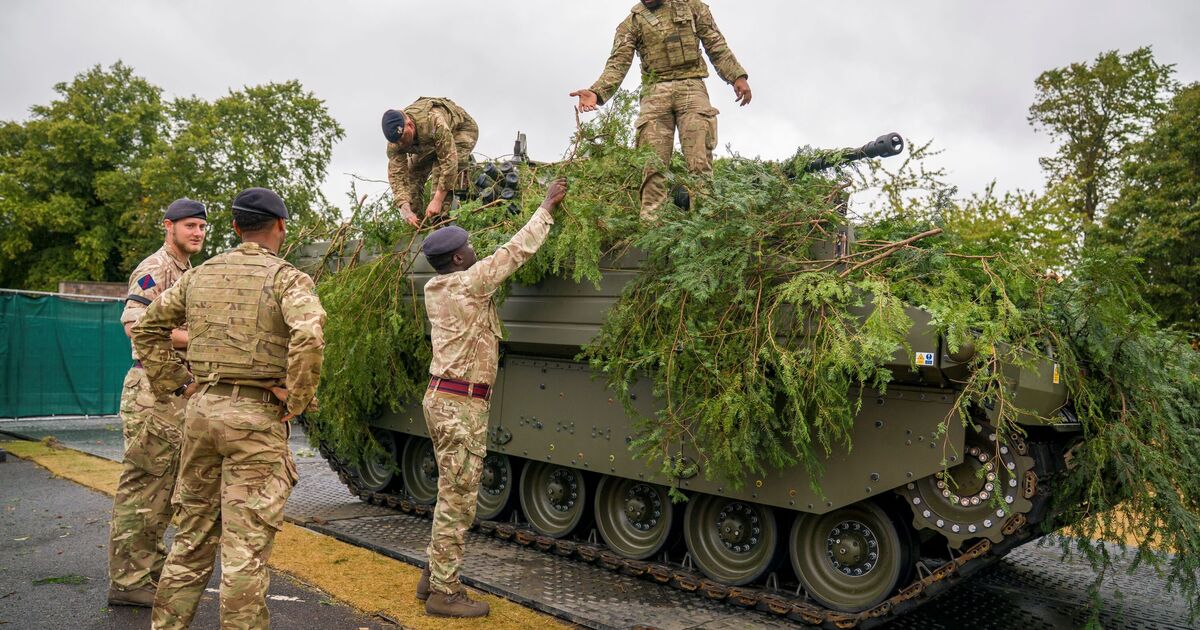
The senior responsible officer for the beleaguered Ajax programme has “effectively been sacked” after safety concerns were hidden from ministers. Use of the £6.3 billion vehicle for military training was halted in November after around 30 soldiers became ill due to noise and vibration while using the Ajax armoured vehicle on a training exercise.
Tests to ascertain the cause of the injuries were forced to be halted after another soldier fell ill after using the £10million platform. Defence Minister Luke Pollard said that to describe himself as angry about the failure to properly inform ministers of safety concerns was an understatement. He said: “Ministers should have been briefed more comprehensively in relation to operational impact and the nuanced risks of operating safely.
“Importantly, submissions did not reflect the full breadth of known aggregated safety risk, particularly regarding vibration-related injuries and historical programme issues.”
While Pollard refused to comment specifically on “individual HR matters”, he did confirm that Chris Bowbrick, who was earning between £95,000 – £162,500, was no longer overseeing the procurement.
Shadow Armed Forces Minister Mark Francois called on ministers to fix or scrap the programme, which was originally meant to enter service in 2017
He told the Daily Express: “This is one of the most extraordinary statements I have ever seen.
“In it, Luke Pollard, rightfully, admits his anger that ‘submissions did not reflect the full breadth of known aggregated safety risk’. It also looks as if the Ajax SRO has now, effectively, been sacked from his up to £160K a year job and that trials will now tentatively restart.
“As the safety of our soldiers remains paramount, Ministers must now, finally, absolutely, fix Ajax or fail it, once and for all.”
The programme has suffered a series of delays and been plagued by noise and vibration issues that injured soldiers testing the vehicles.
At the start of November, however, Mr Pollard said Ajax had “left its troubles behind” as he declared its initial operating capability, meaning it could be deployed on operations. Injuries to soldiers occurred less than two weeks later.
He later told the Commons Defence Committee he had made this declaration after receiving written assurances from the head of the Army, General Sir Roly Walker, and the then-national armaments director, Andy Start, that it was safe.
Writing in a statement to the House of Commons today, Pollard acknowledged that “inaccurate information directly contributed” to his decision to clear the armoured vehicle for use.