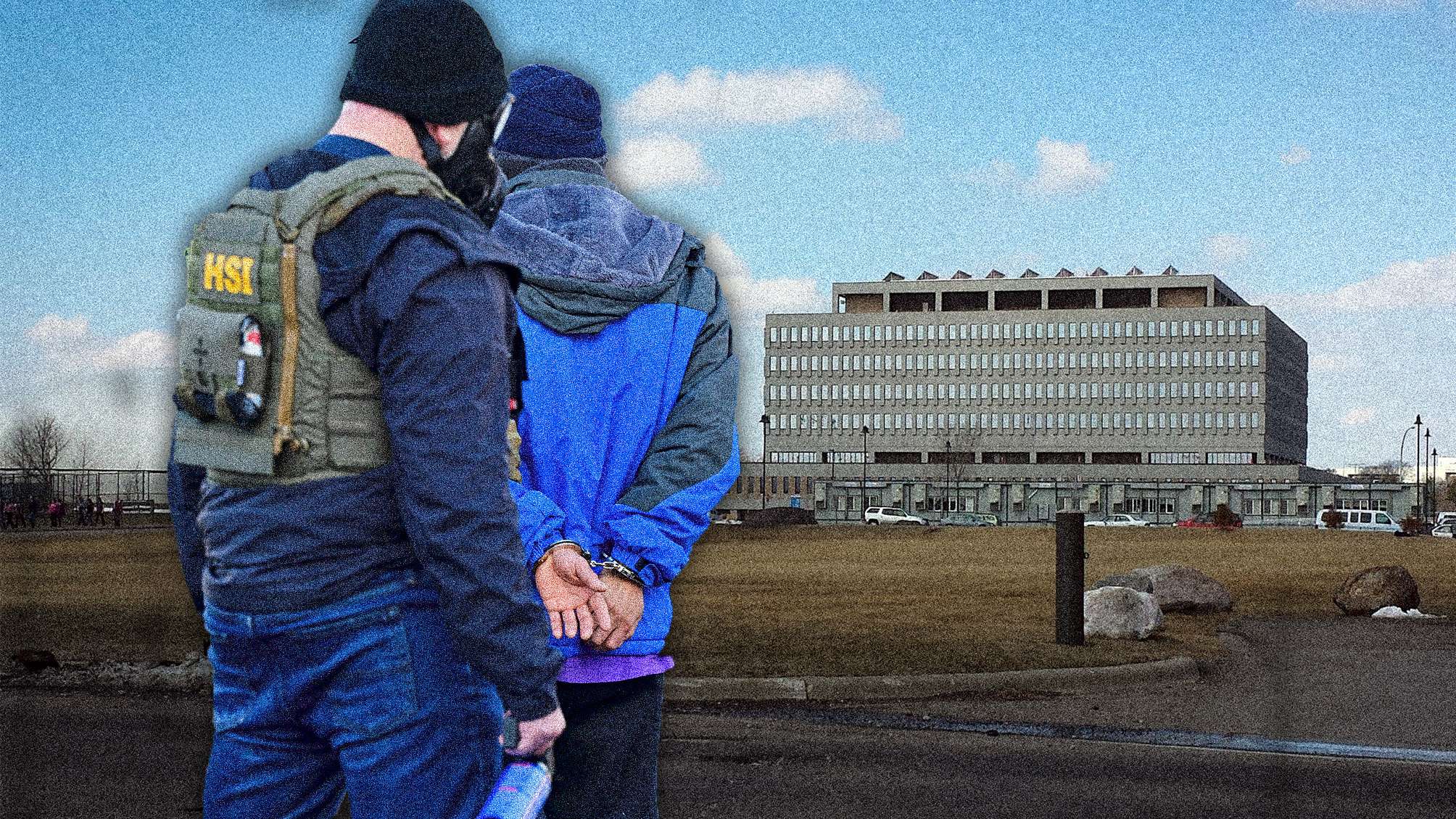
On Monday, the Department of Homeland Security (DHS) claimed that over 3,000 immigration arrests have taken place in the last six weeks amid the agency’s ongoing crackdown in Minneapolis. This influx of arrests has brought to light new concerns that the Trump administration continues to violate immigrants’ and Americans’ rights to due process.
Earlier this week, ABC News reported that federal authorities were denying legal representatives the ability to see clients held at the Bishop Henry Whipple Federal Building in Minneapolis. One anonymous immigration attorney told ABC News that they were denied visitation with a client who’d been held at the facility for multiple days. “I stood outside the visitation room for about four hours…And they just kept repeating, we don’t do attorney visitation,” the attorney told ABC News. The attorney also claimed that this was the first time in a decade of representing immigrants that they’ve had any issue visiting clients at the Whipple Federal Building.
Similarly, ABC News interviewed an anonymous criminal defense attorney who said they were turned away from seeing their client, a United States citizen and an Iraq War veteran, who was being held at the facility after an immigration enforcement operation took place near their client’s home. “I’ve been practicing law in Minnesota for almost 20 years,” the criminal defense attorney told ABC News, “and I have never been denied access to a client.”
A third anonymous attorney told ABC News that one Immigration and Customs Enforcement (ICE) agent at the facility said allowing lawyers to see their clients would result in “chaos.”
These, and other instances reported by ABC News, stand out as potential violations of the Fifth and Sixth Amendment rights to due process. Immigrants also have a statutory right to counsel, which protects an immigrant’s “privilege of being represented” in removal proceedings and appeal proceedings. And according to the ICE National Detention Standards, legal representatives are supposed to be permitted “visitation seven days a week, including holidays…for a minimum of eight hours per day on regular business days, and a minimum of four hours per day on weekends and holidays.”
Unlike criminal defendants, immigrant detainees are not guaranteed legal representation. However, they may procure legal representation to protect their rights while navigating a convoluted immigration system, and immigrants who obtain counsel are much more likely to win their cases.
When Reason asked the DHS about how the agency was ensuring meaningful access to counsel for both immigrant and criminal detainees, or if ICE detention standards had changed, a spokesperson replied that “all detainees at the Whipple building have opportunities to communicate with their family members and lawyers.” A DHS spokesperson likewise denied any constitutional violations at the Whipple Federal Building in a statement to ABC News, and added that detainees “have access to phones they can use to contact…lawyers” and are provided a “list of free or low-cost attorneys.”
Yet access to phones isn’t always enough to ensure attorney-client confidentiality when government authorities record and likely listen to phone calls, the anonymous immigration attorney told ABC News. And other situations, like family members dropping off a detainee’s medications, require more than a mere phone call.
Since President Donald Trump took office for his second term, the DHS and immigration authorities have been frequently accused of denying detainees’ due process rights. In November, a federal judge in the Northern District of Illinois Eastern Division issued a temporary restraining order against the Trump administration for inhumane conditions at the overcrowded Broadview ICE facility, and required, in part, that federal authorities provide Chicago-area detainees with three full meals a day and any prescribed medications needed, as well as allow communication with attorneys. But even with that restraining order in place, plaintiff’s attorneys argued that ICE was still violating the terms of the order in December, according to CBS News.
Although immigration authorities have since left Chicago and are now focused on Minneapolis, the Trump administration’s habit of violating rights seems to have followed in its push for speed over the rule of law.