THE churchwardens of the Grade II listed St Peter’s, Little Budworth, have succeeded in persuading the Consistory Court of the diocese of Chester to grant a faculty permitting the sale by auction of a painting owned by the church for more than a century.
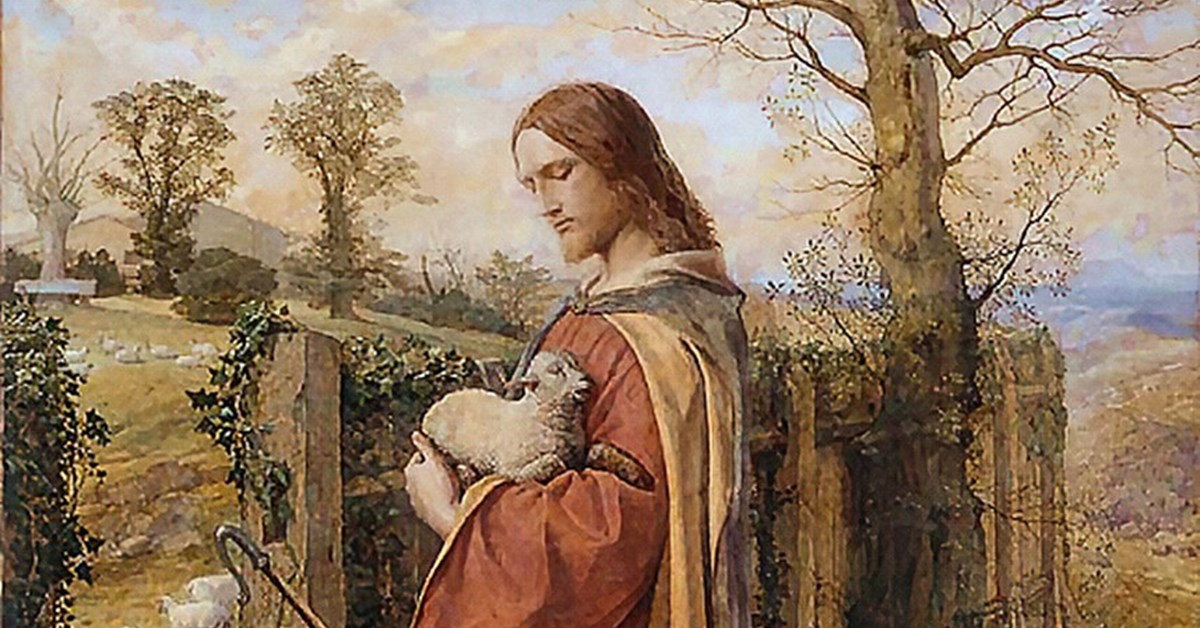
The painting, The Good Shepherd by William Dyce FRSE, RSA, RA (1806-64), a Scottish painter associated with the Pre-Raphaelite Brotherhood, was given to the church in 1924 by a parishioner in memory of a family member, James Henry Stock, who had been MP for Liverpool Walton from 1892 to 1906. A faculty for its introduction was granted in 1925.
The original painting has not been displayed in the church for some 50 years. Since 1987, it had been on a long-term loan agreement, which had now ended. A reproduction has hung in the church since the removal of the original.
There is a strong presumption against the sale of “church treasures”, and such items may not be sold unless it can be shown that there are sufficiently compelling reasons that outweighed this presumption.
The PCC unanimously supported the sale, and the diocesan advisory committee (DAC) recommended that the faculty be granted. The Church Buildings Council did not become a party opponent, but made it clear that there needed to be a strong justification for a sale, and that there was no such justification in the present case.
By 1977, the painting was visibly deteriorating, owing largely, it was believed, to atmospheric conditions in the church. In 1978, it was sent to the Walker Art Gallery, Liverpool, where “minimal restoration” was carried out. It remained on loan in Liverpool until its transfer to the Manchester City Art Gallery in 1987. It remained there on loan until 2024, when the parish was advised that the painting was no longer wanted. The churchwardens and PCC then arranged for the painting to be collected by Bonhams, where it remains, pending a decision on its future.
The diocesan Chancellor, the Worshipful David Turner KC, said that this was “not one of those cases where the parish prays in aid a particular financial crisis or existential ‘emergency’ as the justification for a sale”. It was a case in which the parish had “concluded they simply [did] not have the funds to appraise, and then implement, the complex conservation and restoration work plainly required” on the painting. They were also convinced that the necessary work to effect the required environmental changes and a “security upgrade” were “unaffordable and . . . should not be prioritised over the undoubted need for maintenance and improvement more generally to the fabric” of the church building.
The DAC was sympathetic to the parish’s reasoning. It also pointed out that the painting was not original to the church building; there was, and would continue to be, a reproduction displayed in the church, so that the sale would not cause any visible change in the church; the church was not financially resourced to carry out restoration to the painting, or to upgrade its environment and security to make it more favourable for keeping the original there; and the parish had not been able to find another museum to take the painting on loan.
The Chancellor said that church treasures should be removed only in the most exceptional circumstances. “They are not ‘ordinary assets’,” he said. “They belong to the parishioners and are in the care for the time being of the current generation.” They formed “part of the ongoing ‘story’ of the church”.
But, he concluded, “essentially for the reasons identified by the DAC”, this was “one of those comparatively rare cases” in which he could “properly determine that the ‘cumulative weight of individual factors’ is indeed sufficient to outweigh the strong presumption against disposal by sale”.
A faculty was granted for the sale by auction or private treaty by Bonhams, at the best price reasonably obtainable.