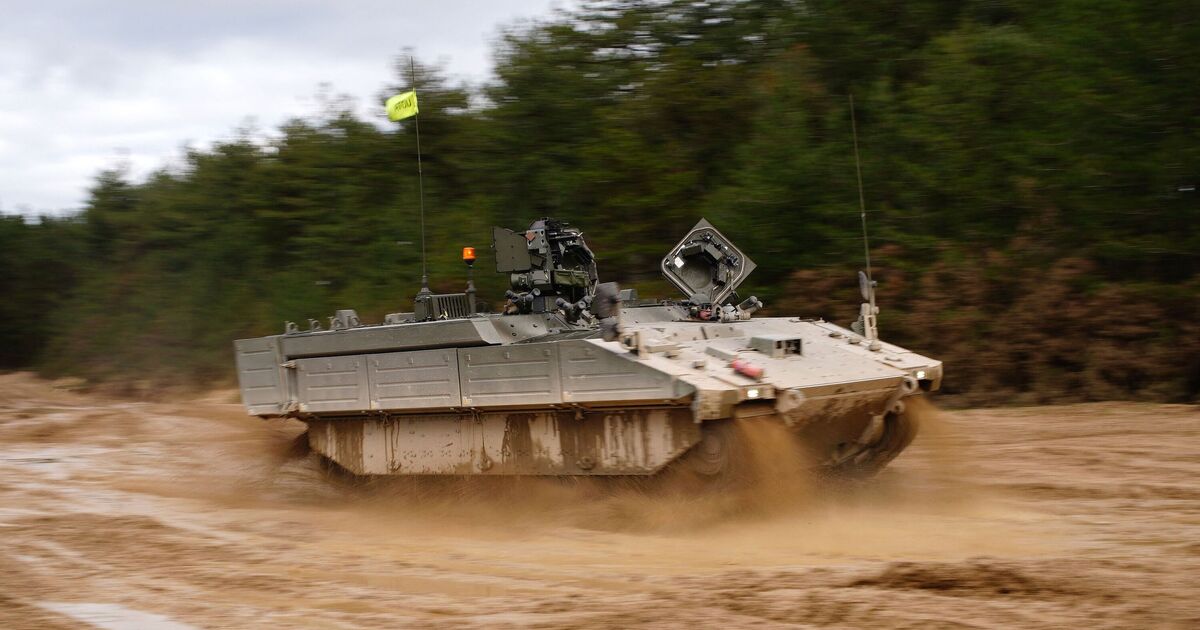
“We will ensure they receive necessary support,” he said in a written statement. The minister said 25 of those who reported symptoms after the war games on Salisbury Plain in Wiltshire have returned to duty, while “two were found to be suffering from symptoms unrelated to Ajax”. Another soldier who fell ill in December during safety trials of the £10 million platform has also returned to duty with no issues, according to Mr Pollard.
The minister said it is “wholly unacceptable” for troops to be “exposed to avoidable risk”.
All testing and training of Ajax were paused following the incidents.
Some soldiers were reportedly left vomiting after taking part in drills inside the armoured fighting vehicle in November.
On Thursday, Mr Pollard said a ministerial review found he had been given “inaccurate information” which directly contributed to his decision to declare Ajax safe and ready for operations, just weeks before the exercise on Salisbury Plain.
The minister said he had initially been told the vehicle was “demonstrably safe”.
Mr Pollard said the senior responsible owner for the beleaguered £6.3 billion Ajax programme has been replaced.
In the written statement, he said: “To say that I am angry about the findings of the ministerial review is an understatement. It demonstrates that people were raising issues with this programme, but they were not being elevated to an appropriate level.”
He confirmed he has paused the declaration of initial operational capability — a term used to mean a platform is ready for operations — for Ajax.
However, he also said testing and trials will restart to “ensure we are best placed to decide Ajax’s future”.
The minister said the Ministry of Defence must decide on the vehicle’s future “shortly”.
Speaking to the Express, Shadow Armed Forces Minister Mark Francois MP called on ministers to fix or scrap the programme.
He said: “As the safety of our soldiers remains paramount, ministers must now, finally, absolutely, fix Ajax or fail it, once and for all.”
Ajax is years behind schedule and has been blighted by problems, most notably noise and vibration issues.
Some soldiers injured have been medically discharged, while others have undergone treatment for hearing loss.
Around 170 of the vehicles have been delivered, with the fleet set to grow to 589 by 2030.