House of Bishops statement on the future of LLF
From the Revd Richard Stainer
Madam, — I hope that I am not being unkind when I say that the expression of sorrow by our Bishops over the messy end to the Living in Love and Faith (LLF) process rings rather hollow (News, 16 January). Apologies for a lack of leadership are just not good enough, however well meant. Leadership may well involve compromise, and yet it seems that they cannot even manage that, and so are prepared to see this issue drag on, causing more hurt and frustration to the LGBTQI+ members of the Church and their supporters.
The conservative and Evangelical wings of the Church are entitled to their views, but they are not entitled to impose them on the rest of us. If they wish to believe that God stopped revealing himself to us around two thousand years ago, that’s fine, but many of us believe that the Bible is to be read with wisdom and in the light of our understanding today. The Bible itself is ambiguous, because, over the time it was written, people struggled to understand God’s will in their own age. It is God’s living word, not something that is set in stone.
The prospect that this festering sore in the body of the Church will be left to suppurate until November 2028 appals me.
If we are to move forward to a compassionate, inclusive Church, then our Bishops need to lead us to a compromise, as has happened in the past over divorce and women priests. It is not ideal, but it is better than the situation that we have today. Perhaps those of us on the liberal wing need to start copying the strong-arm tactics of the others and withhold parish share?
RICHARD STAINER
Bradfield St George
Suffolk
From the Revd Stephen Cooper
Madam, — The Bishops have decided to close LLF without conclusion, recognising that, in doing so, its ending would be imperfect and untidy. On the basis of previous correspondence in these pages, it is evident that some will be deeply hurt by this decision, others will rejoice at it, and some will be left wondering if they have a future in the C of E, while others looking in from outside will wonder whether it is safe to be part of this Church.
My gut reaction was to wonder if I really wanted to remain in a Church whose bishops could make such a decision and statement, which, for all the language of love, is, beneath the surface, about law and systems and the questions who has the power and control, how they are using it, and why. And I wondered what the critique of Jesus would be of all that.
But then I thought about all those faithful members of the LGBTQ+ community who remain in the C of E, whether lay or ordained, despite its obstacles, its limited welcome, hospitality, and inclusion, and its toleration of, as opposed to love for, them; and I thought that such faithfulness should be honoured and supported . . . and the vision for a fully inclusive C of E upheld as something for which it is still worth striving.
STEPHEN COOPER
South Croydon
From the Dean of Canterbury
Madam, — Imagine parents on Christmas Day, having enjoyed their celebrations and said goodbye to their family, and now doing the washing-up. Suddenly, they remember that they have another child. This is the one whom they asked to leave home after coming out because “Jesus would have wanted that.” As it is Christmas, the parents have a moment of concern and go into town to find the child whom they know to be sleeping rough.
They eventually find the child and say, “We thought we would come and see you, as it’s Christmas.” They hand over a card and quickly return home to their mince pies and log burner. Their offspring opens their card, which says “Love from Mum and Dad.” Whatever glimmer of hope has been destroyed. The child is confined to the doorway and the cold for the long term.
Who holds the power here, and who is exercising it with such impact? As with Living in Love and Faith, it is clear. As C. S. Lewis wrote, it is “always winter but never Christmas”.
DAVID MONTEITH
Canterbury
From the Revd Aysha St Giles
Madam, — It is heartbreaking that the Bishops have come to this decision after all these years of supposedly listening to the LGBTQ community and to heterosexual clergy like myself who care deeply and passionately that committed same-sex love should be honoured and celebrated in our churches.
At the very beginning of the marriage service are words from 1 John 4.16: “God is love, and those who live in love live in God and God lives in them.” Perhaps the Bishops would feel comfortable with a rewrite? In any case, they shouldn’t rub further salt in the wounds and continue to authorise the use of this verse while denying that service to same-sex couples.
AYSHA ST GILES
Failsworth, Greater Manchester
Shock at closure of Exeter Cathedral School
From Tricia Dragonetti
Madam, — I read with dismay of the closing of Exeter Cathedral School (News, 16 January). I don’t think anyone would disagree with the fact that singing and music assists and enhances worship. It is also clear to me that to give children the opportunity to be part of our unequalled choral tradition is a good thing. Until very recently, cathedrals were at the pinnacle of such provision.
There seems to have been a sea change in cathedral thinking. It is as if a decision has been taken that it is no longer politically correct to support private education, and, therefore, the generous bursaries offered to choristers, many of whom attend private prep schools, are no longer “affordable”. The reasons for Exeter’s closure, and the changes at other cathedrals, notably Canterbury, are given as the Government’s decision to charge VAT on fees, and the lingering financial shortfall as a result of the pandemic. I wonder whether the underlying problem is really one of philosophy.
Cathedral schools can offer a timetable that accommodates the need for rehearsals, besides supporting the vocal and instrumental needs of the young musicians, which it would be impossible to deliver at a main stream school. Educating the choristers together also helps in creating a team of like-minded children who rapidly become young professionals, and who often go on to pursue musical careers. Scholarships have always been available to ensure that children whose families cannot begin to contemplate the fees are not excluded. It would be a huge loss to the richness of our country if this tradition were abandoned.
TRICIA DRAGONETTI
Salisbury
Decisions about gas heating and disability access
From Daphne Rose
Madam, — I feel desperately sad that churches are expected to raise hundreds of thousands of pounds for their heating systems because the green-energy brigade dictates that a really good and effective gas boiler, for less than £10,000, is not permitted to be installed, but, rather, the extremely expensive heat-pump system (£200,000) or the coronas with light and heating element (£10,000 each) have to be chosen (News, 9 January).
There are many small congregations who can never ever hope to raise the sort of money needed to pay for these green initiatives; in fact, many can barely pay their way with the diocese. I have heard suggestions of giving out blankets or heated rechargeable cushions. Does anyone actually expect people to come together to worship in freezing cold churches? It will not happen. The faithful few are getting older and fewer. There is still plenty of gas around, and gas boilers are very efficient and much cheaper to run. Why can’t these churches just replace like for like and put in a decent gas boiler?
Nobody seems to want to challenge the assumption that we must all go green, even though it is surely not the best use of limited resources for churches to pay 20 times more for an alternative that is not actually cost-effective.
DAPHNE ROSE
Wickham Market
Suffolk
From the Revd Richard Adams
Madam, — The refusal of a faculty to improve access at St Martin’s, Brampton (News, 16 January), is an extraordinary reversal of our much vaunted progress towards inclusivity. I suggest that one or two senior members of the Victorian Society (and possibly the Diocesan Chancellor) should visit each person who has been unable to access the church over the past couple of years, and explain to them why the “architecturally interesting and engaging introduction to the building” should trump their wish to take part in worship there. Lessons might be learned.
RICHARD ADAMS
Beaumaris, Anglesey
Theology of a Festival of God the Creator
From the Revd Professor Ian Bradley
Madam, — Canon Angela Tilby takes exception mistakenly, in my view, to the proposed Festival of God the Creator (“Bad theology will not fix climate crisis”, 16 January).
It is neither unbiblical nor untheological. The Christian story begins with creation, and it is surely right that God’s work of creation through Christ should be celebrated in this way.
This festival was originally proposed by the Ecumenical Patriarch in 1989 and later taken up by the Roman Catholic Church. In the context of our environmental and climate crisis, there is surely every reason for it to be added to the Church of England’s liturgical calendar.
I am also troubled by Canon Tilby’s remark that “so-called ‘natural’ theology is often a dead end.” Natural theology has a fine and honourable place in the Anglican tradition and is, arguably, needed as much as ever now, as we become increasingly conscious of the wonder and delicate balance of the ecosystem and the interdependence of all creatures on our fragile planet.
I would contest her view that we necessarily know God as Saviour before we acknowledge him as Creator. One doesn’t need to be a fully paid-up adherent to Matthew Fox’s creation-centred spirituality to believe that the continuous divine work of creation deserves celebration in the Church alongside the work of salvation.
IAN BRADLEY
St Andrews
Church of England’s safeguarding audits
From Graham Jones
Madam, — The Revd Robert Thompson (Comment, 16 January) questions the independence of INEQE in undertaking audits of each diocese. Should he also question their timekeeping? The last call for submissions for the Audit of the National Safeguarding Team was 28 May last year; and yet, eight months later, and nearly a year after the Audit was announced, there is a deafening silence.
GRAHAM JONES
Address supplied
Not living, but rattling
From the Revd Andrew Body
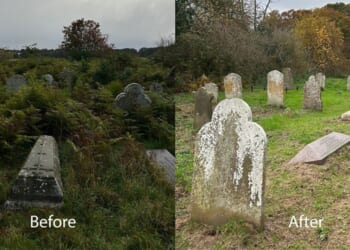
Madam, — I was delighted to hear about the restoration of the bones of the Anglo-Saxon kings and others in Winchester Cathedral (News, 16 January). Sixty years ago, my organ teacher told me that when the organist used the deepest pedal stops, the bones rattled. I hope that problem has been solved now, as well as the remains sorted.
ANDREW BODY
St Ives, Cambridgeshire
Augustinian wisdom
From the Revd Dr Cally Hammond
Madam, — I am flattered to find an insight of St Augustine attributed to me (Sunday’s Readings, 9 January). The quotation is an ancient counterpart to Wittgenstein’s observation that using words to explain words is like trying to fix a ruined spider’s web with one’s fingers.
CALLY HAMMOND
Cambridge
The passage from “Using words” to “relieving the itch” should have been in quotation marks. Our fault. Editor
The Editor reserves the right to edit letters.