IN A broad, airy park, I gaze up at the statue of a young man poised on a rearing horse. It’s a dramatic portrayal of the legendary warrior Alexander the Great, who was born and bred in Macedon, the wild and lovely northern region of Greece. I’m in Thessaloniki, its bustling, stylish capital. Founded by Alexander’s successors, it hugs the shore of the shimmering waters of the Gulf of Thessaloniki, where yachts and ships glide up and down the coast in the distance.
I’m off to explore the city, and, starting at the beginning, follow the trail through the history of ancient Macedon in the Archaeological Museum of Thessaloniki — a must-see with a host of treasures, including some fabulous golden finds from the tomb of Alexander’s father, Philip II. Outside, I find Greece’s second-largest city easy to navigate, with its straight avenues lined with elegant buildings. All around the city, too, within close range of one another, are the remains of Thessaloniki’s eventful history, which includes centuries of Turkish rule.
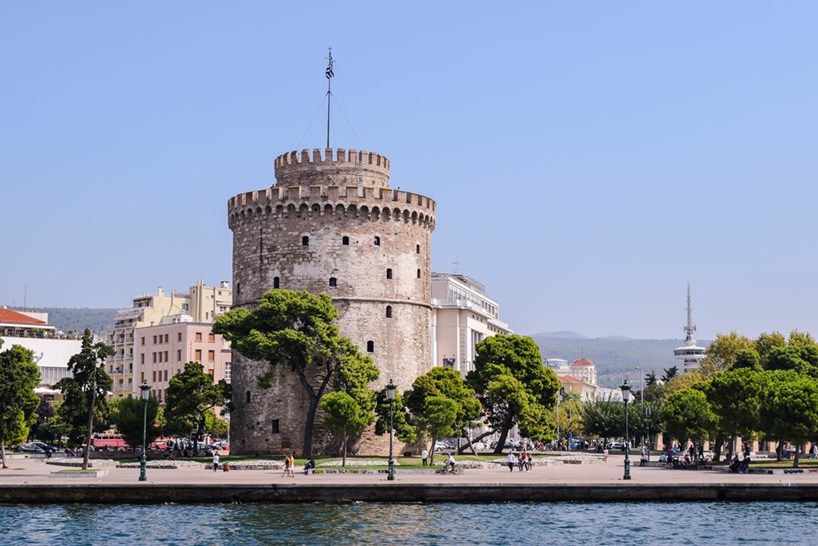 Pixabay/Emilia Babalau-MaghiarThe White Tower
In a garden beside the park, the White Tower rears up above me beside the sea. Built in 1430 and once part of the city walls, it has a bloody history, but is now a cherished landmark. Making my way up the slope from the harbour, I find the ruins of the palace of the Roman Emperor Galerius (notorious for his persecution of Christians), and, close by, the vast Arch of Galerius, built to celebrate one of his military conquests in 297. Only several blocks away, I come across the impressive reminder of the earlier Roman rule, where the ruins of their forum cover an entire square.
It was in that time, too, that the city’s rich religious era began. After St Paul visited the city — twice — and wrote two letters to his followers here, the city became a leading Byzantine centre. This is set out in the Museum of Byzantine Culture, and I’m keen to discover its famed churches, too.
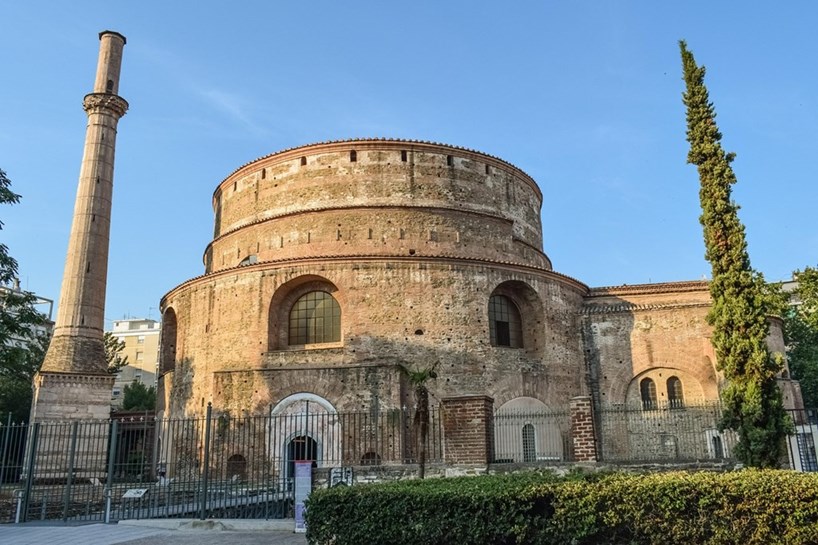 Pixabay/Dimitris VetsikasThe Rotunda
The Rotunda, the oldest and most renowned, is easy to spot. Built as a mausoleum, it was later turned into a church. Inside, I feel dwarfed beneath its huge dome, and admire the traces of its original mosaics.
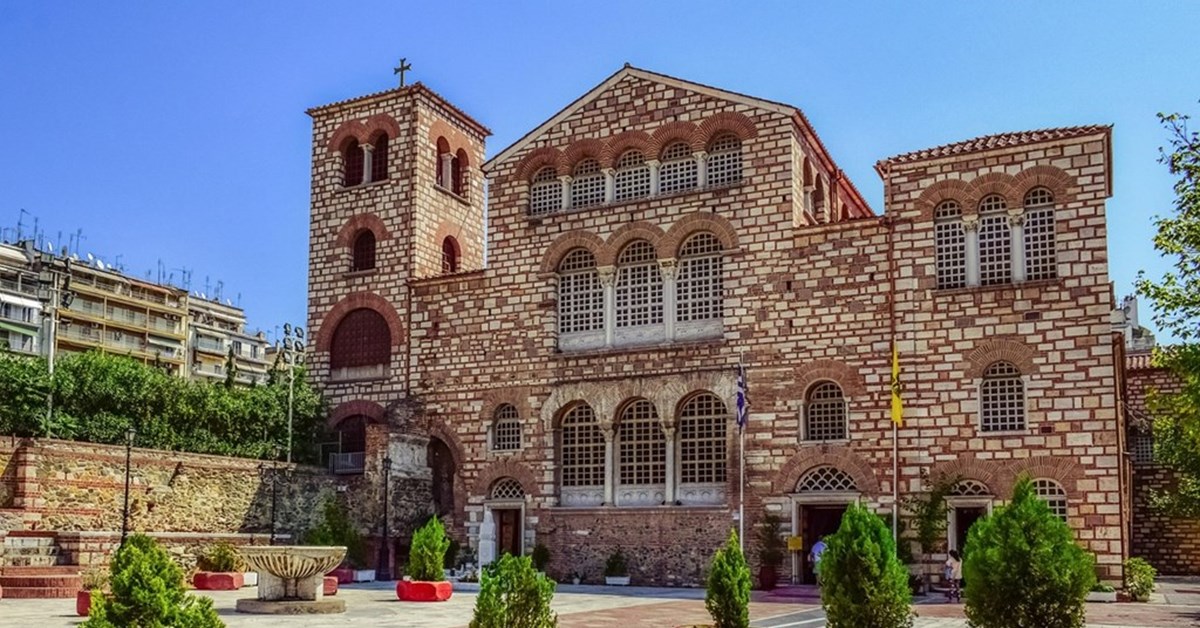
The Church of Hagia Sophia, surrounded by leafy gardens, still has a minaret. Like many of the city’s churches, it was used as a mosque under Ottoman rule. Other churches range from the vast fifth-century Agios Dimitrios — the largest church in Greece — to the tiny and exquisite 11th-century Panagia Chalkeon, nestled beside the street and framed by palm trees.
I spend several hours in the 1881 birthplace of Kemal Atatürk, the founder and first president of modern Turkey. Like the other attractions, the house on Apostolou Pavlou Street, turned into a museum in 2013, is close to the city centre.
Thessaloniki is lively and prosperous, with a cosmopolitan vibe: glossy boutiques fill the streets; so there is tempting shopping on hand. Thessaloniki is also noted for its food. The Bezesten, the old Ottoman cloth hall — now a food hall with terrific local produce and eateries — is a delightful find. In the evenings, the lively restaurants of the Ladadika district make for the perfect hangout to end days of exploring.
Travel details
EASYJET (easyjet.com) flies from London to Thessaloniki from £45.99 one way. Visit the website The Man in Seat 61 (seat61.com) about travelling to Thessaloniki by train. The author stayed at the Electra Palace Hotel (electrahotels.gr), a five-star hotel in the city centre: double rooms from approximately £187.
TRAVEL AND RETREATS is edited by Christine Miles. Tours and holidays advertised are not guaranteed or underwritten by the Church Times or Hymns A&M. Readers should check for ATOL/ABTA guarantees and take out insurance. Details are correct at the time of publication. See also www.gov.uk/foreign-travel-advice