I RECENTLY took the funeral of a much loved parishioner. On the order of service, along with family photos, was an image of a snowdrop in the snow. Members of her family attending the service wore brooches and scarves bearing the emblem of a snowdrop. It emerged that, at the age of ten, the deceased had had diphtheria and spent six weeks in an isolation hospital. She had one doll and one book; no visitors were allowed; and meals were left outside her door.
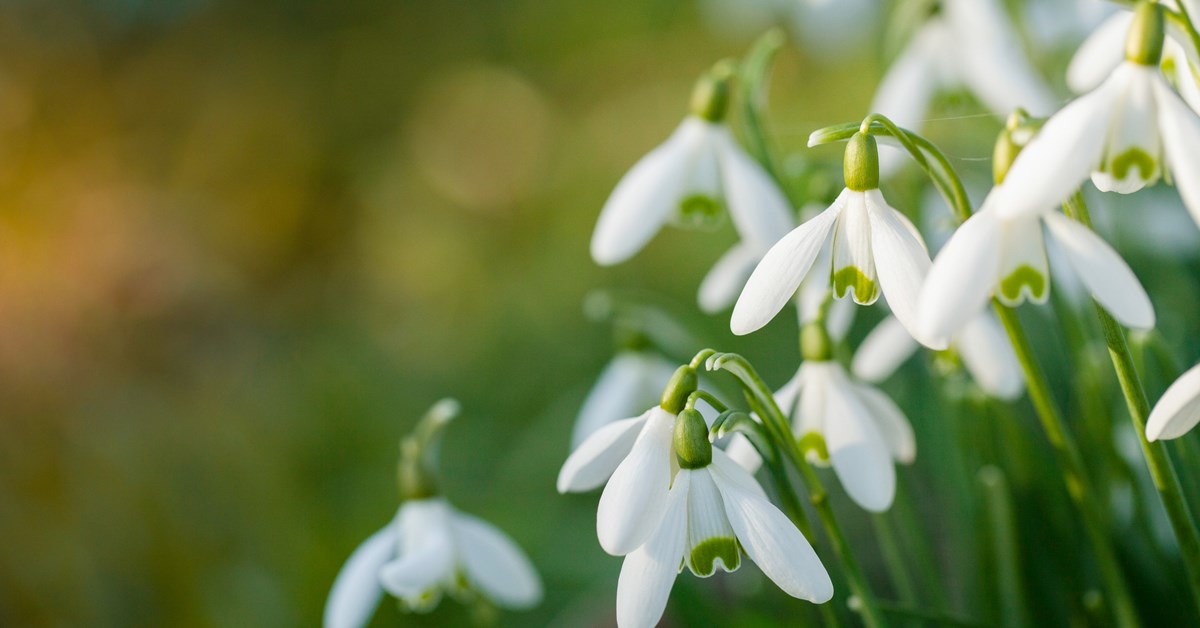
During her long stay in hospital, fearing that she would never leave the building alive, she looked out of the window one morning, and saw a small cluster of snowdrops, just visible through the snow. “If those fragile flowers can survive through the cold and the snow, then I can survive this illness,” she thought to herself. Surprising the hospital staff, her condition improved, and since then the snowdrop had become a family symbol of strength in adversity.
This simple story of hope meshes with the broader myth of the snowdrop, or Candlemas Bell — so called because its flowering coincides with the feast celebrated on 2 February. According to legend, when Adam and Eve were ejected from the Garden of Eden, as they trudged out into the snow, holding hands and shivering with cold and despair, an angel took pity on them. Breathing gently on the falling snowflakes, the angel transformed them into snowdrops, whispering to Eve that these fragile flowers — the first to bloom in the cold depths of winter — would be a reminder of brighter days to come, and a reassurance that it would not be winter for ever.
SO MUCH for the fable, which, like so many fables, holds truth in its untruth, and is thus a good place to begin when considering the feast of Candlemas. In the northern hemisphere, 2 February is a turning point in the year, falling as it does halfway between the winter solstice and the spring equinox. Timed to supersede the pagan festival of Imbolc, it is when the first signs of spring are just becoming evident, when days are getting perceptibly longer, and the darkest nights of winter are falling away.
Additionally, it occurs just a fortnight after “Blue Monday”, purportedly the unhappiest day of the year, when post-Christmas financial stress is at its greatest, the impact of the return to work is making itself felt, New Year’s resolutions are falling away, and summer holidays are far distant, as we gaze from our windows at the storm-tossed trees and soaking pathways.
Even so, we are given occasional glimpses of eye-achingly bright winter sunshine, which lights up our rain-battered landscapes, giving them a luminescence that is unique and lifting the soul in an appreciation all the greater because it is so brief and fleeting. So, too, does Candlemas break into the bleak lethargy of post-Christmas liturgy, offering a glimpse of hope and a celebration of light before the dark purple of Lent takes up the rhythm of the seasons.
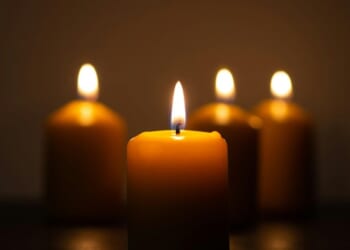
THE themes of Candlemas are the age-old ones of light conquering darkness; of patient hope in times of struggle and hardship; and of the moving aside of the old to make way for the new. Each can form the focus of the festival, depending on where we are in our journey, either individually or collectively. Family services and workshops can focus on candle-making and candle-blessing, a continuation of the tradition of blessing the church’s supply of candles for the year. Congregations can be given a candle to take home and place in their windows, Christingle-fashion.
More powerfully — since it invites active participation and engagement — congregations can be invited to bring a candle from home: one chosen specifically for the purpose, and perhaps symbolising a particular and personal reason for hope and rejoicing. These can be blessed together as a reminder of the communal nature of our faith, then returned to the individual or family, each bringing the Christ-light into their domestic setting.
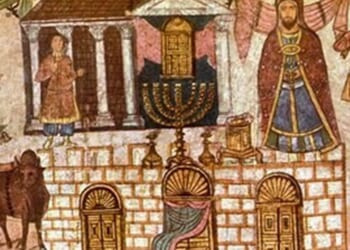
The subject of answered prayer can be explored, Anna and Simeon each having spent years waiting patiently for the Messiah, each coming to terms with grace and courage with what was surely an unexpected manifestation — who expects the “glory of God’s people” to be a small child of working parents? We can be encouraged to stay strong, and hold on to our hopes and wishes for the coming year, trusting in new growth in our lives as well as in our surroundings, preparing the ground for green shoots and future flourishing.
BUT, alongside the messages of hope and encouragement, we should perhaps remain aware of the purple thread that runs alongside the green; for Candlemas falls shortly before Ash Wednesday and the austerity of Lent. The dark words of Simeon to Mary — “and a sword will pierce your own soul, too” — are a reminder of the pain and suffering that will have to be endured: the crucifixion before the resurrection.
The Candlemas procession often ends with the extinguishing of candles at the church door, as we turn away from Christ’s birth and toward the Passion, praying that we might never “forsake the light of Christ”, and asking for the grace to “enter deeply into the Easter mystery”.
The Revd Dr Sally Welch is Vicar of the Kington Group in the diocese of Hereford.
There are many websites that offer helpful suggestions for Candlemas celebrations and crafts:
sunhatsandwellieboots.com has some good, child-friendly craft ideas;
episcopalchurch.org encourages us to celebrate the French holiday of la Chandeleur and eat crêpes; and
elydiocese.org has helpful links for resources, as has the “seasonal resources” section of bradfordcathedral.org.uk.