OVERNIGHT, I became disabled, seriously: tetraplegic. For the first few months after such a drastic spinal injury, it is a question of survival. Then, the challenge of “rehab” dawns. Initially, it seems a simple target: to be able to sit out of bed for four hours. If you can do this, then the door opens to intensive rehabilitation at one of the specialist centres for spinal injuries.
With great gnashing of teeth, I could endure those four hours, and was rewarded with five months of rigorous rehabilitation at the National Centre for Spinal Injuries, housed in a corner of Stoke Mandeville Hospital in Buckinghamshire.
My introduction to the realities of my future life was bleak. I was swallowed up by a feeling of life closing down, and I was scornful of the mandatory rehabilitation regime. It was not a good place to be.
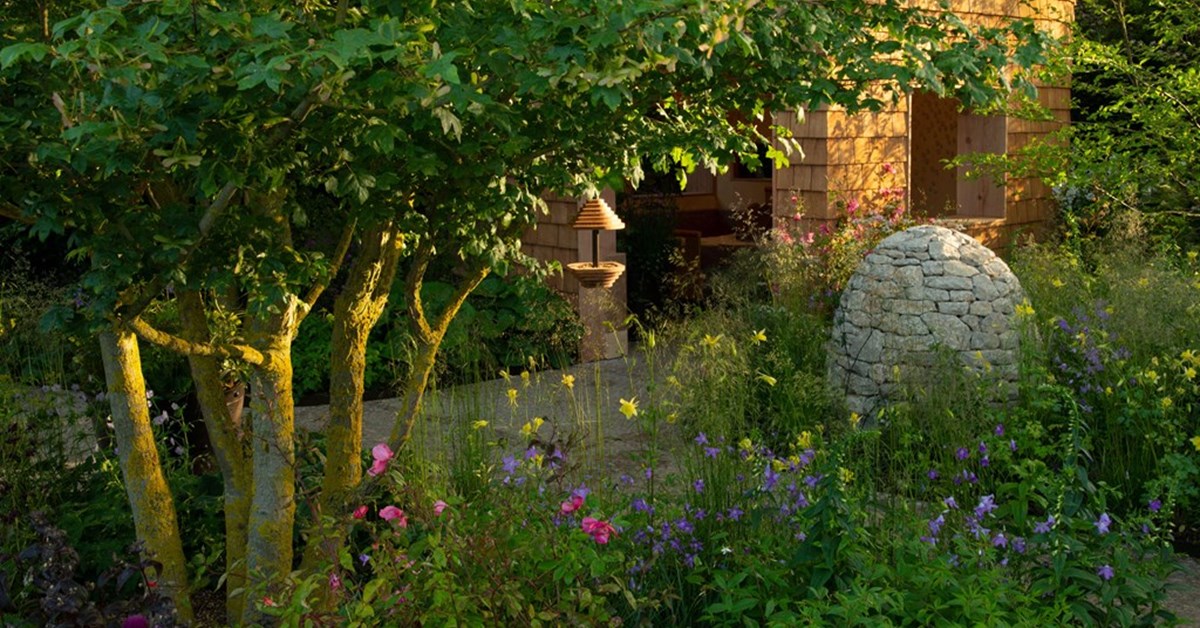
The only respite was a most beautiful garden, designed for wheelchairs; and in its midst was a haven — an upmarket, elegant refectory. Here you could bring visitors; here you could enjoy the lemon drizzle brought in by volunteers. Here, nobody counted the cost, although donations were welcome. Here, the rector of my church, visiting from London, prayed with me — mighty prayers that melted my negativity; and, from then on, I could embrace the challenge of what life was to become.
THIS unexpected and surely unrivalled garden, with its hospitality, was my holy place, a sanctuary with a name: Horatio’s Garden. Such an unusual name for a space so bright and modern was elucidated by a modest plaque revealing a story almost too sad and traumatic to tell.
Horatio Chapple, aged 17, was on a school science trip to Svalbard, a Norwegian archipelago in the Arctic Ocean. Horatio was taken by a polar bear that attacked his camp; heroically, he bided his time when confronted by the bear to enable his friends to flee. This was in 2010.
There was more information about Horatio. As part of his Duke of Edinburgh Silver Award, he had volunteered in a hospital specialising in spinal injuries, and had become deeply concerned for the well-being of those with spinal injuries. His family had responded to their loss by setting up a charity, Horatio’s Gardens, to act on Horatio’s passion. This was the heartrending source of my holy place.
The charity has gone from strength to strength with, now, a dozen gardens throughout the UK, each inviting the suddenly disabled to access a generous, calm, and restorative sanctuary.
For me, Horatio’s Garden at Stoke Mandeville was where I sensed the legitimacy of hope, despite my calamity. The cascade of goodness that has flowed from the tragedy of Horatio’s death confirms the rightness of hope, even in the most broken and heartrending of circumstances.
As I have now discovered, hope is the indisputable foundation of the process of adjustment and rehabilitation. And so, for the flowers and grasses, the kindness of so many, and for the life of Horatio Chapple, I give thanks.
Ann Morisy worships at St Leonard’s, Streatham, in south London.