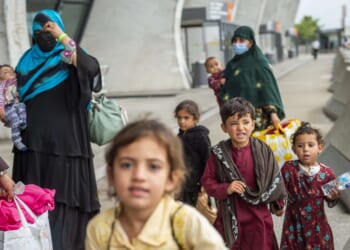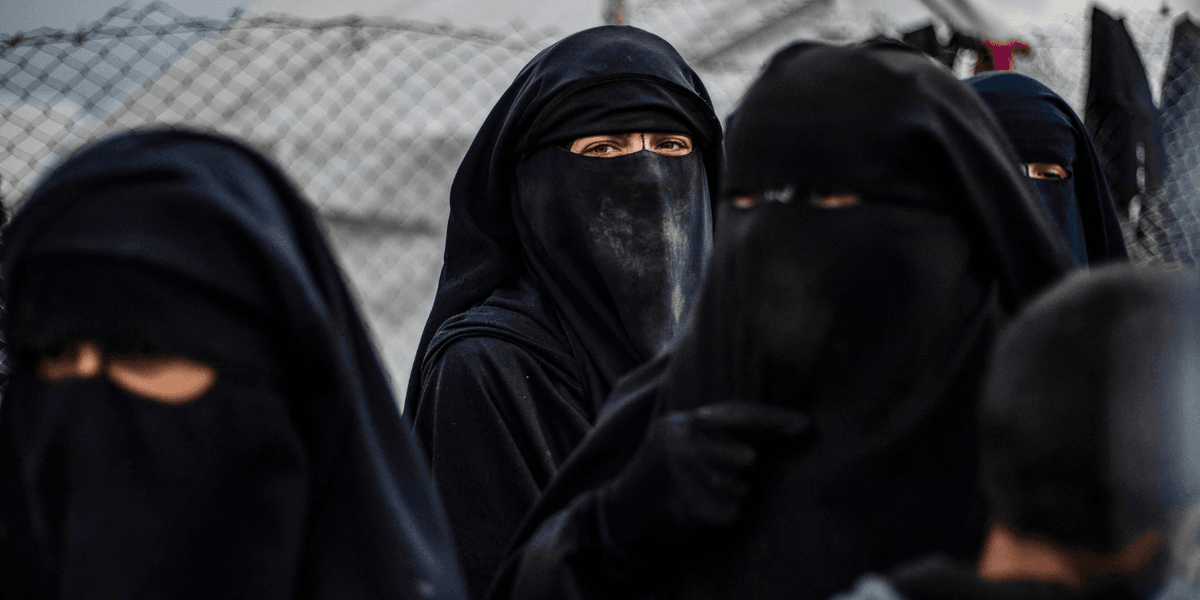
Britain has quietly brought back several women linked to Islamic State, along with their children, from detention camps in Syria, according to a senior official.
The so-called Isis brides had been held in facilities run by the Kurdish-led Syrian Democratic Forces (SDF), the same camps where Shamima Begum remains detained.
Despite the discreet repatriations, 29 people who hold or previously held British passports are still being held at Al-Roj camp near the Iraqi border.
Rasheed Afrin, co-director of the site, told The Times that six British women previously held at the camp, along with nine children, had been repatriated.
Al-Roj is expected to be handed over to the Damascus government under President Ahmed al-Sharaa as Syrian forces move to reassert control over territory currently held by Kurdish authorities.
Begum was one of three schoolgirls from Bethnal Green in east London who travelled to Syria to join the terrorist group in 2015, when she was 15 years old.
Her two companions are believed to have died during fighting between Isis terrorists and coalition forces.
The then-Conservative government stripped Begum of her British citizenship after she was located in SDF custody in 2019, a decision that sparked widespread public debate.

The so-called Isis brides had been held in facilities run by the Kurdish-led SDF
|
GETTY
While the UK’s official position has not changed, the Foreign Office has allowed a small number of women to return with their children following individual case assessments.
Most of those permitted back were under the age of 18 when they travelled to Syria.
A report published in November by the Independent Commission on Counter-Terrorism Law, Policy and Practice said that three adult women and 18 children had been repatriated – but only two of those cases were publicly acknowledged.
The security situation at Syria’s detention camps has deteriorated as Damascus launches military operations aimed at ending Kurdish autonomy in the northeast of the Middle Eastern country.
ISLAMIC STATE – READ THE LATEST:

It is estimated that 29 people who hold or previously held British passports are still being held at Al-Roj camp
|
GETTY
At Al-Hawl, the larger of the two main camps, the handover descended into chaos after SDF forces withdrew ahead of advancing Syrian troops.
It was reported that riots broke out, fires were set and dozens of detained women escaped amid the unrest.
Jihan Hanan, who served as Al-Hawl’s director until this week, told The Times: “There were no preparations for the handover. I’m looking at the videos and pictures coming out and it burns my heart.”
The camp once housed more than 40,000 people, though numbers fell to around 23,400 at the start of this year following repatriations by Iraq.

Al-Hawl camp once housed more than 40,000 people
|
GETTY
Aaron Zelin, a jihadist expert at the Washington Institute for Near East Policy, warned that Damascus had acted too quickly without proper coordination with the SDF or the US.
“The biggest question is what happens to all the third-country nationals,” he said.
“I imagine we’ll see a continuation of this play out, where the foreigners are just left there to rot.”
The human rights charity Reprieve, which represents some of the detained families, condemned Britain’s approach.
Its chief executive, Maya Foa, said: “While all of our security allies have a policy of repatriating families, Britain has taken a ‘do nothing’ approach.
“Over two governments they have brought home just a handful of women and children – and there have been even fewer under this government than the previous one.
“This approach is totally inadequate in the current moment, when British families are at acute risk, in a dangerous detention camp that could collapse at any time.”
She added that the US had long since brought its citizens home and urged the UK to follow suit, arguing that any adults facing allegations could be prosecuted in British courts.