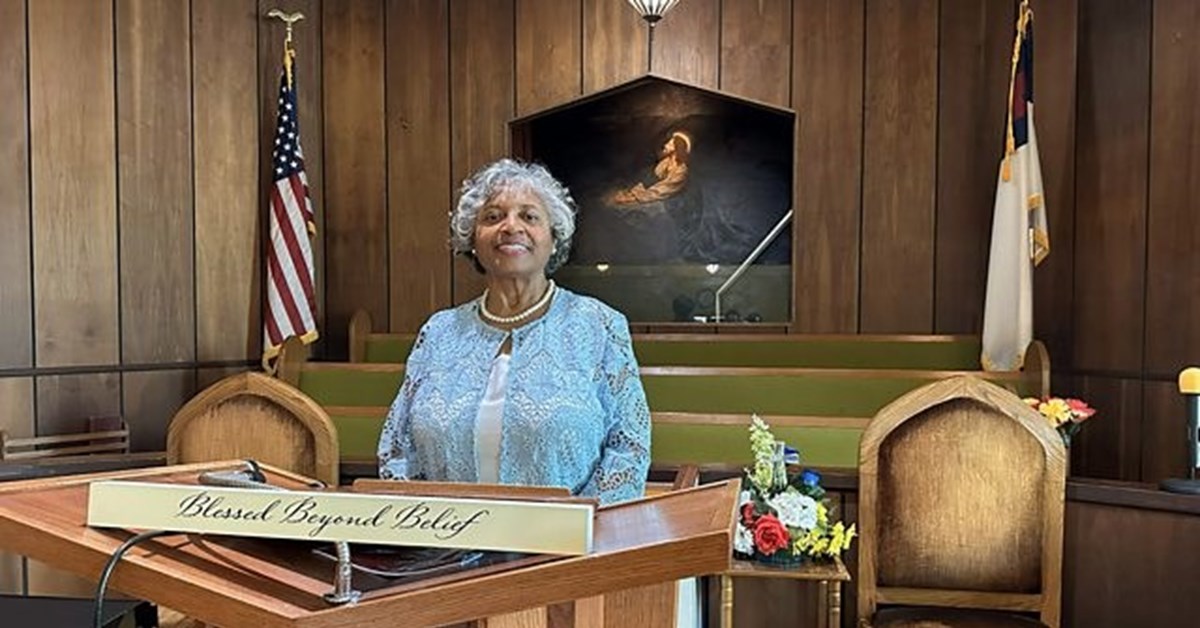
WOMEN have always been significant guardians of African-American culture and faith, but, in the rural south of the United States, it is still something of a rarity to see a woman in a pulpit. On Heart and Soul (BBC World Service, Friday), Alvin Hall, better known as a financial journalist, travelled back to his native rural southland to meet some “Daughters of Thunder”: Methodist and Baptist women pastoring predominantly Black churches.
Particularly interesting were the women still performing a traditional Nonconformist itinerant ministry. The Revd Dr Jacqui King had sometimes pastored multiple small churches at the same time as a Methodist “circuit rider”. Donna G. Hawkins, a Baptist pastor, found herself welcomed to lead worship in nursing homes and retirement communities, establishing a ministry for herself even while most churches barred their pulpit to her.
Memories were told of previous generations of women who, barred from preaching in church, “would go down to the railroad tracks and preach to the rocks”. Similar stories are still being made. After a hurricane in 2005 disrupted the electricity supply, one pastor drove through the dark night to preach to the linemen who were working to repair the power lines.
What goes into making a saint? All Things Considered (BBC Wales, Sunday) celebrated St Dwynwen’s Day — the feast of Wales’s patron of lovers — by exploring “Saints and Saintliness”. St Dwynwen was so keen on chastity that she had to tell her lover to cool it, and he was turned into a block of ice, while she went on to become a nun. Well, maybe: we know of this tradition only thanks to Iolo Morganwg — a notorious late-18th and early-19th-century literary forger.
Wales has a mosaic of saints, some local to a few parishes, some national or shared with the wider Brythonic world, including Brittany and Cornwall, and some international — St Martin had a strong cult in medieval Wales.
The concept of sainthood was explored not only in Christianity, but also in Islam. While charisma, miracles, and Muslim analogues to “heroic Christian virtue” are part of the story of Islam’s walis, some have been declared saints simply because “God wills it.”
While Christianity requires someone to have died before they can be considered a saint, whether through the Vatican’s formal canonisation process or otherwise, Professor Mark Sedgwick, an academic expert on saints in Islam, reported a Sufi tradition of living saints, although both these and the tombs of dead walis sometimes attract criticism, and even violence. The reasons for this went entirely undiscussed.
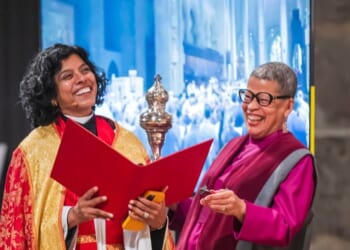
It was left to the Bishop of Llandaff, the Rt Revd Mary Stallard, to try to explain Anglican views of sainthood — she referred to the image of saints in stained glass, people through whom God’s light shines. She was not asked about the thorny topic whether Anglican Churches recognise new saints.