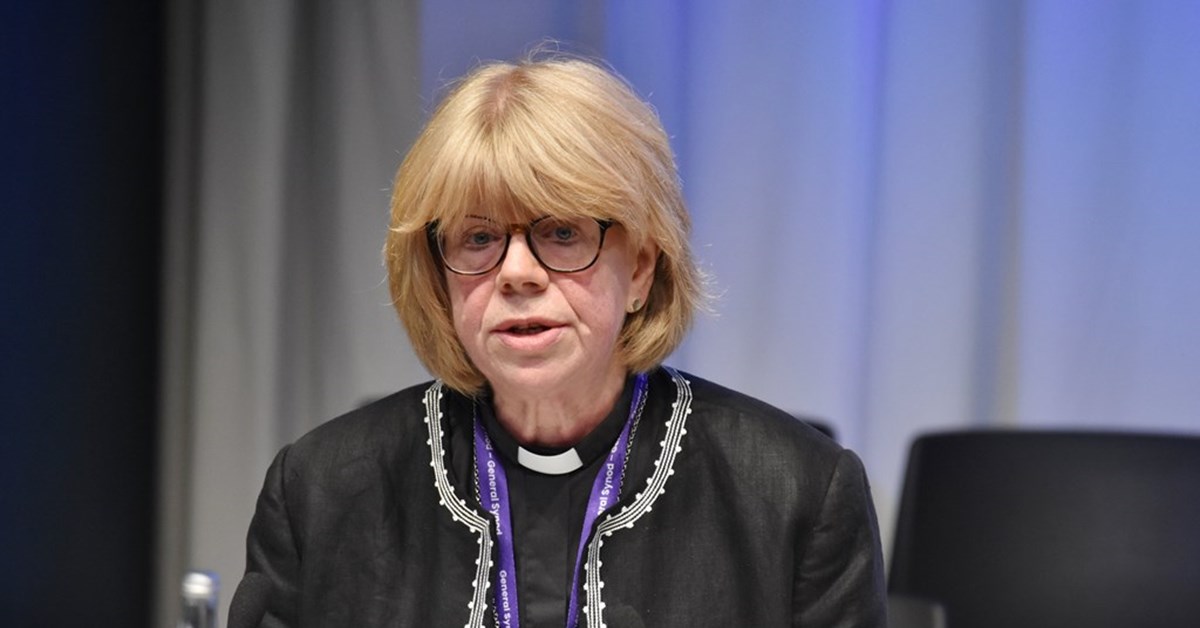
REFORM of social care in England should focus not on independence, but on “interdependence”, and there should be a shift in collective attitudes towards older people and those with disabilities, a paper endorsed by the Archbishop of Canterbury, the Most Revd Sarah Mullally, says.
In the General Synod next month, Archbishop Mullally is due to introduce a motion to support the 2023 report of the Archbishops’ Commission on Reimagining Care, which was chaired by the Rt Revd James Newcome (then Bishop of Carlisle) and Dr Anna Dixon (now MP for Shipley). It urges the Government to draw on the commission’s recommendations as it sets up the National Care Service.
The commission called for a clear Christian vision to mend the social-care system: a plan of action that would give equal dignity to everyone. “The heart of this report is a deeply Christian understanding of what it looks like to live together in community, with people caring for and supporting one another in relationships characterised by mutuality and interdependence” (News, 27 January 2023).
There would have to be a change in the attitudes underpinning the current system, the commission warned. “A reason why we do not value care and support is because of underlying social attitudes towards age, disability, and mental illness.”
It identified the need for a “visible and broad coalition across England, including people with lived experience of care, politicians of all stripes, civic institutions, and faith communities”.
The briefing paper (GS 2419) published last week summarises the findings, offers theological reflection, and sets out the part for the Church to play in enabling the full participation of people who draw on care and support.
It sets it in the context of adult social care and Baroness Casey’s Independent Commission on Adult Social Care, formed at the request of the Prime Minister, which began its work in April 2025. Financial pressures on councils are the most quoted reason for unmet need, the paper says. “Many people may be only receiving basic support, not what may be required to enable their flourishing, with investment in relationships and participation in community life.”
The Archbishops’ Commission, the paper says, “gently pushed back on the idea of independence being a prized goal for social care, instead focusing on interdependence as a necessary condition for recognising our fundamental need for one another”.
The first of the Archbishops’ Commission’s findings was the re-examination of personal and collective attitudes to older people and those with disabilities, with the recognition that “at different times in our lives almost all of us will either be caring for someone or being cared for by someone. . . Care and caring are not binary states, but rather are dynamic, with often fluid boundaries.”
It called for the development of a National Care Covenant, led by national government in partnership with a wide range of stakeholders. It also recommended several technical reforms to give those drawing on care and support more say over the services that they received, and responsibility for managing their own budget, “making the social-care system simple, consistent, and person-centred as part of a long term aspiration that access to care and support should become a universal entitlement”.
The report listed the Church’s response to the challenges in social care as “pastoral, practical and prophetic”, the paper says. It describes the application of the theological principle of imago Dei — that all human beings are created in the expressed image of God — to national examinations of adult social care as “important and radical”.
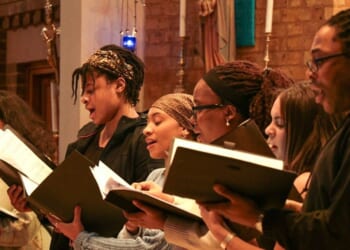
Churches can and do play an important part in this in diverse ways, it suggests, by, among other things, supporting their congregations and wider communities, reducing loneliness, and “ensuring that those who draw on care and support are enabled to participate fully in church life”.
The paper refers to “many practical examples of church-based provision in partnership”, including through initiatives such as Anna Chaplaincy, Renew Wellbeing spaces, Parish Nursing, and the Places of Welcome network. “Every parish church plays a key role in this, by being accessible, welcoming, and inclusive places and by supporting one another in community.”
It also highlights the Church Urban Fund (CUF), with which the Archbishops’ Commission is planning to develop a package of resources. It says that CUF would be “glad to hear from any parishes who would be interested in participating in the development of those resources”.
The paper concludes: “It is crucial that we make the most of the upcoming opportunity for reform.”