CHURCH buildings are not just functional shelters for worship. They are sermons in stone. They preach, whether we intend them to or not. They encode and extend theology. Their arches, thresholds, steps, aisles, and altars are not neutral elements: they are theological artefacts. These architectural decisions materialise ideas about God, humanity, holiness, and belonging.
Sacred architecture mirrors the values and priorities of the communities that built them, including assumptions about which bodies belong within their walls. In this way, church buildings are not only reflections of inherited belief: they are instruments that form belief. They teach us how to move, who may lead, and what kind of presence is imagined as welcome.
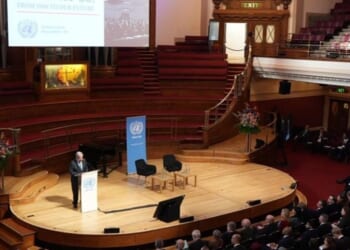
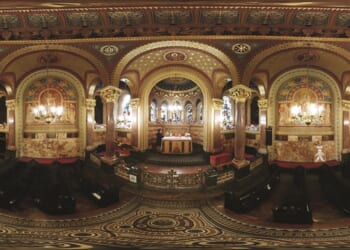
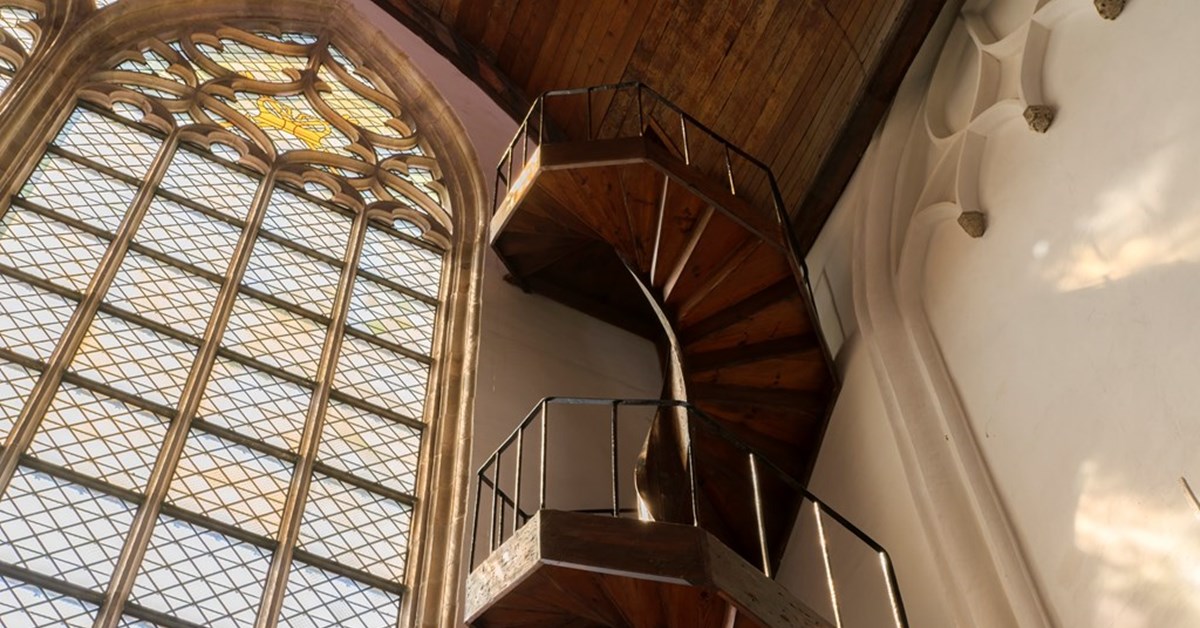
Many historic churches manifest an architecture of separation and spectacle. Elevated sanctuaries, narrow staircases to pulpits, long axial naves — these are more than aesthetic or acoustic choices. They represent theological commitments. They privilege a spirituality of ascent, hierarchy, and visual centrality, rooted not in the radical openness of Christ’s ministry, but in centuries of inherited metaphysics that conflate holiness with elevation and perfection with symmetry.
These design choices are often accepted as sacred norms rather than questioned as theological statements. The result is that sacred spaces frequently function as gatekeepers. They quietly proclaim who may draw near to the holy, and who must remain at the margins.
The most visible expression of this exclusion is physical. Steep stairs, uneven floors, and inaccessible chancels signal an unspoken assumption about the “normal” worshipper: mobile, sighted, hearing, neurotypical, and verbally fluent. Others are positioned as exceptions — accommodated, if necessary, but rarely centred. Even when access features are added, they are often installed with reluctance, reinforcing the idea that access is a concession to modernity, rather than an expression of gospel welcome.
This exclusion is not merely logistical: it is theological. Architecture shapes participation. When sacredness is marked by height and distance, it implicitly aligns divine proximity with physical capability.
THIS vertical theology owes more to Neoplatonic cosmology than to the incarnational, grounded ministry of Jesus, whose way was always downward, toward the lowly, the excluded, and the vulnerable.
As John Hull observes in his critique of visual-centric church design, such spaces often embed a spirituality of transcendence that marginalises those who cannot see, walk, or climb. This aesthetic reinforces a false anthropology — one in which wholeness is equated with the capacity to move, to see, to access without adaptation. A chancel reached only by steps says more than we think. It whispers that grace is elevated, that God is up there, and that some bodies are simply too far down.
This distortion carries particular weight in the sacramental economy of space. When fonts, pulpits, and altars are inaccessible, the very means of grace are placed beyond reach. The eucharist becomes a spectacle rather than a shared meal. Baptismal fonts become ornamental rather than communal. The architecture does not just exclude: it withholds.
Compounding this exclusion is a longstanding theological tradition that idealised the rational, symmetrical, and self-contained body. From classical philosophy through Scholasticism, these ideals became woven into Christian doctrines of sanctity, order, and purity. Disability was frequently cast as deficiency, sin, or anomaly, an interpretation reflected not only in theology but in the built environment. These spaces were not designed with disabled bodies in mind, because they were not imagined as part of the body at all.
YET, even as churches attempt to address this legacy, the response is often shallow. Ramps are added to side doors, lifts hidden behind locked cupboards, access discussed as a problem of logistics rather than as an expression of theology. The very language of accommodation suggests that inclusion is optional, even regrettable, a compromise with modern expectations rather than a manifestation of ancient hospitality.
This is a liturgy of exclusion in stone. And it is doctrinally incoherent. A Church that names itself as the body of Christ cannot simultaneously design its spaces in ways that dismember that body. It cannot claim universal grace while restricting who may access the altar. The contradiction is not just ethical, it is ecclesiological.
This exclusion is often perpetuated by an appeal to “historical integrity” or “aesthetic preservation”. But we must ask: what is the theology behind these values? What vision of God is being preserved when we prioritise stone over presence, or symmetry over welcome? When did access become an affront to beauty? These are not architectural questions alone: they are theological ones.
What is needed is not the demolition of heritage, but its theological reinterpretation. Sacred architecture must be read anew, not only as an artefact of the past but as a site for contemporary ecclesial imagination. What do these spaces reveal about what we have believed? And what might they become if reconfigured in light of the God who meets us not at the summit, but on the road?
Sacred space becomes truly sacred not because it preserves an ideal form, but because it opens itself to grace in the present. It becomes holy not through elevation, but through embrace. When space is reconfigured to welcome all bodies, not as guests but as members, then the architecture begins to align with the gospel it proclaims.
The Revd Tim Goode is Canon for Congregational Discipleship and Nurture at York Minster. This is an edited extract from his book Breaking, Not Broken: Ableism and the Church after Constantine, published by SCM Press at £30 (Church Times Bookshop £24); 978-0-334-06316-2.