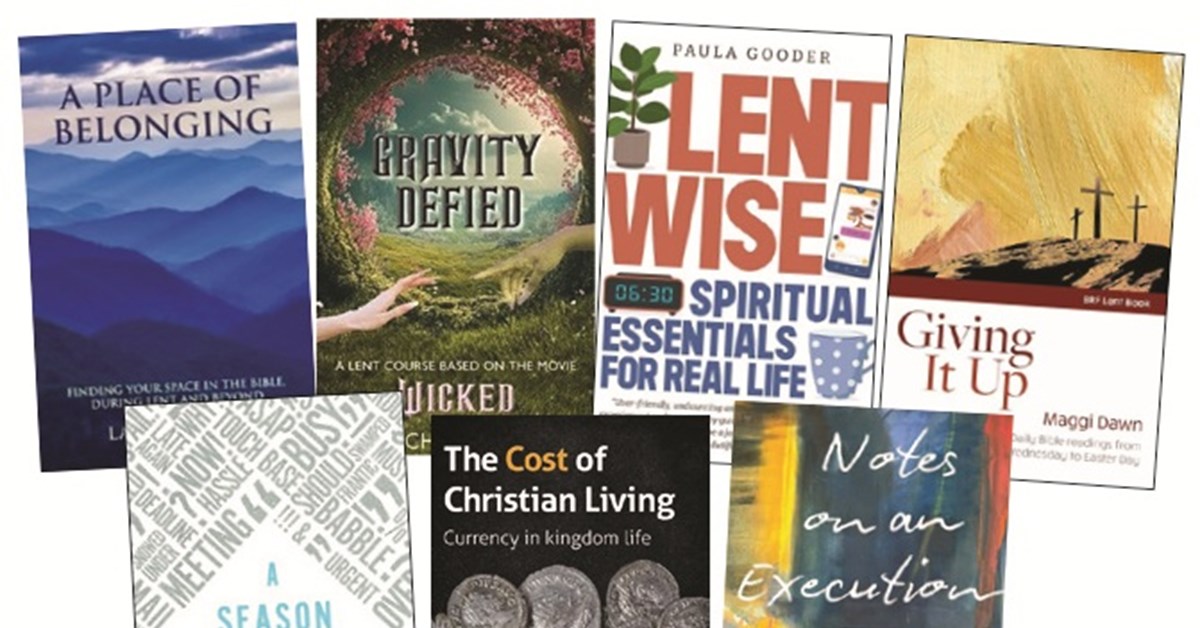
VARIETY is the spice of life, so the saying goes, and 2026 brings a nicely diverse set of Lenten volumes to choose from. For group or individual use, extracting something from scripture to reframe how we see the world now, or using the world around us to enrich our understanding of scripture — all is on offer here.
The Bible has a variety of images that keep on recurring — gardens, water, fire, mountains, and so on — and that appear in the text not merely because they are there, but because of what they mean. The texts of scripture are never merely descriptive: they have resonances and meaning that can interrogate and transform the reader’s perception, if only the reader has eyes to see.
I suppose that conviction is what is behind Lavinia Byrne’s latest book. A Place of Belonging presents a series of biblical texts, examines them, and then draws out what might be of good for the reader, leading them to a richer understanding not just of the Bible, but also of their own experience too. Unafraid of critical tools — indeed, seeing them as essential to deeper understanding — this book is a fine example of a Lent book that is not just a book for Lent. Highly recommended.
Rachel Mann goes to the movies a lot. And then she writes about them. Gravity Defied is the third time she has taken a film — in this case the “prequel” to The Wizard of Oz, Wicked — and invited the viewer to see a deeper meaning behind the story, a story that would appear to have little to do with the solemn season of Lent.
Beneath its “fairytale” exterior, the film has characters, themes, and emotions that are all too familiar, and also more to do with Lent than one might superficially imagine. As the author says, “This Lent book . . . is an invitation to explore pressing yet perennial human dilemmas and challenges, placing them — ultimately — in the wider frame of the Christian vocation to grow ever more into the likeness of Christ.”
Obviously, it is useful for the reader to have first seen the film. For group use, the book divides into smaller portions for discussion, leading into reflection on how the section enlightens and enriches Christian experience. This is a good example of extracting good news from apparently unpromising places, which is one of the many things Lent is meant to be about.
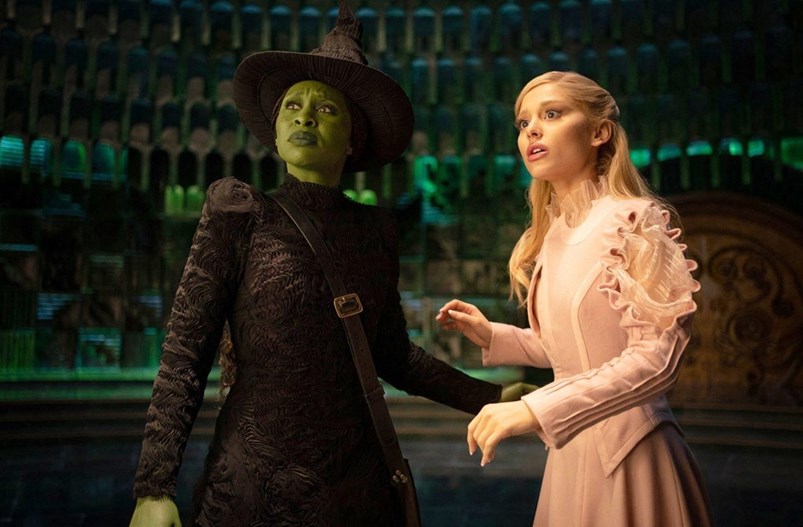 AlamyCynthia Erivo and Ariana Grande in the film Wicked (FlixPix/Universal Picures, 2024), available to stream on digital platforms. It provides the basis for Rachel Mann’s Lent course Gravity Defied
The son of a bank manager, I find money a subject very close to my heart. Something similar is true of contemporary Church, in which sometimes monetary considerations can seem to outweigh missionary ones. It was ever thus, I suppose: money makes the world go round; but is it right for Christians to be bothered about all that? Shouldn’t we just give to Caesar what belongs to Caesar and leave it at that? or let the PCC treasurer worry about the Common Fund and get on with whatever we imagine “mission” to be?
Thankfully, we have Martyn Percy’s latest book, The Cost of Christian Living, to address these and other questions. Actually, it is much more than that. What we have here is a series of really rather high-quality exegeses of a series of Gospel passages that allude to money, transaction, debt, payment, riches, generosity ,and so on.
The book is intended for group or individual use and is divided into two parts, of which the second uses themes that are more orientated to Lent and Holy Week. This is the book that I will probably reread more slowly in Lent, albeit in order to be discomforted again. “Mission and ministry are not for the benefit of the church,” the author reminds the reader. Another Lent book that is not just for Lent.
A century ago, a friend of the novelist and poet Charles Williams (one of my Anglican heroes) asked what it meant to live the Christian life: what was one actually supposed to do? Williams’s answer was “Love, laugh, pray, and be intelligent.” In order to do these things, though, we need resources, spiritual food. What might that consist of?
Paula Gooder has a gift for hiding much learning and substance beneath an accessible and inviting format. In Lentwise, she looks at five different passages of St John’s Gospel, and uses them as the jumping-off points for group discussion. Over five weekly sessions, she suggests five things that we need for the journey: a compass to give us a sense of direction; bread to feed us; light to guide us; shelter to keep us safe; and water to refresh us. This admirably succinct book provides what is needed to set up a Lent group, including all kinds of practical suggestions and reassurances: you don’t have to be the parish priest, and previous experience is not necessary.
For any Christian, of course, the Bible is our primary resource, and a daily discipline of scripture reading is as good a foundation for Lent (and, it is to be hoped, the rest of the year) as there can be. Once again, the Bible Reading Fellowship and Maggi Dawn have come up with the goods.
A reissue of a volume first published in 2009, Giving It Up is the BRF’s Lent Book for 2026, and a good thing it is, too. The simplest format is usually the best: each day from Ash Wednesday to Easter is given a scripture reading, followed by a short meditation. Questions for reflection end each week. A subtle thematic arc of entering into the wilderness and slowly being changed in heart and mind will prepare the reader more truly to perceive the change above all other that is Easter. Of course, this would be used in groups, but I think its primary value lies as a daily manual for the individual. I occurs to me that it would be especially helpful for someone separated from church or community for whatever reason, by illness or geography.
A thing called “mindfulness” has risen in importance for many, and is often seen as something new rather than something that has been locked into the Christian tradition for centuries. I suspect this has happened in no small part because the practice of “meditation” or “contemplation” has become bogusly professionalised in many church circles and thus perceived to be out of the reach of “ordinary” people. Meditation and silence are seen as sets of skills to be acquired rather than ordinary dispositions that need to be gently learned.
Thank goodness, then, for Joshua Rey. A Season of Silence has 40 short sections, which makes it perfect for Lent, but it is not a Lent book as such: any time of the year will do. The idea is to introduce the reader slowly to the concept and the practice of silence. The key here is not to do too much too soon. The “technique” is to “sit, breathe, listen, here, now”. There is no great method: simplicity is the whole point.
Each day has an introduction, a reading, a question, a prayer, and, most important of all, a period of silence, initially of no more than two minutes. This time will be extended, but only gradually; the point is to establish a pattern, not to get “better” at something. Here is a very refreshing and accessible contemporary take on an ancient practice all too absent from our rather noisy contemporary Church.
Rhidian Brook is an established writer and will be familiar to all who listen to Thought for the Day on Radio 4. Notes on an Execution focuses on Holy Week and comes out of his time spent living in Jerusalem, and also responding primarily to St Mark’s telling of the Passion story. Delivered originally as a series of Holy Week addresses in York Minster in 2024, it appears here in print for all to appreciate.
The readings and liturgies of Holy Week are overwhelming and wonderful, and their revival in Anglican practice in recent years has been a good thing. As with anything, though, there needs to be balance, and this series of reflections tell the (over-?) familiar stories anew, written as if from the point of view of the people there at the time: imagine what it was like if you were there. There is nothing new here, in a way — after all, the Jesuits have been using this kind of imaginative meditation for centuries — but it is nice to have a modern take on it so beautifully written.
Have a good Lent. I hope that one of these books will help.
The Revd Peter McGeary is the Vicar of St Mary’s, Cable Street, in east London.
A Place of Belonging: Fragments of the love of God
Lavinia Byrne
DLT £12.99
(978-1-917362-14-6)
Church Times Bookshop £11.69
Gravity Defied: A Lent coursed based on “Wicked”, the movie
Rachel Mann
DLT £7.99
(978-1-917362-16-0)
Church Times Bookshop £7.19
The Cost of Christian Living
Martyn Percy
BRF £9.99
(978-1-80039-349-3)
Church Times Bookshop £8.99
Lentwise: Spiritual essentials for real life
Paula Gooder
Church House Publishing £9.99
(978-1-78140-545-1 )
Church Times Bookshop £8.99
Giving It Up: Daily readings from Ash Wednesday to Easter Day
Maggi Dawn
BRF £9.99
(978-1-80039-553-4)
Church Times Bookshop £8.99
A Season of Silence: Deep listening in a noisy world
Joshua Rey
Canterbury Press £12.99
(978-1-78622-661-7)
Church Times Bookshop £10.39
Notes on an Execution: Lenten reflections on the last days of Jesus
Rhidian Brook
SPCK £9.99
(978-0-281-09172-0)
Church Times Bookshop £7.99