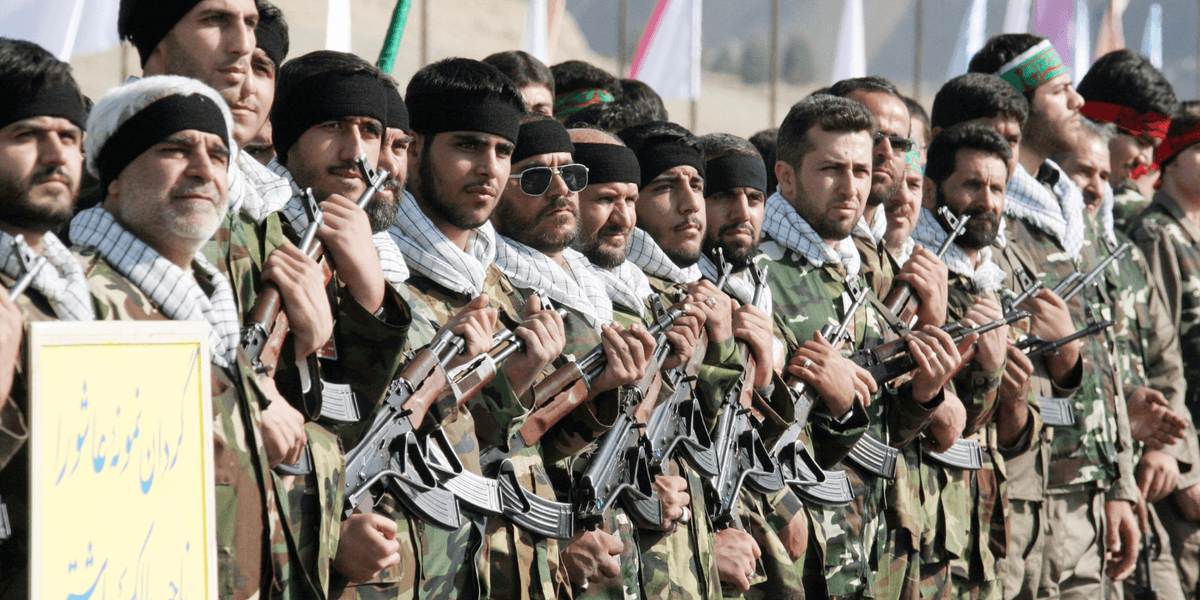
Ministers are preparing new legislation that would allow Britain to proscribe Iran’s Islamic Revolutionary Guard Corps (IRGC), following the EU’s decision to designate the organisation as a terror group.
The Home Office has confirmed work is under way on a bill aimed at hostile state agencies such as the IRGC.
However, officials have signalled the legislation will not be fast-tracked, despite mounting pressure and the IRGC’s role in Tehran’s violent suppression of protesters.
Government sources said the draft law remains unfinished but is expected to be introduced later this year.
Iran’s Foreign Minister reacted angrily to the EU’s move, branding it a “stunt” and warning it would be a “major strategic mistake”.
Lord Blunkett, the former Labour Home Secretary, has become the most senior party figure calling for swift action.
“I think it’s long overdue,” he told The Times. “We should clarify what is already taken as given, namely that this organisation is unacceptable and should be proscribed.”
Lord Blunkett also urged ministers to take a tougher stance against the Muslim Brotherhood.

Ministers are preparing new legislation that would allow Britain to proscribe the IRGC
|
GETTY
Shadow Foreign Secretary Priti Patel has delivered a scathing assessment of the Government’s approach.
“The brutality of the Tehran regime is an affront to humanity,” she said.
“Thousands slaughtered, many more injured and tortured, and show trials continuing, all while Iran sponsors terrorism and threatens regional security.”
Dame Patel described what she called the “Labour government’s silence on the IRGC” as “appalling”.

Dame Patel described ‘Labour government’s silence on the IRGC’ as ‘appalling’
|
GETTY
The proposed ban has exposed deep divisions inside Whitehall, with MI6 and the Foreign Office understood to be opposed to proscription.
Officials are said to be concerned that banning the IRGC could sever vital diplomatic channels and prompt the expulsion of British diplomats from Tehran.
The Foreign Office has instead favoured a sanctions-based approach, with more than 500 Iranian individuals already subject to asset freezes and other penalties.
US officials have historically supported keeping the British embassy in Tehran open, viewing it as a critical back channel for communication with the regime.

US officials have historically supported keeping the British embassy in Tehran open
|
GETTY
The proposed legislation would grant police sweeping new powers to disrupt IRGC activity in Britain.
Officers would be able to seize passports from individuals suspected of acting on behalf of the organisation and conduct stop-and-search operations without suspicion in high-threat scenarios or near sensitive sites such as the Israeli embassy.
Anyone found assisting or benefiting from a proscribed state intelligence agency could face up to 14 years in prison.
The bill would also create new offences for inviting support for groups like the IRGC or displaying their flags or insignia, mirroring existing counter-terror powers.
The framework was developed by Jonathan Hall KC, the independent reviewer of terrorism legislation, after current terror laws were deemed ill-suited to dealing with arms of foreign states.