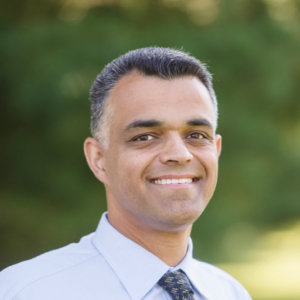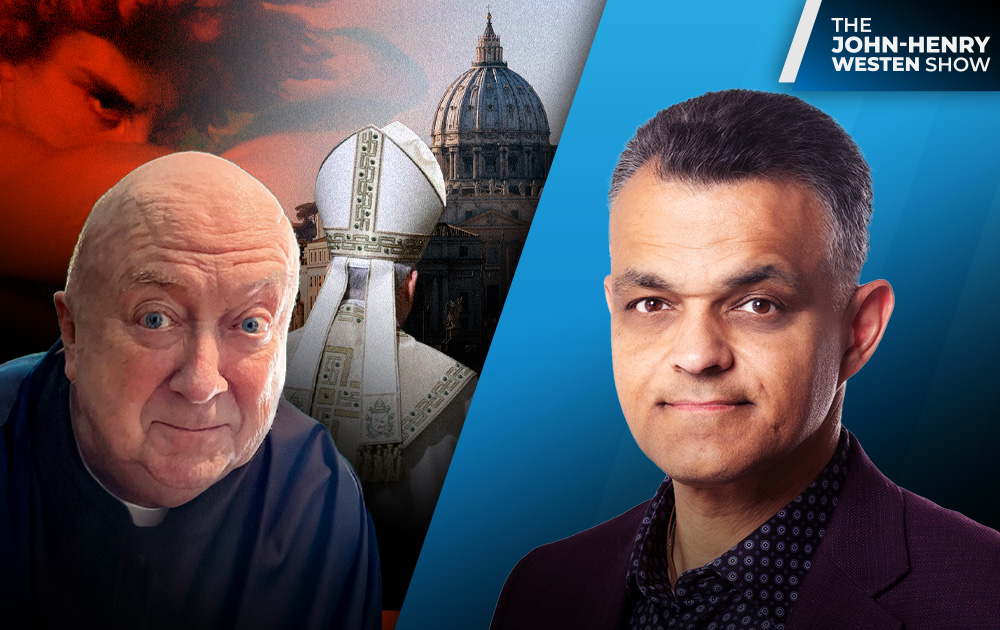
(LifeSiteNews) — Joining me on this special two-part episode of The John-Henry Westen Show is Father Charles Murr. We discussed how the Church changed seemingly overnight after the Second Vatican Council; the ambiguity of the Council’s documents; division within the Church; why those closest to the pope are among the most evil people; and more.
After briefly discussing his background, I opened part 1 by asking Fr. Murr what led to the confusion and chaos in the Church in the 1960s, and if it was the Council itself that had sowed this confusion. Murr explained his belief that it wasn’t the Council itself but the various misinterpretations of its documents that led to confusion and a new “openness” to the world that led to the end of the divide between the Church and communism.
“(Before the council) the Church made a divide between what was happening in the world. The Church was the safeguard … against communism,” the priest said. “All of (a) sudden, that … floodgate was open, and we were dialoguing with communist principles.”
“There wasn’t that divide any longer, and there was an invitation, almost a mocking invitation, that if you wanted to be ‘with it,’ you would be open to dialogue, open to discussing what the enemy is thinking,” he added. “And there was … simply chaos, chaos in thinking, chaos in attitudes. All of a sudden, if you were anti-communist, or if you were anti-socialist, you were a bigot.”
Murr stressed that this openness to communist principles trickled down to the priesthood and even religious communities, as they no longer respected their superiors and followed their own conscience. The priest then delved into how, after the Council, the various interpretations of its documents led each priest to proclaim his own interpretation.
READ: Open letter to Pope Leo XIV: The heresy of modernism lives on through Vatican II
“Nobody knew what (the documents) meant. Everyone was proclaiming his own independent thought as to what they meant. So you’ve got sisters leaving the convent, you’ve got priests leaving the priesthood, then, and then turning around and attacking what always was in the Church,” he said. “All of a sudden, you were either conservative or liberal. We never had those terms … But the world began to be divided into conservative and liberal.”
Murr highlighted how this new divide between liberal and conservative led Catholics to suddenly start debating the morality of abortion and birth control, when before the Council, everyone recognized these as grave evils. He explained that many bishops stopped teaching the Church’s stance on these issues because of the pressure from priests and religious.
” Everyone understood that this was an evil. Birth control, artificial birth control (its evil) wasn’t a question, certainly not for Catholics,” he said. “All of a sudden, these things are considered, and they’re re-evaluated … And the church lost her opportunity to teach (because) everyone was afraid.”
Murr continued:
Our bishops all of a sudden became afraid of their priests and of the religious, because they were threatening to close schools (over) this. They were threatening the order, they were threatening … the ecclesiastical status quo. And so you didn’t have great direction from bishops.
I opened Part 2 by discussing more of Murr’s background, particularly his time in Rome and his discernment of the priesthood. He explained that, while discerning, he had been scandalized by some of the behavior of the priests he had met and decided to pursue a career in law.
This led him to the University of St. Thomas Aquinas to study philosophy, as all Catholic lawyers of the time did. While studying in Rome, he began teaching English at the Ponte Vicio Collegium Mexicanum, the Mexican college, one of the schools that had not yet lost the faith after the Council, and his experience gave him a better impression of Catholic priests.
“I found priests who were holy and (had) great senses of humor and (were) warm human beings and fraternity and friendship,” he said.
But Murr emphasized that the school soon began teaching and encouraging liberation theology, which was essentially Marxism under a different name. He even found himself drawn to this theology.
“They were beginning with (the) theology of liberation. And I remember having discussions, all of a sudden (about) Marxism by another name, because they weren’t calling it Marxism, but it was, of course,” the priest recalled.
” But the way that you’ve got these people (whom) you esteem, you respect, they seem balanced in every other way, and they’re pushing theology of liberation,” he added. ” I didn’t know what (liberation theology) was, but it sounded, well, (as) communism always sounds attractive … Evil always presents itself as good. This, too, presented itself as good.”
READ: Prof. de Mattei backs Fr. Murr’s claims about the 1978 Vatican investigation into Freemasonry
However, after Murr befriended Father Mario Marini, a traditional priest who worked at the Vatican and had taken residence at the college, he realized that his colleagues embracing liberation theology were progressives.
“The friendlier I became with him, the more withdrawn from the college community, from the Mexican college priests, they, and they were careful what they said about him in my presence,” he said. “So again, this divide, and these were the open ones. These were the progressives … These are the ones who wanted to have atheists and communists be part of the Church.”
Murr explained that he and Marini became very good friends, and the priest even encouraged him to begin studying theology. He recalled how one evening, as he and Marini were walking in downtown Rome, they ran into “transgender” prostitutes who were viciously mocking Marini because he was a priest, upsetting Murr.
But Marini explained that these prostitutes had a better chance of getting into Heaven than many people he worked with in the Vatican.
“Well, that hit me like a ton of bricks. (Marini) had said certain things over the years that made me understand that not everyone was a deep believer that he worked with (in the Vatican),” he said. “A lot of them were career men; they were looking out for a career much more than they were in serving God or the Church.”
Murr recalled that he then asked Marini how there can be men so evil and corrupt so close to the successor of St. Peter.
“He said, ‘Why doesn’t that make perfect sense to you? Where do you think the devil is going to be? Don’t you think the devil is going to be where the greatest good on earth is?” he said. “Why would he be far away from that? He would … Pitch his tent right across the hall from the Vicar of Christ. And he has representatives who are very close to the pope, because that’s as close as he can get.”
“All of a sudden, that made sense to me. Of course, where there’s the greatest good, there’s also going to be the greatest evil,” he added.
To hear much more from Fr. Charles Murr, watch my full interviews above or by clicking here for Part 1 and here for Part 2.
The John-Henry Westen Show is available by video via LSNTV on YouTube, Rumble, Banned, and right here on my LifeSite blog.
It is also available in audio format on platforms such as Spotify, Soundcloud, and Acast. We are awaiting approval for iTunes and Google Play as well. To subscribe to the audio version on various channels, visit the Acast webpage here.
We’ve created a special email list for the show so that we can notify you every week when we post a new episode. Please sign up now by clicking here. You can also subscribe to the YouTube channel, and you’ll be notified by YouTube when there is new content.
You can send me feedback, or ideas for show topics by emailing [email protected].