President Donald Trump has sought to justify his policy of summarily executing suspected drug smugglers by arguing that the United States is engaged in an “armed conflict” with criminal organizations that supply prohibited intoxicants. Yet the Trump administration also insists that U.S. forces are not engaging in “hostilities” when they blow up boats believed to be carrying illegal drugs.
Those positions are hard to reconcile with each other, but they are consistent with Trump’s disregard for legal limits on his use of the military to prosecute a literalized war on drugs. His administration has tied itself in knots to portray murder as self-defense while avoiding congressional constraints.
As of early December 2025, Trump had ordered 21 attacks on suspected drug boats in the Caribbean and the eastern Pacific, killing a total of 83 people. As he tells it, those people were “unlawful combatants” in a “noninternational armed conflict” with the United States because they were affiliated with “nonstate armed groups” whose actions “constitute an armed attack against the United States.”
According to the United Nations, the definition of a “noninternational armed conflict” requires violent confrontations between “organised Parties” that possess “organised armed forces.” The violence must “meet a minimum threshold of intensity” that distinguishes it from threats such as “riots,” “banditry,” “unorganized and short-lived insurrections,” and “terrorist activities.”
The “armed conflict” that Trump describes does not meet these criteria. “This is not stretching the envelope,” Geoffrey Corn, formerly the U.S. Army’s senior adviser on the law of war, told The New York Times. “This is shredding it.”
Cardozo Law School professor Gabor Rona concurs. If the men whose deaths Trump has ordered “were running illicit drugs destined for the United States,” Rona writes, “the proper—and entirely feasible and precedented—response would have been interdiction, arrest, and trial. The Trump administration’s summary execution/targeted killing of suspected drug dealers, by contrast, is utterly without precedent in international law.”
Even if Trump’s conflation of drug smuggling with violent aggression made sense, his use of the military would still be subject to the War Powers Resolution. That 1973 law requires the president to report “any incident in which the United States Armed Forces are involved in an attack or hostilities” within 48 hours. It adds that the president “shall terminate any use of United States Armed Forces with respect to which such report was submitted” within 60 days unless Congress has declared war or authorized an extension.
Since Trump notified Congress of the first boat strike on September 4, 2025, the 60-day period expired on November 3, 2025. But shortly before the deadline, the Justice Department told Congress the 60-day rule does not apply in this case because blowing up suspected drug boats does not count as “hostilities” under the War Powers Resolution.
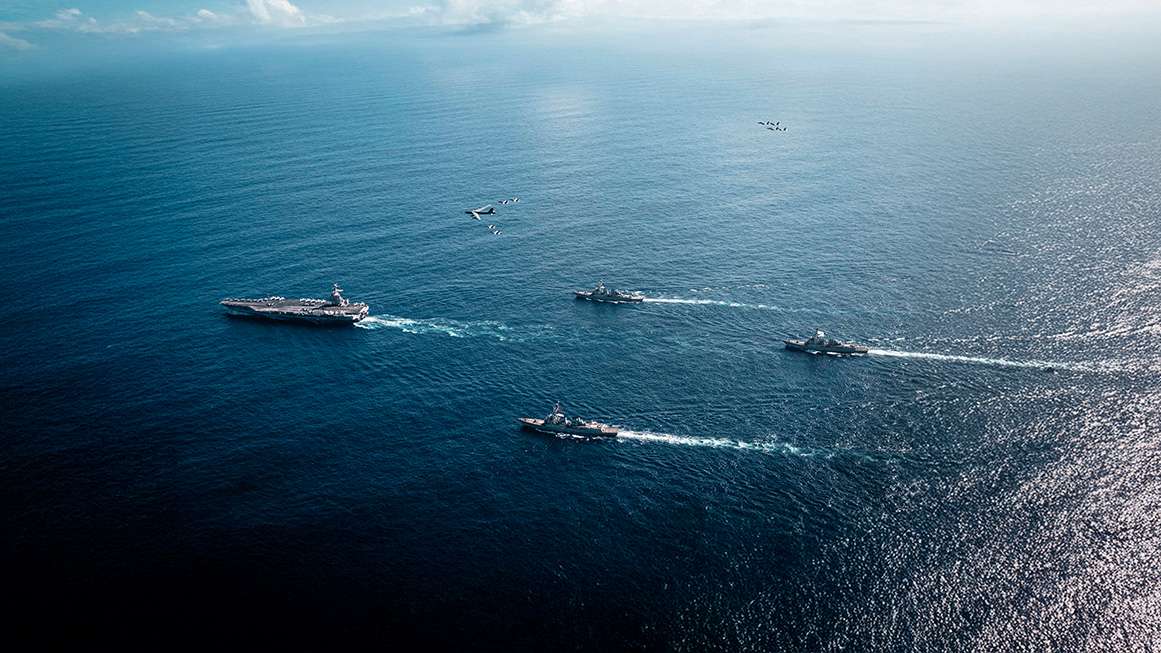
That position—which resembles former President Barack Obama’s controversial claim that dropping bombs on Libya in 2011 did not constitute “hostilities”—hinges on the premise that U.S. forces face no plausible risk of casualties. “In a statement provided by the White House,” The New York Times reported, “an unnamed senior administration official said that American service members were not in danger because the boats suspected of smuggling drugs were mostly being struck by drones far from naval ships carrying U.S. forces.”
This argument concedes that the targets posed no immediate threat, meaning Trump authorized the use of lethal force in circumstances where it was morally and legally unjustified. And in denying the existence of “hostilities,” the government implicitly contradicted Trump’s September 4 letter to Congress about the first boat strike, which said the report was “consistent with the War Powers Resolution.” The provision to which he was referring requires a “report on hostilities involving United States Armed Forces.” The government’s characterization of the attacks also seemed inconsistent with Trump’s assertion of a “noninternational armed conflict,” which requires “hostilities.”
Trump, who has preposterously claimed that “we save 25,000 American lives” with each boat strike, is keen to conceal the reality of his bloodthirsty tactics. By choosing to kill alleged drug smugglers instead of intercepting and arresting them, Trump is imposing the death penalty on criminal suspects without statutory authorization or any semblance of due process.
During his first term, Trump repeatedly praised Rodrigo Duterte, then president of the Philippines, who likened himself to Adolf Hitler while urging the murder of drug offenders. Trump bragged of his “great relationship” with the brutal authoritarian, who he said was doing “a great job” in tackling substance abuse. Now Trump is copying the example set by Duterte, who is currently imprisoned at The Hague, awaiting trial on charges of crimes against humanity.
This article originally appeared in print under the headline “Trump’s Drug Strategy Excuses Murder as Self-Defense.”