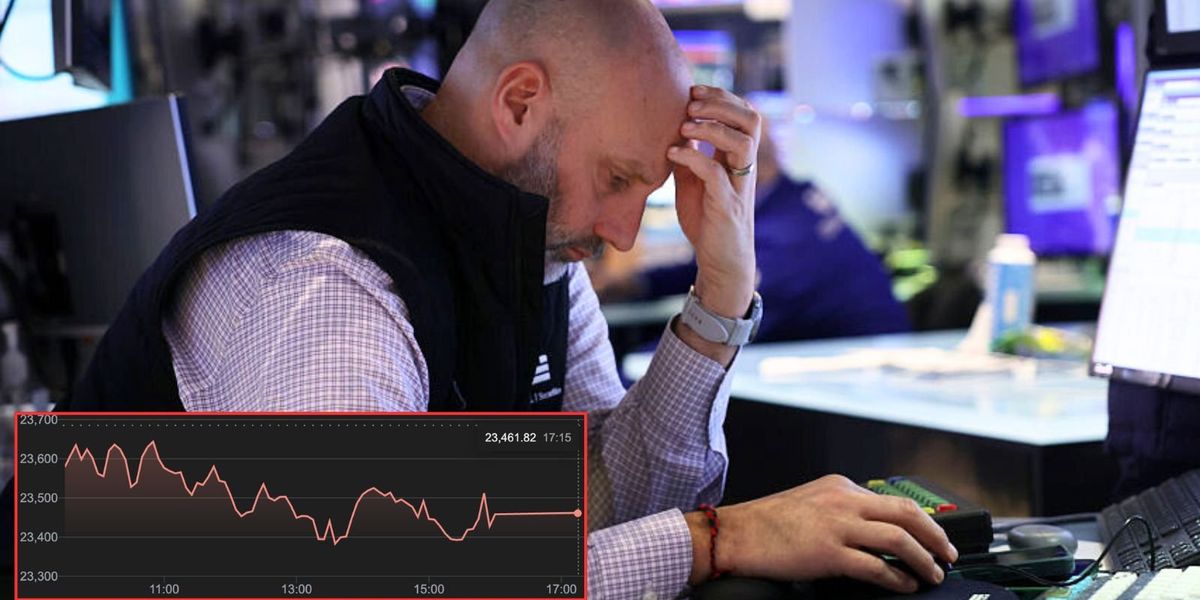
Global financial markets have been hit by a broad sell-off, with equities, commodities and digital currencies falling sharply amid growing concern over artificial intelligence investment and the future direction of US monetary policy.
The FTSE 100 slipped at the open, tracking heavy losses across international markets as volatility in precious metals spread rapidly through global trading sessions.
Gold prices fell by more than six per cent to around $4,530 per ounce, after having reached close to $5,600 only days earlier.
Silver recorded even steeper losses, plunging 12 per cent to below $75 after recently breaking above $120.
Energy markets were also caught up in the downturn, with crude oil prices dropping by more than five per cent to below $66 a barrel.
Asian markets experienced some of the most pronounced moves, with South Korea’s Kospi index falling by five per cent and triggering a temporary trading halt.
Shares in major technology firms were among the hardest hit in Seoul, with SK Hynix falling by more than eight per cent and Samsung down over five per cent.
Tim Waterer, chief market analyst at KCM Trade, said: “Traders are unnerved by the market tumult witnessed on Friday in precious metals.”
Analysts said the market turbulence was exacerbated by Donald Trump’s decision to nominate Kevin Warsh as chair of the Federal Reserve.

The Nasdaq composite fell as Investors retreated
|
GETTY/Google Finance
Anthony Scaramucci, former White House communications director, compared the appointment to a pivotal period in US monetary history.
Mr Scaramucci said: “The market has decided that Kevin Warsh is Paul Volcker.”
Paul Volcker served as Federal Reserve chairman between 1979 and 1987 and was associated with aggressive interest rate rises to curb inflation, a policy approach that often weighed heavily on asset prices.
Rhona O’Connell, head of market analysis at StoneX, said the nomination removed a source of uncertainty that had previously driven investors towards gold and away from the dollar.
Mr Warsh is widely expected by market participants to support efforts to reduce the United States’ national debt burden.
Concerns about a potential bubble in artificial intelligence investment have also intensified selling pressure, particularly in major technology stocks.
LATEST DEVELOPMENTS

After record high, gold and silver prices tumbled over the weekend
|
GETTYMicrosoft shares continued to fall after a 10 per cent decline the previous day, which wiped $357billion from the company’s market capitalisation in the second-largest single-day loss on record.
The decline followed renewed scrutiny of the technology company’s plans for large-scale spending on artificial intelligence infrastructure and uncertainty over when such investments may generate returns.
Stephen Innes, managing partner at SPI Asset Management, said: “The sell-off is reflecting AI mega-cap bubble risk, in a familiar Monday morning echo of Wall Street’s late-week loss of balance.”
Japan’s Nikkei 225 index fell by more than one per cent, while Taiwan’s stock exchange declined by over two per cent, weighing on shares linked to semiconductor manufacturing.
Markets in Hong Kong, Shanghai and other parts of Asia also moved lower as risk sentiment deteriorated.
Digital currencies extended their losses as the global market sell-off deepened.
Bitcoin fell to a ten-month low, sliding as much as 2.5 per cent overnight to $74,541.
The decline brought the cryptocurrency close to its weakest level since Mr Trump returned to the presidency just over a year ago.
January marked a particularly difficult period for Bitcoin, which fell by nearly 11 per cent during the month.
The drop represented the fourth consecutive monthly decline for the digital currency, its longest losing streak since 2018.
Other cryptocurrencies also fell, with Ether down four per cent and Solana losing 1.6 per cent.
Caroline Mauron, co-founder of Orbit Markets, said: “A further drop through the 2021 highs around $70,000 would represent a damaging long-term confidence hit.”
Analysts warned that momentum in global markets remains fragile, with few signs that selling pressure is easing.

The commodity markets fell sharply on Monday morning
|
Trading Economics
Retail investors who entered the gold market during its recent rally have suffered heavy losses as prices reversed sharply.
Merry Chen, a 42-year-old investor from Hangzhou in China, opened a futures account last week and saw her 1 million yuan investment rise by 60 per cent within 48 hours.
When gold suffered its steepest single-day fall since 1983 on Friday, she was forced to liquidate her position, losing 750,000 yuan, equivalent to an 84 per cent decline from her peak.
Ms Chen said: “I never imagined it could be this intense.
“It felt like a trip to a casino in Macau.”
Pressure on precious metals traders increased further after CME Group raised margin requirements on Saturday.
Despite the volatility, some analysts said gold’s longer-term fundamentals remain intact.
Emmanuel Cau, head of European equity strategy at Barclays, said: “Despite screens flashing ‘overvalued,’ a certain amount of premium to gold’s fair value looks durable, suggesting gold is not a bubble.”