A 17th-century plague relic in Yorkshire is being used to collect money for a local hospice, 400 years after it was first erected.
Money collected from the plague stone has raised almost £1,000 for St Leonard’s Hospice in York, who care for the terminally ill.
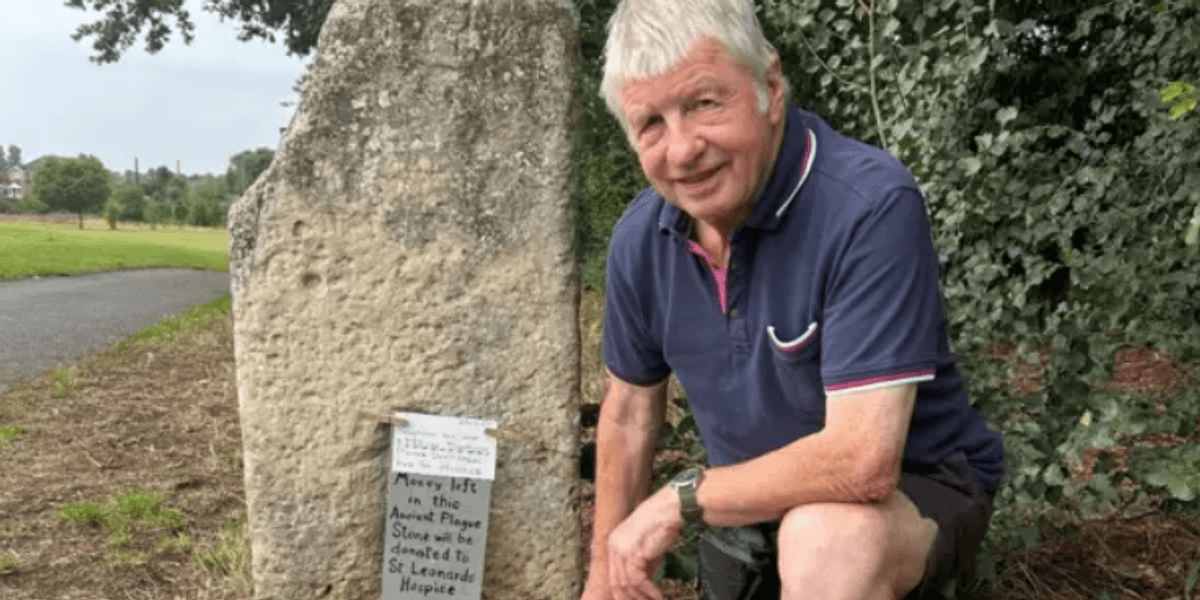
Ian Tomlinson, member of community conservation group, Friends of Hob Moor, noticed money collecting in the plague stone and began donating it to charity.
Speaking to the BBC, Mr Tomlinson said, it was “amazing this simple stone that was used to help the plague victims in the city is now once again being used, this time to raise money”.
Plague stones’ original function was to “disinfect” money between those infected and those who were not.
The sick would wash their money in the stones, usually filled with vinegar or water, to pay vendors for goods, hoping this would stop the disease from passing on.
The plague hit York in 1604, with some moving to Hob Moor to avoid the spread of the disease, according to a plaque by the stone.
Hob Moor sits within Micklegate Stray, one of the Strays of York, which are protected areas of open land surrounding the city.
 Plague stone leaves behind ‘amazing’ legacy after finding new purpose 400 years later |
ST LEONARD’S HOSPICE
Friends of Hob Moor, formed in 1999, aims to protect and conserve the stray’s natural environment.
Mr Tomlinson, who has been a member of Friends of Hob Moor since its formation, told the BBC he began noticing money in the stone in March 2022 and donated it to Marie Curie.
Thinking it was a one-off event, Mr Tomlinson did not expect to find money appearing again in the medieval relic.
He said: “A few days later, there were more pennies and I thought, ‘there’s something in this’.”
Shortly after, he put up a sign indicating any money in the plague stone would be donated to St Leonard’s Hospice, raising £936 so far.
Tomlinson chose the hospice due to its close proximity to Hob Moor, located less than a mile away, and how the charity is cherished among the local community.
James Wainwright, Director of Income Generation, St Leonard’s Hospice, said the hospice was “very grateful to Ian and the Friends of Hob Moor”.
“It’s a wonderful reminder of the generosity of our community, and we’re delighted that this historic landmark is helping us care for local people when they need us most,” he said.
Despite passing the stone “almost daily”, Mr Tomlinson said he has “never seen anyone actually putting money in”.
He sometimes fills the bowl-shaped stone with water to keep it looking authentic.