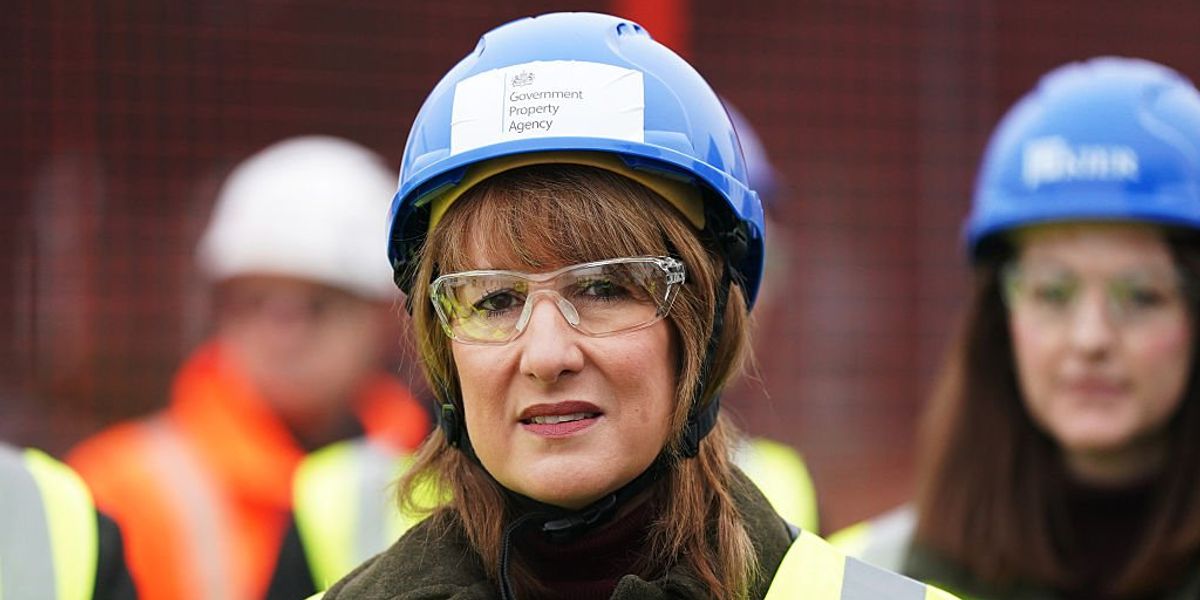
Rachel Reeves has exhausted her remaining Budget headroom despite raising taxes by £26billion in November, Britain’s oldest independent economic research institute claims.
The National Institute of Economic and Social Research (NIESR) said rising unemployment and weak economic growth had left the Chancellor on track to meet her borrowing rules with no margin for error.
The think-tank warned any further deterioration in the economic outlook could push the public finances off course.
David Aikman, director of the NIESR, said: “Fiscal space in our view remains extremely tight, with public debt high and limited room to respond to future shocks”.
The NIESR’s assessment raises the prospect that Ms Reeves may be forced to consider further tax increases later this year to remain compliant with her fiscal rules.
In November, the Office for Budget Responsibility (OBR) forecast the Chancellor would balance day-to-day spending by 2029/30 with £22billion of headroom.
That buffer was intended to protect against unexpected changes in growth, inflation or borrowing costs. However, unemployment has already exceeded the peak level anticipated by the Budget watchdog.
The jobless rate currently stands at 5.1 per cent, compared with the OBR’s projection of a maximum of five per cent. NIESR expects the labour market to weaken further over the coming months.

The Chancellor’s headroom has vanished already, its claimed
|
GETTY
The institute forecasts unemployment will rise to 5.4 per cent before the end of the year. It also predicts the total number of people out of work will approach two million, a level that would surpass figures recorded during the coronavirus lockdown.
Benjamin Caswell, an economist at NIESR, said rising labour costs were a key factor behind the deterioration.
He said, “Part of this unemployment story for the UK is rising labour costs.” The real terms cost of employing an entry level worker increased by seven per cent last year, driven by increases to the minimum wage and higher National Insurance contributions paid by employers.
“We suspect these cost pressures are impacting hiring and labour market flexibility more broadly.”
NIESR’s wider economic forecasts also paint a weaker picture than official projections.
 GRAPHED: The UK’s tax burden as a percentage of GDP, 1948-2031 | GB NEWS
The institute expects economic growth to slow to 1.3 per cent next year, falling further to 1.1 per cent in 2028. A gradual recovery is not expected until the end of the decade, with growth reaching 1.4 per cent by 2030.
These figures are below the OBR’s forecast of 1.5 per cent annual growth from next year through to the end of the decade.
Lord Frost, the former Conservative minister and current head of the Institute of Economic Affairs, said the projections highlighted pressure on the public finances.
He described the outlook as evidence of the “perilous state” of the fiscal position.
Lord Frost said: “Hiking taxes, spending, and regulation on workers is fatal for economic growth.”
He said the effects of higher National Insurance, increases to the minimum wage and the Employment Rights Act were now becoming visible, warning of “a spike in the cost of hiring entry level workers, meaning fewer jobs and opportunities for young people”.
The Treasury rejected NIESR’s conclusions and pointed to its record since entering Government.
A spokesman said: “The headroom will not be assessed in March but last year we doubled it.”

Unemployment has already exceeded the peak level anticipated by the Budget watchdog
|
TREASURYThey said the Government had “defied expectations on growth” and noted that the OBR, Bank of England, IMF, OECD and BCC had all upgraded their forecasts.
He said the UK was expected to be the fastest growing European G7 economy this year and next, and pointed to six interest rate cuts since the election, the fastest pace in 17 years.
James Murray, chief secretary to the Treasury, told the House of Lords Economic Affairs Committee on Tuesday reduced headroom could create “more speculation” amid “unexpected pressures”.
The OBR is due to publish updated forecasts next month. Ministers are expected to respond with a parliamentary statement rather than a full fiscal event.